Operations | Monitoring | ITSM | DevOps | Cloud

MCP Server Monitoring: Tracing Tool Calls with OpenTelemetry

MCP server monitoring guide: spans, metrics and logs to record for tool calls, why failed tools look healthy, and how to trace requests from client to server. Sejal Pandey works on content and growth at Last9, writing about observability, reliability, and SRE practices.

AI inference, explained through one question

TL;DR Part 0 of a three-part series on building a documentation assistant with Aiven. This part gives you the vocabulary. Part 1 is the architecture. Part 2 builds the thing. Almost everything written about large language models explains how models get built. Very little explains what happens the other billion times, when a finished model sits there answering questions. That second thing is called inference, and it is where practically all of the engineering work actually lives.

FastAPI Shipped Three Breaking Changes in 21 Hours: What to Check

FastAPI released 0.146.0, 0.147.0, and 0.148.0 between Sunday afternoon and Monday morning (UTC), and each one is labeled a breaking change. None of them will crash your app on startup. They change what values your endpoints receive, which is the kind of change that passes CI and then shows up as odd data a week later. At Scout Monitoring, we monitor a lot of FastAPI apps, and a loosely pinned fastapi dependency is the most common way these releases will arrive.

Modal scales the next generation of AI with unified observability from Datadog

Modal is an AI infrastructure company rebuilding the cloud for AI, giving developers easy access to the compute needed to build and scale AI applications without managing the underlying complexity. Operating across more than 20 cloud providers and launching approximately 26 million containers daily, Modal relies on Datadog to unify observability across its infrastructure, applications, networking, and CI—helping its engineers detect 99% of incidents within five minutes, resolve 96% of issues before customer impact, and confidently scale one of the world’s most complex AI platforms.

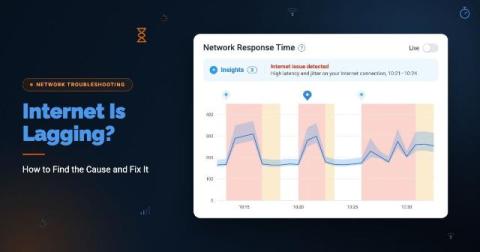
Internet Is Lagging? How to Find the Cause and Fix It

The speed test shows 500 Mbps. Yet Microsoft Teams calls keep turning into people talking over each other, the CRM pauses on every click, and remote employees are opening tickets because the Internet is lagging. Nothing looks broken, which is exactly what makes lag so hard to troubleshoot. Why is my Internet lagging? If your Internet is lagging, your connection is slow to respond, not necessarily slow to download.

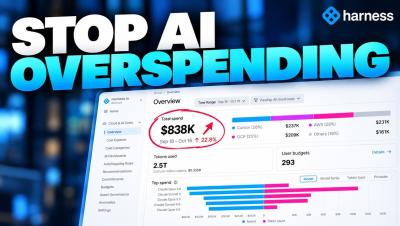
Harness Cost Management Agent | How to Set and Enforce AI Spending Budgets

Control AI spending across your organization with Harness Cost Management Agent's AI User Budgets. In this demo, see how Harness helps teams set, monitor, and enforce AI spending limits across tools like Claude, Cursor, and Amazon Bedrock, all from one centralized control plane. What you'll learn: Set weekly AI spending budgets for users and teams Track AI consumption across multiple tools and models.

Enterprise Vibe Mode: Deploy AI-Built Apps to Production | Harness Demo

Vibe coding makes building applications easier than ever. But how do you take an AI-generated app and safely deploy it to production? In this demo, see how Harness brings Vibe Mode to the enterprise, allowing anyone to deploy applications while automatically applying your organization's security policies, governance, compliance requirements, and deployment configurations. See how Harness enables teams to.

The Auvik Spring 2026 roadmap

Our Spring 2026 product roadmap is built around the idea that AI network management should start with what’s actually happening on your network, not a blank prompt. Over the past six months we’ve built Auvik AI into alerting, troubleshooting, the remote terminal, and Command Runner. We’ve also added, faster fixes for servers and workstations, and a ServiceNow CMDB integration. We walked through all of this, plus what’s coming next, in our Spring 2026 roadmap webinar.