The latest News and Information on Containers, Kubernetes, Docker and related technologies.
“I’ve run a lot of systems in production, and a lot of what has gone into the Kubernetes project came out of scars that came from running web search in production and running API services,” Brendan Burns, the co-creator of Kubernetes, said at the top of his keynote at GrafanaCon L.A.
The early adopters have begun to find a great degree of success and it is now time for the more mainstream enterprise to get off the proverbial wall and begin exploring containers and other areas of the cloud-native landscape. However, there is a need to mitigate or manage the risk of adopting new technology as it does introduce a dimension of change that accompanies any transformation.
With the adoption of agile microservices, enterprise IT teams have rapidly transitioned from managing pets (physical and virtual servers) to cattle (public cloud services) to now chickens (containerized infrastructure). Container platforms like Docker and container orchestration engines like Kubernetes are helping IT operators drive greater agility, portability, and flexibility for scaling, managing, and optimizing microservices architectures.
At Grafana Labs, we field questions about best practices from customers all the time. One company recently asked whether it should run a containerized Prometheus environment rather than a VM-based one. We thought we’d share our answer here too. So: Should you run Prometheus in a container?
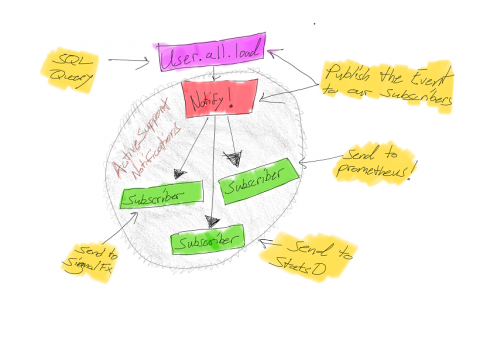
If you’re running a production application, you need metrics. There are great products out there that allow you to gain visibility into how your application is performing, give some nice graphs, and charge you for it. In the Rails community, this is commonly achieved by using NewRelic and Skylight. But for some of us, we achieve visibility by using Prometheus and Grafana that we build and host ourselves.
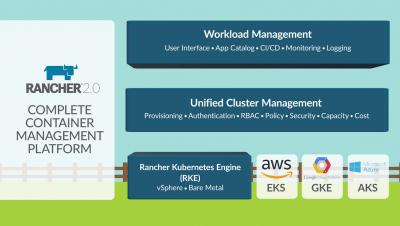
In today’s software-driven economy, every organization faces an imperative to modernize the way they deliver software in order to adapt and enable the digital era — or perish. Digital transformation across industries is driving the need for IT to enable Cloud-Native applications. This has led enterprises to adopt Kubernetes as the most effective way to support cloud-native architectures and to modernize their applications and IT infrastructure.
Docker is a powerful tool for creating and deploying applications. It simplifies rolling out applications across multiple systems and is a useful tool for integrating new technologies. An application that runs using Docker will start up the same every time on every system. This means that if the application works on your local computer, it’ll work anywhere that supports Docker. That’s great news! It simplifies your development process and can be a powerful tool for continuous delivery.