Operations | Monitoring | ITSM | DevOps | Cloud

Toil Reduction Outside the Data Center: Lessons From the Clinical Front Office

Ask an operations team where the week went, and you'll usually get a list of things that shouldn't have needed a person. Access requests provisioned by hand. A disk cleared for the ninth time this quarter. Certificates rotated one at a time because the renewal script was scoped, estimated, and never finished. None of it is difficult, and all of it is necessary. And at the end of the quarter there's nothing to point at, because the work left no trace beyond the absence of an outage.

Free Open Source AI Agent for SRE and More: Why We Give AURA Away

Wondering what the catch is on a free, vendor-backed agent? There is not one in the license. AURA stays Apache 2, fully capable, and free to run. If you are weighing an open source tool with a company behind it, the first question is what the catch is. You have seen the project that turns out to be open core, or that is quietly hindered in one key way. This is Mezmo's answer for AURA.

Install an AI SRE Agent in Kubernetes with AURA and Helm

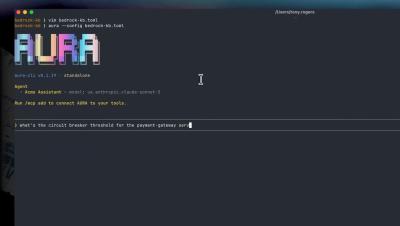
AURA does not have to live on your laptop. Install it into the cluster with Helm and it is still there the next time something breaks. AURA is a fully open source AI agent built specifically for SRE work. Rather than one general assistant, you configure workers: separate agent roles, each scoped to a job like inspecting the cluster.

What your AI SRE can't see (and what you can do about it)

AI SRE is having a moment. The category pulled in massive funding rounds over the last two years, Gartner published its first market guide, and vendors are promising everything from 90% faster resolution to fully autonomous incident response. If you run an engineering organization, someone has probably pitched you an AI SRE in the last quarter. And let’s be honest: faster triage, less alert fatigue, and automated frontline response are wins for understaffed teams.

SRE Agent Enhancements: Faster Triage, Greater Access Controls, Deeper System Connectivity

This blog post is part of PagerDuty’s ongoing series on how we’re helping customers navigate their journey towards autonomous operations. Read on to learn about how recent SRE Agent Enhancements build towards this vision. During an incident, everything is competing for attention at once. Responders lose time swiveling between tools, insights gathered by AI stay siloed instead of feeding into the next decision, and the pressure to move fast means learnings rarely stick.