Operations | Monitoring | ITSM | DevOps | Cloud

A Multidisciplinary Guide To Cloud Cost Intelligence

Cloud cost intelligence has moved beyond simple cost-cutting. Now, it’s about creating value. Cloud bills continue to rise, and workloads are becoming increasingly complex. Teams also need to understand what they’re spending, why, and how that spend ties to business results. FinOps has become the framework for bringing finance and engineering together. It’s helping teams manage costs, improve margins, and plan with confidence. But challenges remain.

The Unit Economics Of Watering My Lawn: A Lesson On Runaway AI Costs

My wife and I spent hours this summer at home digging in the dirt. We planted new shrubs and perennials and created a small vegetable garden. We spread many square yards of fresh topsoil and grass seed over areas of lawn that needed rejuvenation. It turns out, I should have done all that landscaping with a FinOps leader’s mindset — before my water bill tripled when I wasn’t looking.

Turning Data into Dollars: How Expense Insights Drive Savings

In today's competitive business environment, every dollar counts. Companies face rising costs across nearly every area-operations, technology, compliance, and staffing. While most organizations already track expenses, not all of them take the next step: using expense data as a strategic tool. The difference between simply recording costs and analyzing them for insights is enormous. When data is harnessed effectively, it becomes more than just a ledger-it becomes a roadmap to savings and efficiency.

Why Security Must Include Cost Accountability In The Cloud

A SaaS team once spotted their first breach not in a SIEM dashboard, but in their AWS bill. Their compute costs spiked by 400% overnight. Turns out, an attacker had spun up dozens of high-powered instances for crypto mining. Logs eventually confirmed the intrusion, but the cost anomaly was the first signal that something was wrong. This incident isn’t unusual. Cloud costs often reflect consumption, but they can also reflect compromise.

FinOps Training At Scale Webinar: Key Takeaways On Proven Strategies From Fred FinOps

Cloud costs are no longer just an engineering problem or a finance problem. It’s now an everyone problem. That was the central message from the FinOps Training At Scale webinar that took place on Sept. 25, 2025, where CloudZero’s Larry Advey (a.k.a. “Fred FinOps”) and Director of Tech Enablement Umesh Rao walked through the realities of building FinOps practices that work in the real world.

How To Tag AI Cloud Spend: A Practical Framework For FinOps Teams

The world of cloud costs is always evolving, and AI spend is quickly becoming one of the most unpredictable and confusing cost drivers. As more organizations integrate generative AI into their products, FinOps teams are struggling to account for — and control — these new, often mind-boggling cost streams. In fact, 44% of engineering professionals say improving AI explainability is a top priority in AI budgeting, according to CloudZero’s State Of AI Costs In 2025 report.

Understanding Variable Costs In The Cloud

Cloud costs don’t wait for your finance team to catch up. They spike on product launches, dip when usage slows, and sometimes blow past forecasts overnight. Every container spun up, every gigabyte stored, and every terabyte transferred adds to the tab. The main culprit is often variable costs. In this guide, we’ll break down how variable costs affect budgeting and the strategies you can use to turn cost variability into a competitive advantage.

Smarter AI Cost Optimization With Guardrails That Scale

AI adoption is reshaping how organizations innovate. It’s also driving cloud costs higher. CloudZero’s State Of AI Costs In 2025 report finds that for mature FinOps and engineering leaders, visibility into AI costs is a critical first step, but it’s not enough. To enable fast, responsible AI and machine learning innovation at scale, teams need pragmatic, flexible guardrails. They don’t need rigid budgets or knee-jerk shutdowns that slow progress or push teams into shadow ML.

ECS Vs. EKS Vs. Fargate: AWS Container Services Compared

Amazon Web Services (AWS) provides more than 200 services. Among those, Amazon Elastic Compute Service (ECS), Elastic Kubernetes Service (EKS), and AWS Fargate help deploy and manage containers. Choosing between these services can be challenging. They seem similar on the surface (and are all popular). But each offers unique benefits and limitations. In this guide, we compare the three services, discussing the best use cases for each, and helping you choose the best fit for your business.

The Best Cloud Cost Allocation Methods, Explained

All the major cloud providers enable users to attach business context to their infrastructure in some way. This process — known as cloud cost allocation — is how companies map spend to the teams, products, or features driving it. Done well, cost allocation fuels smarter business decisions. It connects cloud bills to business value, helping teams not just control spend but also understand unit economics and margins.

Rightsizing Cloud Infrastructure: Stop Leaving Money On The Table

In FinOps, rightsizing means adjusting cloud resources (instance types, number of CPUs, amount of memory, storage, databases, containers, and many other configuration parameters) to match actual workload requirements. It’s one of the most powerful levers in the FinOps toolbox, and for good reason. Consider: Average CPU utilization across Kubernetes clusters sits at just 10%, according to Cast AI’s 2025 Kubernetes Cost Benchmark Report.

Making AI Costs Make Sense: A FinOps Guide To Tagging And Tracking AI Spend

AI is reshaping the cost landscape. As a positive person, I’m going to call this change exciting! FinOps teams are integrating AI into cloud platforms and incurring the spend that comes with it. As a FinOps strategist who has helped several companies optimize cloud spend across industries, it became evident that clarity around AI spend unlocks swift, smart decisions. That’s AI … optimized.

The AI Cost 'Black Box' - And How CloudZero Provides Clarity Into Spend

AI adoption continues to explode, and so do their costs. By mid-2025, enterprise LLM spend had already hit $8.4 billion, more than double the year before. And in a major shift, Anthropic recently overtook OpenAI as the enterprise leader. Their Claude models are now core tools for companies adding generative AI technology into their products and workflows. CloudZero recently announced we are the first cloud cost platform to integrate with Anthropic.

5 Key Azure FinOps Principles for Ultimate Cost Control.

Seeking ways to slash Azure costs? This video breaks down the challenges and reveals how FinOps can be the strategic answer to optimizing your Azure resources that can help you maximize Azure cost savings. Furthermore, learn how the Azure Cost Management Tool from Turbo360 (formerly Serverless360) perfectly aligns with the five essential FinOps principles, enabling you to boost your Azure savings by up to 30%.

CloudSpend for iOS 26 for sharper, smarter, and simpler cloud cost management

Experience seamless control, clarity, and cost optimization with the CloudSpend app on iOS 26. This update integrates Apple’s new Liquid Glass design and secure, on-device AI summaries to deliver instant insights into your cloud spending, empowering you to act decisively from anywhere.

AI's False Efficiency Curve: How To Save And Protect Your Margins

The popular narrative around AI economics is changing. At one time, Moore’s Law conditioned us to expect that smarter, faster computing would steadily get cheaper. When it comes to AI, that expectation holds true at the unit level. Per-token costs are indeed declining. But the number of tokens consumed per task is growing exponentially, making total costs spike. The tension here is important: on paper, inference is getting cheaper.

The Ultimate Guide To Container Orchestration Tools

Managing containerized applications or microservices can be difficult. It is even more demanding and prone to error if you do it manually. So, what’s the alternative? Container orchestration. Container orchestration is an automation technology that enables engineers to coordinate when containers start and stop, schedule and execute tasks, manage failovers, and perform recovery processes. The technology helps automate these tasks throughout a container’s lifecycle.

Snowflake Pricing In 2025: Your Usage And Cost Guide

Snowflake’s scalable architecture, minimal latency, advanced analytics, simplified data handling, flexible pay-as-you-go model, and always-on security make the data cloud a top choice for many businesses. You can also purchase Snowflake resources on demand or upfront. But if you struggle to control your Snowflake costs, you’re not alone. With the help of this guide, you’ll know how to manage your Snowflake costs better.

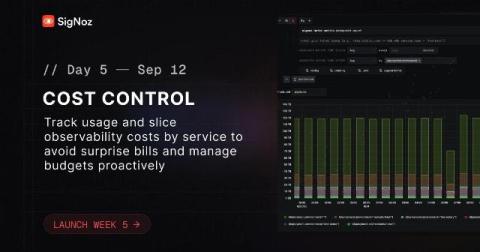
Introducing Cost Meter - Proactive Observability Cost Control with Per-Hour Granularity

The irony isn't lost on us - observability platforms are built to be proactive about system health, yet when it comes to managing observability costs themselves, teams are forced to be reactive. Today, that changes with Cost Meter, now live in our platform. Cost Meter transforms observability spend management from a monthly billing surprise into a proactive, data-driven process with hourly aggregated metrics that give you complete visibility into your telemetry ingestion patterns.

K3s Vs. K8s: Which Kubernetes Is Right For You?

Kubernetes, also known as K8s, is an open-source, portable, and scalable container orchestration platform. With K8s, you can reliably manage distributed systems for your applications, enabling declarative configuration and automatic deployment. Yet, K8s can be resource-intensive and costly, with a rather steep learning curve. But in 2019, a lighter, faster, and potentially more cost-effective alternative appeared: K3s. Still, K3s is not a magic wand that works for all Kubernetes deployments.

Granular Allocation, Accurate Unit Costs: The New Standard For FinOps In The Outcome Era

If you’re struggling to contain cloud costs in this suddenly volatile AI-fixated environment, it might be time to consider FinOps as an exercise in granular allocation and unit economics, with a focus on outcome.

How Pepperdata Increases Resource Utilization for Reduced Costs on Kubernetes | Pepperdata

Without Pepperdata, the Kubernetes system scheduler only sees resource allocations—causing low utilization and inflated spend. Watch the video to learn how Pepperdata optimizes workloads running on Kubernetes. Visit pepperdata.com to learn more.

13 Cloud Cost Management Strategies (And How CloudZero Can Help)

Cloud cost management is a big deal right now. For instance, 58% of organizations say their cloud costs are too high, according to our State of Cloud Cost report. Over the last five years, several other studies have shown that controlling cloud spend is a top cloud computing challenge. There’s more. As AI adoption accelerates, a new challenge has emerged: managing the rapidly growing costs of AI in a scalable and intelligent way.

How To Communicate Cloud Economics To Executives Effectively

We’ve seen the same story play out time and time again in numerous SaaS companies: The problem often begins when engineers — with a technical understanding of cloud costs and a deep understanding of how to build robust products — struggle to communicate the actual business impact of their efforts to company leaders.

5 Ways To Align Engineering And Finance On Cloud Spend

Finance and engineering both thrive on efficiency. So when companies realize they’re wasting cloud spend, but aren’t sure where or how, both teams become frustrated. It’s remarkable how common this scenario has become, particularly over the past five years. Before the pandemic, Gartner reported that companies wasted over $14 billion on cloud services. During the cloud adoption surge in 2020, IDG found that 70% of US businesses overspent by as much as 62%.

AWS Athena, How It Works, And Why It Matters

Amazon Athena is heralded for its simplicity, pay-per-query pricing, and speed. Others say Athena has its fair share of limitations, which could affect your overall analytics experience and quality of analyses. So, what is what? In this post, we’ll share what AWS Athena does, compare it to Amazon Redshift, and share how to understand and control your Athena costs in AWS (with just one tool).

Introducing Kentik Traffic Costs: Real-Time Network Cost Intelligence

Introducing Kentik Traffic Costs, an industry-first automated workflow delivering instant cost estimates for network traffic slices. Learn how this exciting new feature gives network, financial, and sales teams actionable insights to optimize spend, improve margins, and drive revenue.

OpenAI Pricing: The Models, Features, And Costs To Know

If your SaaS organization is experimenting with OpenAI, your cloud bill just got a new line item. And unless you know exactly what drives it, that line item can go from manageable to margin-killer, fast. It’s also worth clarifying that OpenAI is not the same as ChatGPT. ChatGPT is the familiar end-user app with a flat monthly subscription. OpenAI, meanwhile, is the platform behind it — a mix of models, features, and usage-based pricing that shifts depending on what you build.

CloudZero Is The First Cloud Cost Platform To Integrate With Anthropic

The most challenging question in AI today isn’t how to build with it. It’s whether you can prove it’s worth what you’re spending on it. Every week, I hear the same thing from engineering and finance leaders: “We know the AI bills are big.

Cost Controls and so Much More: Issue Detection Through Usage Analysis

Keeping tabs on cloud spending across multiple organizations and vendors, including Datadog, can be tough and costly. If you're not tracking expenses, you're also missing other critical insights. The Flight Centre Travel Group (FCTG) faced this when moving to Datadog, needing to monitor costs across numerous organizations and over 180 Azure subscriptions. After a rapid migration, new cost reports quickly revealed more than just financial benefits. Unusual spending patterns often highlighted incidents, bugs, or security issues, offering early warnings about internal system problems.

Kentik Traffic Costs Workflow Demo

Learn how Kentik's automated traffic cost workflow provides instant visibility into network traffic costs, enabling you to optimize spend, improve margins, and make smarter business decisions. In this demo, you'll see practical examples like evaluating costs by AS group and downstream customer, helping network, finance, and commercial teams take immediate, actionable steps to reduce costs and boost efficiency.

Vendor consolidation-the key to IT cost optimization in 2026

IT departments are no strangers to complexity. With businesses navigating a range of cloud services, cybersecurity tools, and automation technologies, the modern IT ecosystem can resemble a medley of vendors, software, and services sown together. While these solutions aim to improve performance, the sheer volume of suppliers can muddy the waters when it comes to efficiency and cost management.

Why Cost Optimization Should Be More Like Pulling Levers, Not Using Scissors

The cloud, as we know it today, was created as recently as 2006. For most of its lifespan since then, companies have been throwing money at cloud services with abandon. The competitive edge gained by having the newest, best, and most powerful tools at their disposal made it worthwhile for companies to spend ever-increasing amounts without too much worry.

Gemini AI Pricing: What You'll Really Pay In 2025

If your team is experimenting with Google’s latest Gemini models, you’ve probably noticed the pricing can get murky. And like any cloud service, usage-based billing means those features can quickly rack up your SaaS costs. Free tiers fade fast. Token usage gets fuzzy. And before long, your GenAI bill feels more like a guessing game than a budget line item.