Operations | Monitoring | ITSM | DevOps | Cloud

Why AI Automation for ITOps Needs Context Graphs

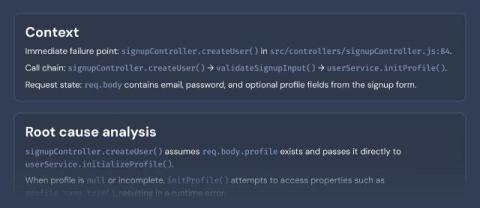
AI automation in ITOps fails because execution loses decision context, and context graphs turn incident history into durable execution memory that systems can actually reuse. AI automation for ITOps fails because it remembers what it did, but not why. Fixing an issue depends on what was tried last time, what failed, what worked, which exceptions were approved, and under what conditions. That information rarely lives in the system.
Sponsored Post

Digital Twins Gone Wild: My Unexpected AI Doppelgänger

I recently tried using AI to create a digital twin of myself. I uploaded a photo, expecting a futuristic, slightly improved version of me... and what did I get in return? A picture of Kim Jong Un. Clearly, AI has a sense of humor-or a very different definition of "twin." Forget Arnold Schwarzenegger and Danny DeVito. Digital Twins 2-Now Starring My AI Doppelgänger From Speedscale's perspective, a digital twin is built from real production traffic, continuously updated, and executable in your test and CI/CD environments.

Announcing the Harness Human-Aware Change Agent | Harness Blog

AI that understands human insight and connects it to the changes that drive real incidents. At Harness, our story has always been about change — helping teams ship faster, deploy safer, and control the blast radius of every modification to production. Deployments, feature flags, pipelines, and governance are all expressions of how organizations evolve their software. Today, the pace of change is accelerating.

AI In 2026: Autonomous, Invisible, Expensive

With all we’ve seen from AI in the last several years, it can be easy to forget that it’s still in its very early days. As torrid as its evolution has been thus far, it will only intensify. As SVP of Engineering at a B2B SaaS company, I’ve had a front-row seat for much of this evolution. Here are three ways I see AI heading in 2026.

How AI amplifies your entire engineering culture

Anyone who has ever attempted to learn the guitar knows the lure of buying high-end gear. Surely, an expensive guitar and a best-in-class amplifier will hide the fact that you only know a few chords and maybe the lead line to that one song you keep hearing on the radio. What most players find out, however, is that spending thousands of dollars on gear doesn't change the fact that you're not that good yet.

How is the next wave of AI impacting the Indian cloud scene?

Gartner has predicted that 2026 will see a 10.6% increase in India’s total IT spend from 2025 (2025: USD 159 billion vs 2026: USD 176.3 billion), with data centres, cloud infrastructure, and AI-enabled technologies driving this growth. This isn’t just a budget increase; it’s a fundamental shift in where innovation happens, who owns the infrastructure, and how we translate AI potential into scalable impact.

Building & Enforcing an AI Policy

Just like "cloud" in years past, the term "AI" has permeated just about every tech space and product. And although AI has plenty of business benefits, there are also plenty of risks in using AI, especially when it comes to sensitive business information. End users may not understand (or care) about the negative impacts of AI, which is where IT comes in. In this stream, you'll learn about how you can build an AI policy that works and how to enforce it so that users actually follow it!

AI SRE Update: Your Feedback Shaped Our Latest Release

A note from Lauren Nagel, Mezmo's VP of Product: At Mezmo, we believe the best observability tools aren't just built for users, they're built with them. Since the launch of Mezmo's AI SRE agent, we've listened and learned from our customers. The feedback and insights have been invaluable in helping our teams refine and enhance the experience. Today, we're excited to share our latest release, packed with improvements and powerful new capabilities that make our AI SRE even faster and more intuitive.

Building AI-Ready Database Operations: A Deep Dive into Maturity and Actionable Habits

Now, we will explore how this foundational strength translates into organizational maturity and lay out the durable operating habits required to bridge the gap between reactive firefighting and strategic performance engineering.