Operations | Monitoring | ITSM | DevOps | Cloud

How to Build an Office Network That Can Handle Business Growth

A video call freezes mid-sentence. Just for a second. Everyone waits, then carries on as if nothing happened. A week later, a new hire cannot get her laptop online in the small meeting room. She tries the next room. It works there. Nobody calls it a network problem. Not yet. It is just one of those things. Then it adds up. Two more people join. Someone plugs a printer into whatever port was free. The guest WiFi quietly starts carrying half the office because the main network keeps dropping. None of this was planned. It drifted.

Observability Never Really Shifted Left

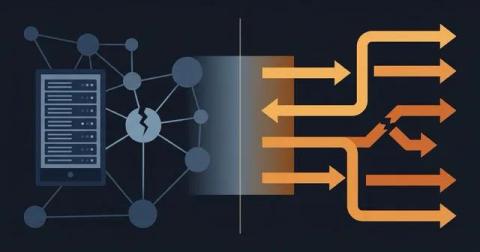
We made software development faster. Now we need to make validation faster, too. For the last decade we have shifted development left. Testing, security, performance, and CI/CD all moved closer to the developer. Observability mostly did not. It still starts after deployment (we covered the incident side of this in Your Observability Stack Found the Fire), which means the people writing the code rarely have meaningful production behavior to observe while they build.
Sponsored Post

Chaos Monkey Won't Find Your Bug

We shipped a chaos feature that never caused any chaos. Our mock server has had a fault-injection effect for years with a straightforward job: withhold the response entirely and see whether the caller copes. Last week I audited it against the actual code path. It had never withheld anything. The handler returned early without writing a response. Go's net/http then did what it is designed to do, which is synthesize a 200 OK and flush the recorded body. Every experiment anybody ever ran with that effect handed the application a perfectly good answer, and every one of them passed.

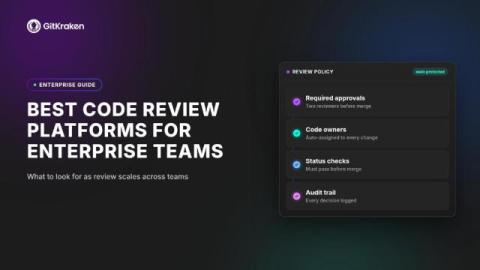
Best Code Review Platforms for Enterprise Teams

If your engineering team operates under compliance constraints, code review is about more than catching bugs. It’s where security policies get enforced, audit trails get documented, and institutional knowledge gets shared. Choosing the right code review platform determines how quickly your developers move from pull request to production. GitKraken gives enterprise development teams a unified DevEx platform that connects code review, pull request management, and collaboration into a single workflow.

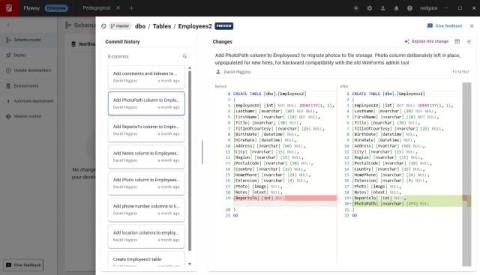
Every change has a story: introducing Object Level History in Flyway Desktop

You open a stored procedure to make what should be a quick fix, and something doesn't add up. There's a filter you don't recognize, or a column that has changed type, or a join that looks like it was added in a hurry. Who changed this? When? And, most importantly, why? We're excited to announce that object level history is now available for Redgate Flyway Enterprise users of Flyway Desktop.

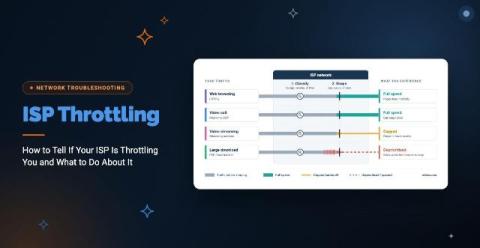
ISP Throttling: How to Tell If Your ISP Is Throttling You and What to Do About It

Your connection is fine in the morning and crawls every afternoon. Or video calls stutter while everything else loads normally. Either pattern could be ISP throttling. It could also be network congestion, or a problem inside your own network. ISP throttling is when your internet service provider intentionally slows your connection based on how much data you use, the type of traffic you send, the time of day, or the plan you’re on. Knowing throttling exists is the easy part. Proving it is harder.

The Heroku Experience for the AI Era

Ask a developer who used Heroku what they remember about it and you'll usually get some version of the same answer: you pushed your code and it ran. That feeling is back in the conversation, mostly because AI tools have made building software faster than its ever been. But speed was only half of the Heroku story. The other half, the part teams ran into a year or two later, matters just as much today.

AI Prompts For IT Asset Management: Ready-to-Use Inventory Questions

AI prompts for IT Asset Management (ITAM) are the questions and instructions IT teams type into an AI assistant to get answers from their asset inventory. They're searched by IT asset managers, technicians and IT leaders whose assistant can already read inventory data and who want ready-made questions that return useful answers about devices, owners, warranties and costs.

Shipped: Drill into your cloud bill up to eight levels deep

Most cost questions have more than one layer. Which team spent the most, which services drove it, and which accounts were behind those services? Previously, following that path meant changing dimensions, adjusting filters, and re-running the query at every step. Multi-dimensional drill-down has been one of the most-requested features in Explorer. The team shipped two-level group-by earlier this year, collected feedback, and kept going. Now the path goes eight levels deep.