Operations | Monitoring | ITSM | DevOps | Cloud

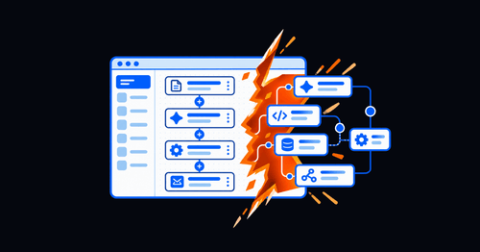
What Happens When You Outgrow a No-Code AI Agent Builder?

A no-code AI agent builder can get a defined agent into production quickly. The risk appears when added branches, exceptions, integrations, and controls exceed the visual canvas. Organizations should look for a platform that lets teams extend individual steps with reusable code without rebuilding the agent or abandoning its governance.

Build better SLOs with RUM and synthetic SLIs

Well-designed service level objectives (SLOs) help you track the benchmarks your app needs to meet to deliver a successful user experience (UX). To track performance against these SLOs, many SRE teams are turning to real user monitoring (RUM) and synthetic monitoring for their service level indicators (SLIs), as these forms of data provide more direct measurements of UX than backend performance metrics.

We used our own product to cut our AI tooling bill without cutting AI usage

The problem: our AI spend was growing faster than our understanding of its ROI. Like most engineering organizations, Harness went from "a few people are trying out AI coding tools" to "AI tooling is a line item in the monthly finance review" in a matter of months. The cost itself wasn't really the problem.

Telemetry Cost Management: Routing, Tiering, and Governance Without Blind Spots

TL;DR Cutting telemetry volume is only half of cost management. The other half is sending each signal to the right destination and storage tier, adjusting policies as traffic and incidents change, and rolling out every change in phases that teams can measure and reverse.

Certificate Lifecycle Management: How to Track, Monitor And Renew Digital Certificates

Certificate Lifecycle Management (CLM) is the process of tracking every digital certificate an organization uses, from the moment it is requested to the day it is retired. IT, infrastructure and security teams look into Certificate Lifecycle Management when they need to stop certificates from expiring unnoticed, keep up with shorter certificate lifetimes and know who answers for each one.

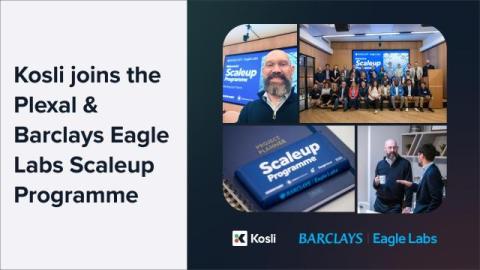
Kosli joins the Plexal & Barclays Eagle Labs Scaleup Programme

Kosli has been selected for the fourth edition of the Scaleup Programme run by Plexal and Barclays Eagle Labs. Following a competitive application process, we’re one of 25 high-growth UK technology companies chosen to take part. The programme is built for companies where growth for scaleups starts to present new challenges, with particular focus on scaling commercial performance, customer expansion, funding, and capital planning.

Enterprise AI ROI: proving returns at scale

Enterprise AI ROI is the return on AI investment measured across a portfolio: dozens of initiatives, multiple business units, shared platforms, and one board asking for the total. It fails differently than single-project ROI, usually because baselines and unit costs were never established, and it's proven with per-initiative denominators rolled into portfolio-level reporting.

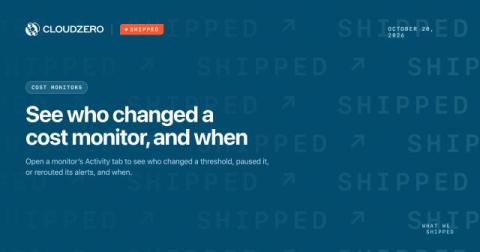
Shipped: See who changed a cost monitor, and when

A cost monitor is only useful if people trust its settings. When a threshold moves or a monitor goes quiet, the team needs to know who made the change and when. Every monitor in CloudZero keeps that record. You can check it yourself in a few seconds, confirm a change was intended, and put a setting back if it wasn’t.

ChatGPT Enterprise pricing in 2026: seat costs, minimums, and the new token rate card

ChatGPT Enterprise has no public list price. Reported 2026 contracts average about $60 per user per month within a $45 to $75 range, with 150-seat minimums and annual prepayment, putting the floor near $108,000 a year. Newer eligible agreements add usage-based billing under OpenAI's published token rate card.

Cloud Monitoring and Incident Response: A Guide to AWS, Azure, and Google Cloud

Effective cloud monitoring and incident response starts with understanding service health, collecting useful diagnostic data, and establishing a clear process for investigating and resolving problems. Whether you use AWS, Azure, Google Cloud, or several providers, the goal is to understand how your systems are performing and take action when reliability is at risk. A dashboard showing healthy virtual machines does not necessarily mean customers can complete a transaction.