Operations | Monitoring | ITSM | DevOps | Cloud

The latest News and Information on Containers, Kubernetes, Docker and related technologies.

Introducing Rancher Academy

Today we launched the Rancher Academy, our new free training portal. The first course is Certified Rancher Operator: Level 1, and in it you’ll learn exactly how to deploy Rancher and use it to deploy and manage Kubernetes clusters. This professional certification program is designed to help Kubernetes practitioners demonstrate their knowledge and competence with Kubernetes and Rancher – and to advance in their careers.
Network Security for D2iQ Konvoy

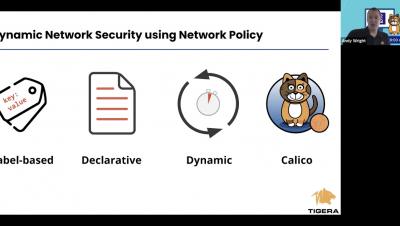
By default, pods are non-isolated; they accept traffic from any source. The D2iQ Konvoy solution to this security concern is Network Security Policy that lets developers control network access to their services. D2iQ Konvoy comes preconfigured with Network Security Policy using Project Calico which can be used to secure your clusters. This class will describe a few use cases for network policy and a live demo implementing each use case.

How to Import Kubernetes Labels as Tags | Datadog Tips & Tricks

In this video, you’ll learn how to turn Kubernetes node labels and pod labels into tags in Datadog in order to correlate metrics, traces, and logs back to Kubernetes deployments. Using labels for Kubernetes objects—such as pods or nodes—is key to organizing and making sense of your deployments. Datadog can automatically bring your Kubernetes labels from your clusters into the Datadog platform as tags, regardless of whether you’re using on-prem Kubernetes or a cloud-based service such as AKS, EKS, or GKE.

Welcome to the Rancher Academy!

Today we're launching the inaugural course of the new Rancher Academy: Certified Rancher Operator: Level 1. In this course you'll learn and demonstrate the skills to install Rancher, install downstream Kubernetes clusters, and interact with them from the perspective of a user and an operator. The course ends with a final assessment, and when you pass, you'll receive a certificate from Rancher Labs that will help you advance your career.

Introduction to Machine Learning Pipelines with Kubeflow

For teams that deal with machine learning (ML), there comes a point in time where training a model on a single machine becomes untenable. This is often followed by the sudden realization that there is more to machine learning than simply model training. There are a myriad of activities that have to happen before, during and after model training. This is especially true for teams that want to productionize their ML models.

Everything You Need to Know About Buildah

Buildah is a tool for building OCI-compatible images through a lower-level coreutils interface. Similar to Podman, Buildah doesn't depend on a daemon such as Docker or CRI-O, and it doesn't require root privileges. Buildah provides a command-line tool that replicates all the commands found in a Dockerfile. This allows you to issue Buildah commands from a scripting language such as Bash.

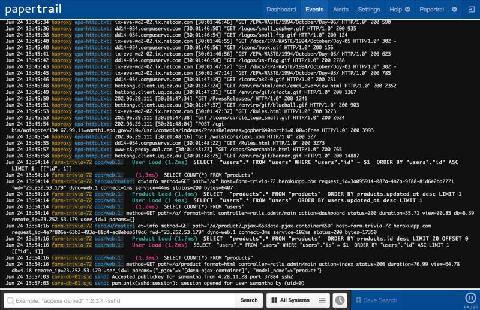
5 Reasons Why You Should Invest in a Docker Logging Tool

Today, continuous development and continuous delivery have become the de facto mode of application development for businesses seeking higher agility. With the continuous push to achieve higher efficiency and reliability in running software operations, container technologies like Docker, Kubernetes, and Mesos have become mainstream. Among these technologies, Docker is the most popular.

A Blueprint for Running Stateful Services on Kubernetes

Managing stateful applications has been challenging for engineering and operations teams long before the debut of Kubernetes. In this post, we’ll explore all aspects of your deployments of stateful applications on Kubernetes, from the underlying hardware to Pod update strategies, and provide insights into how LogDNA uses stateful Kubernetes to build one of the world’s fastest log management platforms.