Operations | Monitoring | ITSM | DevOps | Cloud

A Comprehensive Guide to Migrating from Python 2 (Legacy Python) to Python 3

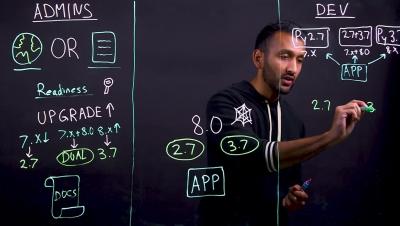
Python powers many applications we use in our day-to-day like Reddit, Instagram, Dropbox, and Spotify. The adoption of Python 3 has been a subject of debate in the Python community. While Python 3 has been out for more than a decade now, there wasn’t much incentive to migrate from the stable Python 2.7 in the earlier releases. If you’re still running on legacy python, it’s high time to migrate as it has reached the end of its life since Jan 2020.

Papertrail + Python Logging = Super Powers

Design applications to be modular. It’s a software design best practice. Modular programming is writing multiple independent programs that perform a single function but work together to achieve an overarching outcome. The benefit to this design is the smaller parts can be easily created and tested. New functionality can be slipped into the larger whole without interfering with other functions.

Quantitative Finance with Splunk: 'Who Correlated My Asset'

Over the past 24 months or so, I have been studying investing/trading while also working to become more proficient with Splunk. I like to combine activities and gain momentum, so I decided stock market and economic data would be the perfect way to dig deeper into Splunk and hopefully improve my investing/trading. In the beginning, I only looked at it as a way to learn more about Splunk while using data that was interesting to me.

Instrumenting Lambda with Traces: A Complete Example in Python

We’re big fans of AWS Lambda at Honeycomb. As you may have read, we recently made some major improvements to our storage engine by leveraging Lambda to process more data in less time. Making a change to a complex system like our storage engine is daunting, but can be made less so with good instrumentation and tracing. For this project, that meant getting instrumentation out of Lambda and into Honeycomb.

Introducing Datadog Agent 7 with Python 3 support

We’re excited to release version 7 of the Datadog Agent. It has all of the same functionality as Agent 6, but it is the first version to ship with only the Python 3 runtime. With Python 2 reaching its end of life on January 1, 2020, migrating your services to Python 3 will ensure that they continue working as expected. We’ve tested all of our more than 350 integrations to ensure they work with Python 3.

An Introduction to Python 3.7 Data Classes

Sometimes it’s fun to just nerd out for a moment. Python is one of the most popular scripting languages today and we love it too. That’s one reason why LogicMonitor can execute any script or programming language supported by your environment. That means can enjoy the latest features of your favorite languages in your favorite monitoring tool (right?). If Python is your vice, give Python 3.7’s Data Classes a try!

20 Simple Python Performance Tuning Tips

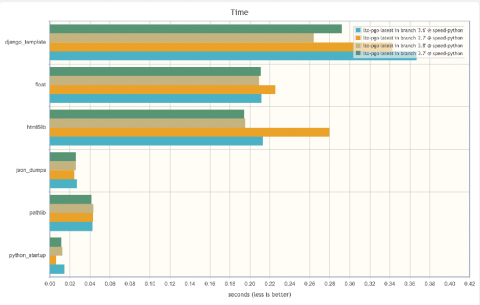
Python is a powerful and versatile higher-order programming language. Whether you’re developing a web application or working with machine learning, this language has you covered. Python does well at optimizing developer productivity. You can quickly create a program that solves a business problem or fills a practical need. However, the solutions you reach when developing quickly aren’t always optimized for python performance.

An Introduction to Python List Comprehensions

Python list comprehensions offer a concise method of interacting with each element of a list. Even though they’ve been available since Python 2.0, their syntax often demotivates people from using them. This article aims to introduce List Comprehensions in a friendly way and offer you one more Python feature to add to your scripting toolbox.