Operations | Monitoring | ITSM | DevOps | Cloud

PagerDuty Report Finds Two-Thirds (66%) of Office Professionals Have Used Unauthorized AI Tools at Work

Three-quarters of office professionals (75%) say they would be likely to look for a new job that offered better AI skills development, a figure that climbs to 80% at companies with $1 billion or more in revenue.


How Skylar MCP Gives Agentic Workflows the Operational Context to Act With Confidence

AI models can reason over language, summarize findings, and explain patterns. What they cannot do on their own is see the real-time operational state of your environment. Ask a model about a critical incident and it will answer from whatever context it is given, which means the answer is only as trustworthy as the input. In operations and compliance workflows, an answer is only useful if it is grounded in current service context and governed access to the systems that define reality.

Shadow AI Is Happening Within Your Organization

A majority of office professionals (72%) believe they understand how to use AI for their job better than the team responsible for managing AI at their company. While it’s encouraging to see employees embrace AI with such confidence, organizations will want to ensure they are providing the tools, guidance, and safeguards needed to help employees use AI safely.

AI at the edge: simplifying infrastructure with Cisco and Canonical

Legacy infrastructure was not designed for the requirements of the AI era. While large-scale model training remains centralized in data centers, test-time inference is rapidly shifting to the edge to reduce latency and bandwidth consumption. This shift creates a new frontier for enterprise AI, but deploying at the edge introduces significant manual complexity, interoperability issues, and security vulnerabilities.

How Agentic AI is Transforming Infrastructure and Operations

Infrastructure and Operations (I&O) teams have long operated under a familiar paradox: the faster the business scales, the more pressure I&O absorbs. Every new application deployment, every endpoint added, and every cloud workload spun up generates more complexity, more risk and more tickets. The traditional responses to this pressure — more headcount, more tooling, more scripts, more APIs — have delivered incremental relief at best.

Introducing the Rootly Agent

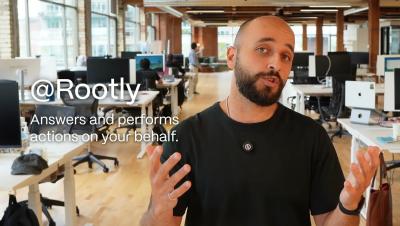
During an incident, ask the Rootly Agent anything and it'll respond (and act) based on context and your data. Use the Rootly Agent to: The Rootly Agent performs actions on your behalf, so it is bound by the permissions assigned to your user. It will also ask for confirmation before taking significant actions. Rootly admins can turn it on for their workplaces and start running incidents even more efficiently.

Atlassian's HR team leads AI transformation

AI transformation doesn’t succeed without people at the center. At Atlassian, HR is leading the way. Our People team believes that the best AI culture isn’t mandated from the top. It’s built by meeting employees where they are, partnering with leaders across the business, and making AI part of how work gets done from day one. See how Atlassian’s HR team is building a culture of experimentation where everyone builds, and what that looks like in practice.

AI Made Infrastructure Weird Again | Ubuntu Summit 26.04

For years, we were told we were escaping hardware. Virtualization, containers, and Kubernetes made the underlying servers practically invisible to the average application developer. Then came the AI boom and infrastructure got incredibly weird again. In this fast-paced lightning talk, Billy Olson from Canonical breaks down why the modern AI server is no longer just a machine, but a volatile distributed system packed inside a single chassis.

Tokenmaxxing: The AI Productivity Lie

Your best engineer spent 500,000 tokens last week. Nothing shipped. There's a name for it now: tokenmaxxing. Failed prompts, dead PRs, code that never reaches production — it looks like productivity, but it isn't. Most engineering leaders can't tell you what percentage of AI-generated code actually ships, or where the budget went. You should be able to say "that bug cost me $2,700 in tokens to fix.".