Operations | Monitoring | ITSM | DevOps | Cloud

Kubernetes GPU Scheduling for MLOps and GPU Sharing

The default Kubernetes scheduler was built for stateless services: web servers, APIs, databases. It schedules a pod, checks that a node has enough of whatever resources were requested, and binds it. For CPU and memory, that model works fine. For GPUs, it falls apart in three specific ways. First, GPUs are treated as an opaque integer resource.
AI Provider Outages: An On Call Playbook

On the morning of August 5, 2026, a major AI provider went dark for roughly seven and a half hours, and thousands of engineering teams learned in real time what an AI provider outage actually costs them. Anthropic's Claude models returned elevated error rates and failed API requests starting around 3:00 AM Eastern, and applications that quietly route user traffic through a large language model suddenly had no model to route to. Chatbots stopped answering. Summarization pipelines stalled.

GPU Cloud for non-AI workloads: Rendering, simulation, and scientific computing

The GPU cloud conversation over the last three years has been almost entirely captured by AI. Marketing pages talk about training, inference, and foundation models. Vendor announcements focus on which NVIDIA card fits which LLM. Reference customers are AI companies. The infrastructure decisions being made in the market are shaped by AI's specific requirements - high VRAM, fast interconnect, FP8 support, continuous utilization patterns.

Claude Code + Harness | Software Delivery for the Agent Era

Claude Code changes how fast software gets written. Harness changes whether you can trust what shipped. In this video, watch how autonomous AI agents handle end-to-end bug fixing, security remediation, and deployment verification—all within an automated Harness pipeline. From reading a ticket to running canary deployments and self-healing broken manifests, see how engineering teams can deliver software faster without sacrificing quality or security.

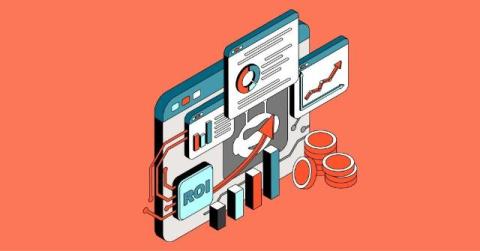
Generative AI ROI: benchmarks and how to prove it

Generative AI ROI measures the financial return on generative AI investments relative to their total cost. Benchmarks diverge sharply: Google Cloud's 2025 study found 74% of enterprises see ROI within the first year, while MIT's NANDA initiative found 95% of pilots deliver no measurable P&L impact. The difference is not the AI. It is whether the organization can actually measure cost and outcome at the use case level.

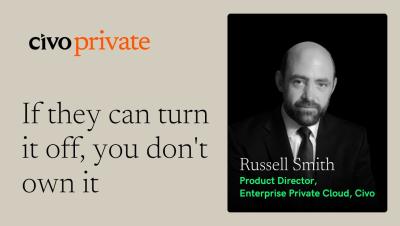
If they can turn it off, you don't own it - The AI kill switch problem

If someone else can turn it off, you don't own it. And most organisations haven't fully reckoned with what that means for their AI strategy. Civo Product Director Russ Smith draws a direct line from the Broadcom/VMware licensing shock to the Anthropic model restrictions, two different industries, same structural problem. When a vendor can change the rules overnight, businesses that built their strategy around that vendor are left with uncertainty and no clear next step.

AI isn't a black box. It's Pandora's Box.

When CFOs talk about AI budgets, they tend to describe it the same way: it’s a black box, offering little or no transparency. The bill arrives at the end of the month, it’s bigger than last month, and nobody can really explain why. Meanwhile, engineering keeps asking to raise the token budget. I think that framing undersells what’s actually happening out there. If the black box is the bill, the Pandora’s box is what you opened when you brought AI into the company.

Upgrade headaches? Extended Agent Support gives you breathing room #sysadmin #security #devops

The RHEL 7 agent deadline is here. Are you covered? Puppet Agent support for RHEL 7 is expiring soon—here is how to keep your systems secure. With RHEL 7 EOL approaching in August 2026, upgrading business-critical systems can be a massive headache. This overview explains how Puppet Extended Agent Support provides continued coverage for your legacy environments. Subscribe for more infrastructure management tips and leave a comment if you are planning a migration.

How to Build and Scale Unified Asset Intelligence for AI Success

Every IT leader has felt this tension: your organization has invested in AI, automation and digital operations, and yet outcomes still fall short of expectations. Even with the right tools and intent, you won’t be able to fully realize the value of your AI investments if they’re built on an unsteady foundation.