Operations | Monitoring | ITSM | DevOps | Cloud

The latest News and Information on DevOps, CI/CD, Automation and related technologies.
Scaling Your App

Every application starts the same way: One server. One database. One optimistic engineer saying: “We’ll scale later.” And honestly? That’s usually the right call. Premature scaling is how perfectly normal applications end up with: But eventually, growth happens. Traffic increases. Queries slow down. Deployments get riskier. Your infrastructure starts making unfamiliar noises. This is where scaling enters the picture. Not scaling for conference talks.

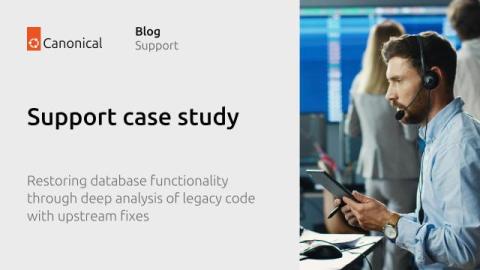
How Canonical Support solves hard Linux performance bugs - even in 12-year old code

Some support cases are straightforward. Others lead deep into legacy code, where a single logic bug can quietly turn a routine command into a major performance problem. This series looks at how Canonical Support and Sustaining Engineering work together to investigate, patch, and upstream difficult issues that standard troubleshooting alone cannot solve.

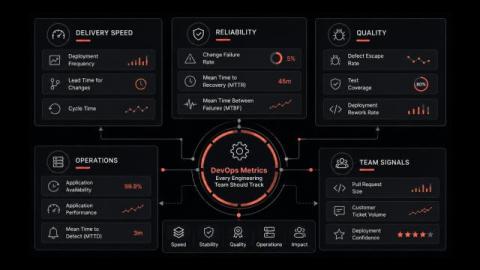
15 DevOps Metrics Every Engineering Team Should Track in 2026

Software moves from code to production more quickly today, but it is still difficult to tell whether delivery is actually improving or just becoming more active. Most teams rely on dashboards filled with metrics like deployments, uptime, failures, and tickets. The numbers are available, but the meaning behind them is often unclear. DevOps metrics become useful only when grouped into clear categories: DORA metrics cover only delivery speed and stability, which is just part of the picture.

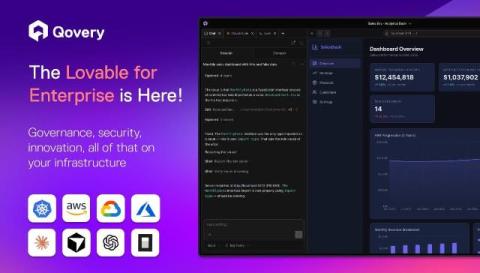
The Lovable Experience. Enterprise Governance. Your Infrastructure. We Built It.

Introducing the AI Builder Portal - the governed alternative to Lovable and Bolt.new for enterprise. Same one-click builder experience, running on your Kubernetes cluster, under your governance. Romaric founded Qovery to make Kubernetes accessible to every engineering team. He writes about platform strategy, developer experience, and the future of cloud infrastructure.

Understanding GPU cloud instance types: How to read a spec sheet for real-world ML performance

A GPU spec sheet is a confidence trick. It looks like an objective document - numbers, units, comparable rows - but most of the numbers on it don't map cleanly to the performance a real workload will see. Teams that pick GPUs by reading the headline figures usually find out the gap between spec and reality somewhere around the first production run. This is a working guide to reading GPU cloud instance specifications against actual ML workloads. The goal isn't to recommend a card.

High Cardinality Metrics At Scale: A Better Playbook

The “high cardinality is expensive” sentence has become observability’s version of “in this economy” — said so often that nobody questions whether it’s true. Every vendor pricing page invokes it. Every glossary article repeats it. Every architecture diagram shows aggregation buffers placed before the storage layer.

Konstruct product updates: Global resources, MCP support, and smarter permissions

May has been one of our busiest months yet for Konstruct. Across three releases, 0.5, 0.5.1, and 0.5.2, we've shipped some of the most requested platform-level changes since we launched: a unified model for sharing resources across organizations, native support for AI-driven workflows via MCP, a completely redesigned API keys experience, and a cleanup to how permissions actually work in multi-org environments. Let's walk through what shipped and why it matters.

Uber blew its annual AI budget in 4 months

Uber burned through its entire annual AI budget in under 4 months. Here's what went wrong — and what every engineering org should be doing instead. The data: 80% more code is getting pushed with AI… but only 18% of AI-written code actually ships to production. That's not a productivity story. That's a spend problem. If you're scaling AI tooling without real-time monitoring and guardrails, you're Uber.