Operations | Monitoring | ITSM | DevOps | Cloud

Introducing Agent Studio and Autonomous Agents in InvGate Service Management

When AI knows how to resolve a ticket, teams still need a way to decide how much it can do on its own. Today, that often means choosing between keeping a human in charge of every action or giving the AI broad autonomy. There’s no practical middle ground, so teams get stuck wherever they started, usually the most conservative setting. Even when AI already knows the right answer, the ticket still ends up in a human’s queue.
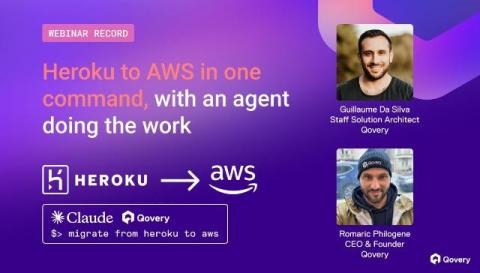
Heroku to AWS in One Command, With an Agent Doing the Work (Webinar Replay)

Replay and recap of our live session: an AI agent reads a Heroku Rails app and deploys the full stack to AWS through Qovery from one prompt. Chapters, timestamps, the four ways teams leave Heroku, and the steps a human should still own. Romaric founded Qovery to make Kubernetes accessible to every engineering team. He writes about platform strategy, developer experience, and the future of cloud infrastructure.

How Implementing Produce ERP Software Transforms Inventory Management

Agencies operating within the Technology, Business, and Economy sectors face a myriad of challenges when it comes to managing inventory effectively. The complex nature of inventory management requires precision, timeliness, and the ability to adapt quickly to changing demands. Implementing Produce Erp Software offers a pivotal solution, transforming how agencies approach inventory management by providing real-time tracking, streamlining supply chains, optimizing demand forecasts, and boosting operational efficiency.

Connecting Reservations and Guest Communication: Why System Integration Matters

Restaurants lose valuable service time when reservation records and guest conversations sit in separate systems. Staff members repeat questions, miss updates, and spend busy periods checking availability instead of serving arriving guests. Integration connects these tasks, giving each interaction a current booking record and a clear follow-up path. The result is faster communication, fewer avoidable errors, and better visibility for managers. The operational difference becomes clearest during booking, changes, and high-volume service.

$4.48 a Gallon: Your Holiday Checkout Is the New Mall

Remember when “going shopping” meant getting in the car? This fall, filling the tank feels like applying for a small loan. U.S. regular gasoline averaged about $4.48 a gallon for the week of September 21, 2026. A round trip to the store starts competing with free shipping. And free shipping never needs a parking spot. That doesn’t tell us how many shoppers will move online this holiday season.

Best Kubernetes monitoring tools compared in 2026: A buyer's guide for SRE, platform engineering, and ITOps teams

Monitoring Kubernetes in production is structurally different from monitoring traditional servers: pods are ephemeral, nodes autoscale, and the layered resource model—containers, pods, nodes, namespaces, deployments, services—creates an observability challenge that tools built for static infrastructure were never designed to handle.
Sponsored Post

How to cut AI infrastructure spending without reducing GPU capacity

Every infrastructure leader running AI workloads is staring at the same problem: GPU spending keeps climbing, the finance team wants a justification, and the operations team is caught between proving the infrastructure is necessary and explaining why the returns aren't keeping pace with the investment. The instinctive response is to either procure more capacity to handle growing demand or cut back on what's already deployed. Neither actually solves the problem.

Test PostgreSQL With the Queries Your App Actually Runs

The first number from my local PostgreSQL 16 test was roughly 1,600 statements per second. It looked impressive. It was also the least useful result in the run. The useful part was the workload. It came from queries the demo app had actually sent: the same prepared statements, parameters, reads and writes. A synthetic benchmark tells you how PostgreSQL handles a synthetic workload. It does not tell you whether your migration just broke the UPDATE your app depends on.

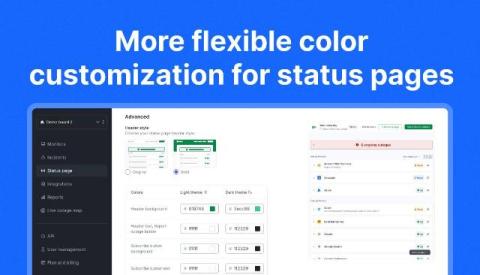
More flexible color customization for status pages

We’ve expanded status page color customization to give you more control over your branding and support a wider range of color combinations. Previously, you could select one primary color and one text color for each theme. These colors were applied across multiple elements, which could make it difficult to achieve the right contrast or match certain brand styles. Now, you can customize individual parts of your status page separately for both light and dark themes.

Why Manual SAP Patch Validation Fails

Validating SAP patches means answering three questions before anything reaches production: does this apply to my systems, what does it depend on, and what breaks if it goes wrong? For most SAP teams, the answer still comes from manual work. Someone reads the note, checks a component version by hand, updates a spreadsheet, and trusts memory for the rest. That can work, but it depends on one person’s head, or on a spreadsheet that slowly goes stale. The failure mode is usually not a bad patch.

AlmaIQ in practice: when AI solves productivity problems in minutes

In a market where new tools and technologies are constantly emerging, it is easy to get carried away by features. The real differentiator, however, lies in the impact a solution has on operations. That is what stands out most about Almaden’s solutions. More than a Digital Employee Experience (DEX) platform, it turns data into decisions. It enables IT teams to anticipate problems, act proactively, and improve the user experience.