The latest News and Information on Cloud monitoring, security and related technologies.
Is monitoring in the cloud special enough to warrant a list of tips and best practices? We think so. On the one hand, monitoring in the cloud might seem easy since there is a large number of solutions to choose from. On the other hand, though, the dynamic and distributed nature of the cloud can make the process much more challenging. In this article, we’ll cover ten tips and best practices that will help you ace your cloud monitoring game.
Site reliability engineers (SREs) are the glue between “Dev” and “Ops,” ensuring that software engineering expertise is applied to operations challenges. SREs naturally focus on making systems more reliable, efficient, and scalable. If you’re an SRE yourself, you’re already deeply familiar with these ideas.
Does your team use Azure DevOps for tracking work? You’re going to love our latest integration if that’s the case. You can now create and resolve Work Items in Azure DevOps directly from Rollbar, making error monitoring and debugging even faster. This is the latest addition to our toolkit for the Microsoft ecosystem (read about our Azure Active Directory integration). It reinforces our mission to help software developers build software quickly and painlessly.
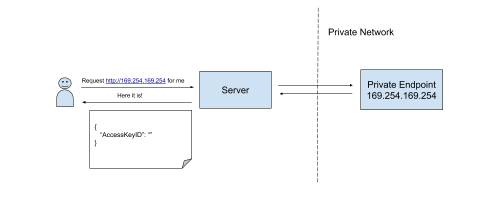
The recent disclosure of yet another cloud security misconfiguration leading to the loss of sensitive personal information made the headlines this past week. This particular incident came with a bit more information from the indictment of the accused party, allowing us to piece together the revealed data and take an educated guess as to what may have transpired leading up to the loss of over 100 million credit card applications and 100 thousand social security numbers.
If you ever need to duplicate or clone your Azure VMs or perhaps even migrate your Azure VMs from Azure Service Manager (ASM) to Azure Resource Manager (ARM) you can use one of our Azure Management Tools, Azure VM Cloner (AVMC) to quickly and easily do this for you.
I’ve heard many conversations about the limitations of “serverless technology” ever since the concept was widely known. They often focus on how specific implementations of serverless are limited by certain aspects that the user doesn’t have control of. This seems odd to me because serverless isn’t a technology.
Many articles have been written about AWS Step Functions since it was first introduced in 2016. Most of them create the impression that the service is simply an extension of the Lambda function that allows us to stitch together multiple Lambda functions to call each other. But actually, it is much more than that. Step Functions allows us to design and build the flow of execution of modules in our application in a simplified manner.