Operations | Monitoring | ITSM | DevOps | Cloud

Introducing the Sentry Trace Explorer

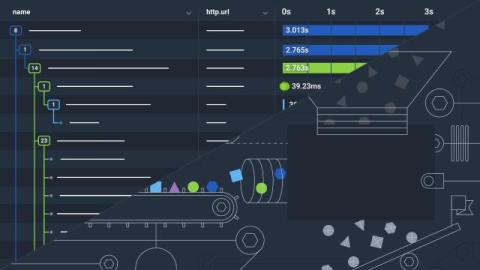
The Trace Explorer is a new way to query and visualize the application metrics from the traces and spans within your applications. In this video, Cody from the Sentry Developer Experience team shows you how you can get started using it. Want to dive in and find your slow database queries, or what pages or components are loading the slowest? Trace Explorer is the best way to do it - and gives you an easy path to jumping into the spans that make up all actions within your application.

OpenMetrics vs OpenTelemetry: A Detailed Comparison

When it comes to monitoring and observability, two of the most discussed standards are OpenMetrics and OpenTelemetry. While both are designed to collect and transmit metrics, they have distinct goals, use cases, and communities driving their development. In this guide, we'll break down what each of these projects is, how they compare, and how they fit into your monitoring stack.

An Easy Guide to OpenTelemetry Environment Variables

When working with OpenTelemetry, environment variables play a crucial role in configuring and customizing your setup. These variables provide a flexible and convenient way to adjust settings without needing to change code, allowing you to fine-tune your OpenTelemetry installation across different environments.

OpenTelemetry Collector with Docker: A Detailed Guide

Monitoring and observability have become the backbone of reliable software systems. OpenTelemetry, a CNCF project, has gained immense traction as the go-to framework for collecting and exporting telemetry data. But what makes it even more powerful is its Collector—a vendor-agnostic tool that simplifies data processing. Combine that with Docker, and you’ve got a robust, portable, and scalable observability solution.

DX Operational Observability: Onboarding OpenTelemetry in Minutes

In our era of cloud-native applications, robust observability is critical to maintain performance, identify issues, and enhance user experiences. With its advanced capabilities, DX Operational Observability (DX O2) integrates seamlessly with OpenTelemetry, a leading open-source observability framework. In this blog, we explore how to onboard the OpenTelemetry Demo Application to DX O2. The demo application provides a hands-on introduction to combining these powerful tools.

OpenTelemetry Profiling: A Look into Performance Insights

In software development, making sure your apps perform well is key. Performance issues, hidden delays, and wasted resources can quickly hurt user experience and increase costs. That’s where OpenTelemetry profiling steps in to help. In this blog, we’ll break down what OpenTelemetry profiling is, why it’s important, and how you can use it to optimize your applications.

Getting Started with the OpenTelemetry Helm Chart in K8s

Managing observability in cloud-native environments can feel like juggling a thousand things at once. OpenTelemetry makes this easier by becoming a favorite among developers for collecting, processing, and exporting telemetry data without breaking a sweat. Now, let’s talk about the OpenTelemetry Helm Chart. It’s like having a shortcut button for deploying OpenTelemetry in Kubernetes.

Fast-Track Kubernetes Observability with Logz.io and OpenTelemetry: A quick getting started guide

In formal terms, OpenTelemetry is an open source framework used for instrumenting, generating, collecting, and exporting telemetry data for applications, services, and infrastructure. It provides vendor-neutral tools, SDKs and APIs for generating, collecting, and exporting telemetry data such as traces, metrics, and logs to any observability backend, including both open source and commercial tools.

How to monitor your Rust applications with OpenTelemetry

Rust’s strong memory safety and efficient code execution make it a top choice for building robust, high-performance systems. But even with its powerful guarantees around memory management and thread safety, Rust applications in production environments can still face challenges such as latency spikes, resource contention, and unexpected bottlenecks. For this reason, monitoring Rust applications is essential to ensure they meet performance expectations and remain reliable under load.

Everything You Should Know About OpenTelemetry Collector Contrib

Observability isn’t just a nice-to-have—it’s essential. OpenTelemetry steps in as a unified framework that helps you collect, process, and export telemetry data across distributed systems. The OpenTelemetry Collector Contrib extends this framework, offering extra components that make it even more powerful and flexible, helping developers and operators monitor and optimize systems with ease.

Demystifying the OpenTelemetry Operator: Observing Kubernetes applications without writing code

The promise of observing your application without writing code (i.e., auto-instrumentation) is not new, and it’s extremely compelling: run a single command in your cluster and suddenly application telemetry starts arriving at your observability backend. What else could you ask for? The OpenTelemetry Operator aims to fulfill such a dream for Kubernetes environments by using a set of well known patterns such as operators and custom resources.

Top 6 Open-Source Jaeger Alternatives [comparison 2025]

Jaeger, a renowned distributed tracing system, has been a trusted companion for developers and operations teams seeking to unravel the complexities of microservices architectures. However, as the landscape continues to evolve, the time has come to explore Jaeger alternatives that offer distinct features and advantages.

Golang Monitoring using OpenTelemetry

When it comes to monitoring Golang applications, there are various tools and practices you can use to gain insights into your application's performance, resource usage, and potential issues. By using OpenTelemetry for monitoring in your Go applications, you can gain valuable insights into the behavior, performance, and resource utilization of your distributed systems, allowing you to troubleshoot issues, optimize performance, and improve the overall reliability of your software.

Take control of your OpenTelemetry Collectors with Otel Remote Management

Managing OpenTelemetry (OTel) collectors across diverse, cloud-native environments is key to streamlining monitoring and gathering valuable insights. But, managing them effectively, especially across multiple servers, has been a manual and time-consuming process. That changes today. Sumo Logic’s Otel Remote Management is designed to simplify OpenTelemetry Collector management, all from a single unified user interface.

OpenTelemetry and Grafana Labs: what's new and what's next in 2025

As the new year rolls in, it’s a great time to reflect and think big. What were some of your notable achievements in 2024, and what are your goals for 2025? We often do this in our personal lives — but why not apply this same line of thinking to observability, as well?

Monitoring Windows Servers With the OpenTelemetry Collector

This post was written by Martin Thwaites and Vivian Lobo. The OpenTelemetry Collector is an exceptional solution for proxying and enhancing telemetry, but it’s also great for generating telemetry from machines too. In this post, we’ll go through a basic, opinionated setup of using the OpenTelemetry Collector to extract metrics and logs from a Windows server.

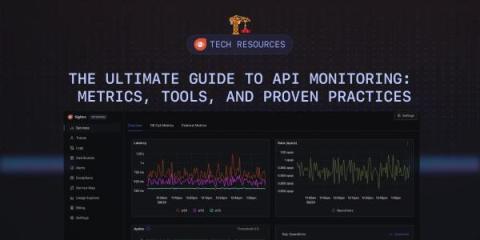
The Ultimate Guide to API Monitoring in 2025 - Metrics, Tools, and Proven Practices

According to Akamai, 83% of web traffic is through APIs. Microservices, servers, and clients constantly communicate to exchange information. Even the Google search you made to reach this article involved your browser client calling Google APIs. Given APIs govern the internet, businesses rely on them heavily. API health is directly proportional to business prosperity. This article covers everything about API monitoring, so your API infrastructure’s health is always in check .

Top 6 Distributed Tracing Tools in 2025

Distributed tracing is the functionality to trace requests or messages flowing through different systems or environments like frontend, Backend, middleware. Distributed tracing brings connectivity or visibility of various services using a unique identifier. This identifier is passed to different services to correlate them as a single flow. We track data from different services with distributed tracing, but how do we visualize them? Visualization is a tedious task.