Operations | Monitoring | ITSM | DevOps | Cloud

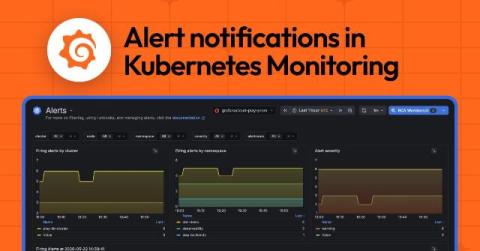
The inside scoop on alerting changes in Kubernetes Monitoring

Kubernetes Monitoring in Grafana Cloud comes out of the box with preconfigured alert rules that notify you about issues like CPU throttling, crash-looping pods, and nodes going offline. These rules are installed automatically when you set up the app, and they start evaluating immediately. But if you've recently reinstalled the Kubernetes Monitoring app and your alert notifications stopped arriving, or started looking different, you're not alone.

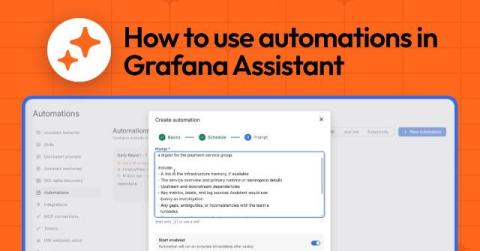
Spend less time on repetitive tasks with the new automation feature in Grafana Assistant

The ability to schedule regular tasks, such as cron jobs, has been around for decades. So why are we still running the same AI prompts by hand every day? As you use Grafana Assistant, our AI-powered observability agent, to stay on top of the state of your system, you likely find yourself asking the same questions. Maybe you want to know what changed overnight, or whether yesterday's deployment hurt latency, or which dashboards or skills are drifting out of date.

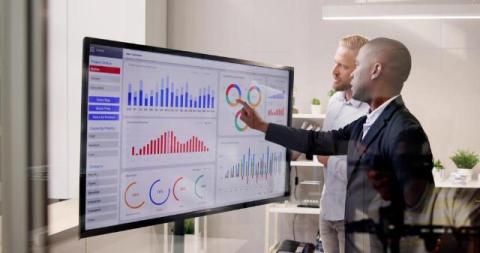
Why Clean Dashboards Improve Reporting and Decision-Making

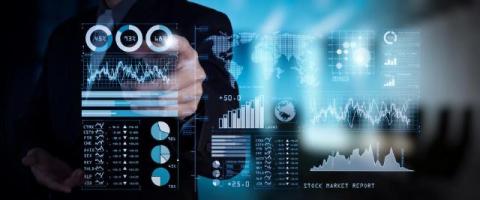
Reporting affects how leaders judge performance, catch strain points, and set priorities. Yet many teams still work from crowded views, disconnected files, and stale exports. That arrangement slows review, invites doubt, and weakens confidence in every figure shown on screen. Clean dashboards correct that problem by presenting important measures in a clear order, limiting visual clutter, and making changes easier to spot. Better reporting, in turn, supports steadier choices across finance, sales, operations, and service.

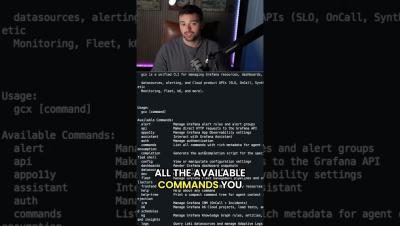
Getting Started with gcx: A CLI for AI Agents and Grafana Telemetry | Demo

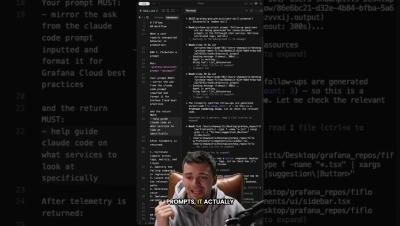
AI agents are only as useful as the context they can access. With gcx, your coding agents can connect to Grafana and query real-time production telemetry from your Cloud, Enterprise, or OSS environment. The best part: it avoids the upfront context bloat that can come with loading tools before you even send a prompt. gcx uses a CLI approach, so there’s zero token cost until your agent actually needs to run a query.

Lessons From a CI/CD Supply Chain Attack at Grafana Labs

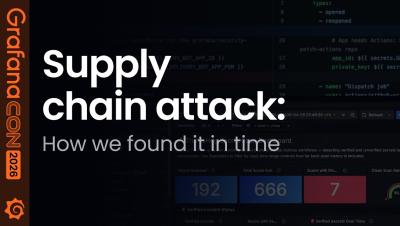
When a compromised GitHub Actions workflow targets your CI/CD pipeline, how do you respond — and what do you change so it never happens again? Nick and David from Grafana Security walk through a real supply chain incident triggered by a pull_request_target misconfiguration, showing exactly what broke, what tools caught it, and what the team rebuilt afterward.

Preview launch: the Agent Impact Leaderboard and the Business Impact & ROI Dashboard

The Agent Impact Leaderboard and the Business Impact & ROI Dashboard are live in preview inside GitKraken Insights today. We built them because the questions engineering leaders are getting asked about AI shifted faster than the tools to answer them. Here’s what shipped and how to get access.

Inside the Grafana AI Team Weekly: Guards for AI Observability (May 5, 2026)

This is an excerpt from a real AI team weekly meeting where we talk about the stuff we build and occasionally also demo them! In this one, Principal Software Engineer Sven Großmann shows a new feature he's working on for AI Observability, called "guards". We're showing parts of our team meetings to build in public in some small way and give you a sneak preview of what's to come. But not all features we show may make it to production! You've been warned. :)

Exploring Powerful Power BI Dashboards for Smarter Decision-Making

Operational dashboards help teams answer urgent business questions quickly. They show whether production is on track, inventory is healthy, downtime is rising, or resources are being stretched too thin. This article explores practical Power BI dashboard examples for operational efficiency across production, supply chain management, resource planning, and performance measurement. It also explains how to build dashboards that support real decisions rather than simply displaying data.

Zero to Dashboard with Grafana Assistant and the Infinity datasource plugin

Senior Developer Advocate Nicole van der Hoeven demonstrates how to go from zero to dashboard in a few minutes without using any queries, with the help of Grafana Assistant and the infinity datasource plugin for Grafana. Nicole is using the rawg.io video game database API to visualize games and get recommendations for what to play next!

Generate test scripts from natural language with Grafana Assistant: introducing k6 Script Authoring

Performance testing is critical to ensure your applications stay reliable under load, but writing the scripts themselves often feels like a chore. Most engineers already know the scenario they want to test; the hard part is translating that intent into a working performance test. Even experienced developers who use k6 can lose time looking up syntax, configuring load stages and thresholds, or debugging boilerplate code before they can run a meaningful test.

Inside the Grafana AI Team Weekly: Workspaces and Investigations (April 28, 2026)

This is an excerpt from a real AI team weekly meeting where we talk about the stuff we build and occasionally also demo them! In this one, Staff Product Design Engineer Ben Darlow demos improvements to Workspace Home. Staff Software Engineer Sonia Aguilar and Principal Software Engineer Sven Großmann also demo a new dependency graph view for Investigations. We're showing parts of our team meetings to build in public in some small way and give you a sneak preview of what's to come. But not all features we show may make it to production! You've been warned. :)

Web API: your complete guide for custom integrations

Data is almost always scattered across too many tools. Usually, if you want to see it all in one place, you're stuck building messy pipelines or paying for a warehouse you don't really want. SquaredUp is a window into all those tools. It lets you see what’s happening across your entire stack in real time without moving any of the data. Think of it as a universal translator that lets your tools talk to each other so you can stop the manual digging and just see the big picture.

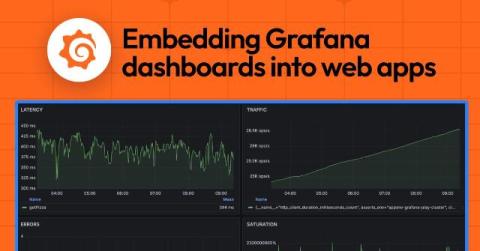
How to embed Grafana dashboards into web applications

Note: This post originally published in October 2023 and was updated in May 2026 to include new methods and options for embedding Grafana dashboards. Grafana dashboards are powerful and flexible tools for observing applications and infrastructure, so it’s no surprise we get a lot of questions from the community about how to embed them into their web applications.

Getting started with Checkly dashboards

Checkly is a modern reliability platform that combines testing, monitoring and observability in one place. Its integration with Playwright and languages such as TypeScript means that developers can write tests using tools they are familiar with and then run them in Checkly. Its Monitoring as Code philosophy also means that Checkly tests can be incorporated into CI/CD pipelines.

Why Some Roles Care About Open Source & Why Others Don't: 4th Annual Observability Survey | Grafana

Note: We're happy to share that since the recording of this video, OpenTelemetry *has* graduated from the CNCF! SREs, developers, and CTOs say open source is essential to observability. Engineering managers and directors? Not so much. Grafana's 4th annual observability survey — 1,363 responses — reveals a split inside the same orgs that's worth a conversation.

AI-assisted testing, extensions updates, and more: k6 2.0 is here

For years, teams have relied on k6 to take a more proactive approach to performance testing, ensuring they can catch issues early and deliver more reliable user experiences. That approach has helped make k6 one of the most widely used performance testing tools in the open source community today, with more than 30k stars on GitHub. Last year, we introduced k6 1.0, a major release that brought TypeScript support, native extensions, revamped test insights, and production-grade stability guarantees.

Eliminate noisy log lines with Adaptive Logs drop rules

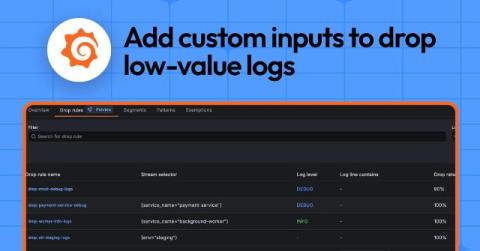
Most platform and observability teams have logs they know are noise. These could be throwaway health check logs, forgotten DEBUG logs, or verbose INFO logs from little used services that only serve to inflate your bill. Regardless of what they contain and why they're there in the first place, the hard part is getting rid of them. Centralized teams want to easily and quickly prevent these logs from being ingested, without having to work with toilsome infrastructure change management to do so.

Troubleshoot performance issues faster with the new Grafana Assistant integration for Database Observability

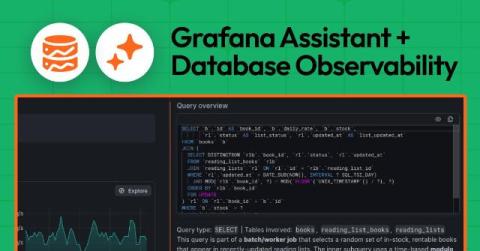
So your database is slow. Now what? Grafana Cloud Database Observability already gives you visibility into your SQL queries with RED metrics, individual execution samples, wait event breakdowns, table schemas, and visual explain plans. But visibility is just the starting point. You can see that a query's P99 latency spiked, but what should you do about it? You can see wait events like wait/synch/mutex/innodb firing, but what does that actually mean?

The World Beneath The Dashboards

Most people assume the modern enterprise runs cleanly on the dashboards and cloud consoles that dominate today’s digital workspaces. Anyone who operates these environments understands a more complicated truth. The real work happens beneath those surfaces, in systems few people notice until something slips. Across industries, engineers face the same recurring scenario: a routine shift disrupted by signals of degradation somewhere in the environment.

SmartAssist and SQL Analytics - AI-powered querying

SQL Analytics has always been one of my favourite SquaredUp features. That's not just because I can use raw SQL to achieve complex data transformations. The fact that I can run SQL queries over data from all sorts of sources — not just relational databases, gives incredible power and flexibility. The great news is that SQL Analytics now ships with our AI-driven SmartAssist technology.

Get Observability in the Terminal, for You and Your Agents: gcx

The way you write code is changing, which means the way you observe your systems and respond to issues needs to change, too. Engineers today spend much of their day working via command line, as agentic tools like Cursor and Claude Code have become highly effective at handling many day-to-day engineering tasks. This greatly accelerates code generation, but it doesn't solve for the context switching that comes when you have to jump into another tool that's not part of this new, faster workflow.

When Dashboards Start Teaching the System: Why Selector's Natural Language Querying Matters

Operations teams have lived with the same frustrating tradeoff for years: the data exists, but getting to the right answer often takes too much time and too much expertise. Engineers are expected to know platform-specific query languages, navigate layers of dashboards, and understand exactly where the right visualization lives before they can even begin troubleshooting. That approach can work in smaller environments, but as infrastructure grows more distributed and complex, it becomes a bottleneck.