Operations | Monitoring | ITSM | DevOps | Cloud

Actionable Intelligence, Not Artificial Intelligence: What AI in Data Center Management Actually Requires

“AI-powered” has become a marketing label applied to almost any data center software feature. A more useful and precise term is actionable intelligence — a four-level maturity model (descriptive, diagnostic, predictive/prescriptive, and cognitive) that shows whether a platform’s AI claims are backed by real data infrastructure or just a chatbot layered on top of an incomplete system.

AI's Role in Enhancing Digital Commerce Operations

Artificial intelligence is quickly becoming a must-have for digital businesses, not just a nice-to-have. For companies looking to sharpen their operations, AI offers powerful ways to predict what's next, smooth out customer interactions, and keep transactions safe. It's not about replacing people, but giving them better tools. This lets teams focus on big-picture strategy while AI crunches data and automates tasks. This shift is changing what's possible in terms of how efficient a business can be, how happy its customers are, and how much it can grow.

How AI Tools Are Reshaping Knowledge Work

Knowledge work has always meant sitting with information, making sense of it, and turning it into something useful. That could be a report, a lesson plan, a research paper, or a business strategy. For a long time, this process depended almost entirely on human effort. You read, you took notes, you organized your thoughts, and slowly you built understanding. Today, that process looks different.

5 ways agentic AI in ITOps will close the gap between alerts and action

Agentic AI in ITOps has emerged as a practical way to go beyond just detecting incidents. Modern IT teams have invested heavily in observability, yet the gap between detecting an issue and resolving it continues to widen. Three major challenges are driving this shift: This is where agentic AI makes a difference.

Claude outage on July 17, 2026: what happened and how StatusGator caught it early

Claude had a global outage on July 17, 2026, driven by “529 Overloaded” server errors that hit the API, Claude Code, the web app, and the desktop app. It lasted about 1 hour and 32 minutes. StatusGator detected it and sent an Early Warning Signal at 14:30 UTC, 27 minutes before Anthropic acknowledged it at 14:57 UTC.

The Two-Clock Trap: A CRO's Diagnosis of Why Enterprise AI Fails at the Sourcing Table

Every AI engagement runs on two clocks, and they no longer agree. The first is the intelligence clock, and it runs fast. The world it keeps time with re-renders every quarter. Models improve, inference costs fall, automation tightens, and the cost of producing a unit of work keeps dropping. This is the clock an enterprise believes it is buying when it invests in AI. The second is the contract clock, and it stopped years ago.

Why AI-Generated Code Needs Monitoring More Than Handwritten Code

Like it or not, vibe coding is here to stay. It’s too easy to just go away. Maybe if the per token cost rises too much at some point that it becomes cheaper to hire a junior… But until then, you’d better get used to it. For now, tools like Cursor, Copilot, and Claude let developers (and plenty of non-devs) ship full-stack apps faster than a junior is able to completely grasp the concept of the app they’re working on. And that’s pretty neat.

The True ROI of Cloud Migration: Modernization, and AI Unlock

For years, the cloud migration business case was framed around one comparison: “Will AWS be cheaper than our data center?” That question still matters, but it is no longer where the value is. The 2017-2024 wave of mass migration is largely complete. Most enterprise workloads are already in the cloud - often in a lift-and-shift state: oversized instances, commercial-OS BYOL, on-prem-shaped network designs, and legacy frameworks that block the next step.

What Is LLM Observability? A Complete Guide

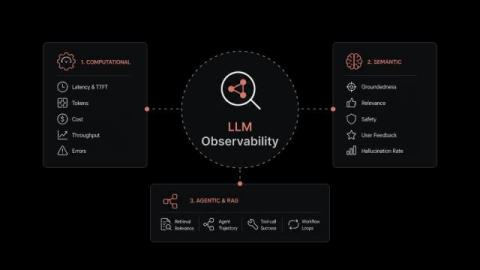
If you run LLM features in production, your most dangerous failures are the ones your monitoring never flags. Your LLM feature passed every test, and the demo went great. Three weeks after launch, a support ticket lands: the chatbot quoted a refund policy that does not exist. The dashboards are all green, and the same prompt answers correctly when you retry it. This is the blind spot LLM observability exists to close. Your existing tools saw the request come back fast with a clean status code.