Operations | Monitoring | ITSM | DevOps | Cloud

Building a Control Framework for the AI SDLC

Since November, Kosli’s own engineering team has been running a live experiment: what happens to code review when the thing generating the code - and increasingly, the thing reviewing it - is an AI, not a person. Alex Kantor, Kosli’s Director of Technology, walked through that experiment in this webinar: what broke, what it cost to fix, and what four “obvious” assumptions in a standard code review control turned out not to hold once you took the human out of the loop.


3 Things Leaders Must Know About Scaling AI

AI is moving faster than ever, but is your governance keeping up? In this video, Brooke Johnson, Ivanti’s Chief Legal Counsel and SVP of People and Security, breaks down the critical gap between AI adoption and responsible scaling. While speed is rarely the issue, trust and accountability are becoming major roadblocks for IT teams. We explore why nearly 70% of IT pros have witnessed AI hallucinations and how unclear ownership can stall even the most advanced AI initiatives.

Why enterprise buyers choose Altamira for AI and custom software delivery

Enterprise software buying has changed. A few years ago, most companies picked a vendor based on hourly rates and a portfolio page. The stakes are higher now, especially where AI is involved. Gartner predicted that at least 30% of generative AI projects would be abandoned after proof of concept by the end of 2025, mostly due to poor data quality, unclear business value, and rising costs. With failure rates like that, choosing an AI software development company is a risk decision, not a procurement task.

The Best AI App Builders for Small Businesses in 2026

TL;DR: The best AI app builder for small businesses in 2026 is Jotform AI App Builder for end-to-end workflow automation. Lovable is best for customer-facing web apps, Softr for portals, Glide for field operations, Adalo for native mobile apps, and Base44 for custom AI web apps. Small businesses rarely need an app in the abstract. They need a faster way to handle bookings, orders, client intake, approvals, inspections, payments, documents, and follow-up.

Your AI agents are lost: give them a graph

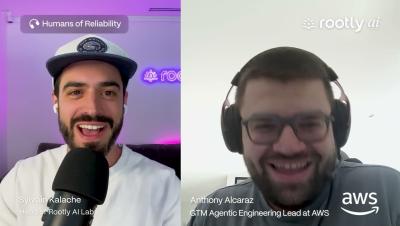
The biggest limitation facing enterprise AI agents may not be the model. It may be the context surrounding it. Anthony Alcaraz, Senior AI/ML Portfolio Growth Manager at AWS and co-author of O'Reilly's *Agentic GraphRAG*, joins Humans of Reliability to explain why reliable agents need more than a vector database and a large context window. They need structured knowledge they can navigate, memory they can prune, constraints they can follow, and feedback loops that help them improve.

Introducing AI Agent Deployment in Harness Continuous Delivery | Harness Blog

‍Teams building agents have converged on something that looks a lot like the software development lifecycle, but reshaped around a system whose output isn't deterministic: prototype an agent against a framework, evaluate it against a dataset of expected behavior, deploy it somewhere real, observe how it behaves against live traffic, and feed what you learn back into the next prototype. Call it the agent development lifecycle (Agent DLC).

Introducing Harness AgentTrace: An Observability and Guardrail Framework for AI Agents | Harness Blog

AI agents fail differently from the software we spent the last two decades learning to monitor. We hear some version of the same story from teams shipping agents to production: an agent starts producing wrong answers. Not obviously broken: confident, well-formatted, plausible wrong. The logs are clean, latency looks healthy, and error rates sit at zero. Nothing flags a problem. A user eventually does.