Cisco discusses benefits of VirtualWisdom with Cisco MDS 9000
Cisco presents to Dell Technologies World attendees at the VI booth! Learn how Virtual Instruments can un-leash the power of your data center.


The latest News and Information on Monitoring for Websites, Applications, APIs, Infrastructure, and other technologies.
There is a lot of dogma around shipping a product in startup land. Many founders follow strict patterns they got from a book or some influencer's tweet. "Ship Early" is one of the more stubborn ones, and in many cases it is exactly the right thing to do. The earlier you start learning about what your users' problems and how your product solves that, the better. I shipped Checkly fairly late.
The VoIP (Voice over Internet Protocol) phone system is not an alien technology in this progressive world. People have left behind the traditional landline telephony system long ago and now enjoy un-interrupted, crystal-clear and almost free calls over the Internet. VoIP technology is increasingly used by everyone whether it is an individual or a business organization. the technology has impressed a lot of audience by its versatility.
Crash reporting can alter the balance between support and development, and swing it in your favor! Sure "literally" is an overused term. But, I think it’s fair to say that “LITERALLY” nobody likes it when software crashes. Users don’t like it when the software they love using breaks. They’re left wondering what happened and how long will it be until there’s a fix.
We consider ourselves tech savvy. If you are reading this blog, you probably do too. And like us, you probably expect that computers are just supposed to work for you. However, in my experience, this close relationship we share with our machines just expands the realm of possible annoyances we encounter. Here are some easy ways to help you improve your relationship with the most important piece of equipment in your working life.
Hello, Checkly community and Monitoring as Code (MaC) aficionados! We have some exhilarating news that we can't wait to share. Our mascot is sporting sunglasses today because Checkly has been named in Gartner®'s 2023 Cool Vendors in Monitoring and Observability: Where Awareness Meets Understanding report!
One of the chief complexities in running large scale containerized applications is the need for continuous systems/application monitoring. Containers are very different from traditional VMs and the 3 tier applications that run on them. Monitoring that needs to ensure that SLAs promised to the business are being met as well as an ability to forecast usage trends while identifying problem areas such as bugs, capacity challenges, slowing performance, and any potential downtime.
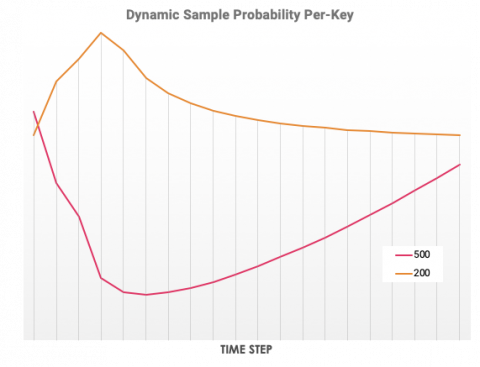
Last week, Rachel published a guide describing the advantages of dynamic sampling. In it, we discussed varying sample rates to achieve a target collection rate overall, and having different sample rates for distinct kinds of keys. We also teased the idea of combining the two techniques to preserve the most important events and traces for debugging without drowning them out in a sea of noise.
AWS Lambda has a cool feature that can be both a blessing and a nightmare for a serverless application, depending on whether it’s properly handled by our code: the retry behavior. A retry occurs when an invocation of a Lambda function results in an error and the AWS Lambda platform automatically invokes the function again, with the same event payload. Before we get deeper, make sure you are familiar with the AWS documentation on the subject.
It’s been a while since the new Monitive codename “Freyja” was launched in private beta, and even though a lot of things have happened, development is moving forward a bit slow than I’ve hoped. Nevertheless, I’m happy that the core monitoring engine is running smoothly and it’s a great foundation for the years to come.