Operations | Monitoring | ITSM | DevOps | Cloud

The latest News and Information on DevOps, CI/CD, Automation and related technologies.

AI pricing explained: what AI actually costs and how providers charge for it in 2026

AI pricing covers the cost structures and billing models providers use to charge for AI products: per-token APIs (GPT-4o at $2.50/1M input tokens), per-seat subscriptions (Copilot at $30/user/month), per-conversation billing (Agentforce at $2/conversation), and consumption-based GPU compute (H100 instances at $55.04/hour). There is no standard. The total AI cost is almost always higher than the sticker price.

8 IT Infrastructure Automation Use Cases to Prioritize

IT infrastructure automation sounds simple enough on the surface, right? You take repetitive infrastructure work, turn it into automated workflows, and give engineers more time for higher-value problems. This may seem easy, but in practice, it gets more interesting. Modern IT environments are spread across cloud platforms, legacy systems, identity tools, ITSM platforms, monitoring systems, network devices, and business-critical applications.

The bottleneck has moved. AI is rewriting the Software Development Lifecycle

If you've read our previous piece on the 8 stages of AI engineering maturity, you know where your team sits. Turns out adopting AI is the easy part; adapting to its consequences is where most organizations struggle. For more than a decade, software organizations optimized around a single assumption: implementation capacity was scarce.

Anthropic Fable 5 & Mythos 5 Suspended AI Risk Revealed!

Your entire AI stack ran on a model that disappeared in three days. The US government issued a directive suspending all access — a few hours' notice, no deprecation window, no roadmap. Launched Tuesday. Gone by Friday. And every enterprise that had built workflows on top of it just found out what the real risk was: not the model itself, but the absence of a governance layer underneath it.

What is AWS Cloud WAN? Benefits, Use Cases, and Adoption Best Practices

Learn how AWS Cloud WAN works, key benefits, limitations, use cases, and adoption best practices. As AWS environments grow across multiple regions and accounts, networking can become increasingly difficult to manage. What starts as a handful of virtual private clouds (VPCs) can quickly evolve into a complex web of connectivity, routing policies, and security requirements.

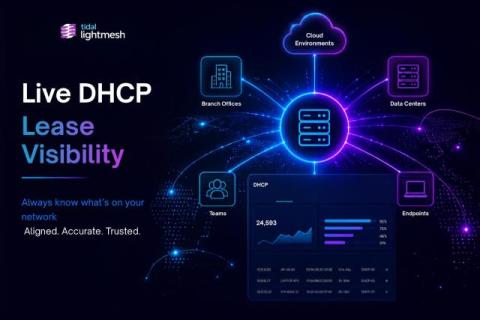
LightMesh DHCP Integration: Always Know What's on Your Network

Dynamic Host Configuration Protocol (DHCP) activity changes faster than most IP inventory systems can keep up. Devices reconnect. Leases expire. Infrastructure changes constantly across servers, endpoints, and cloud environments. If your IP inventory cannot reflect those changes automatically, teams quickly lose confidence in the data they rely on to operate the network.

ClickHouse LowCardinality: When It Helps and When It Hurts

ClickHouse LowCardinality cuts storage and speeds up queries on low-cardinality columns, but backfires on trace IDs. How to tell the difference. Prathamesh works as an evangelist at Last9, runs SRE stories - where SRE and DevOps folks share their stories, and maintains o11y.wiki - a glossary of all terms related to observability.

The Miasma worm explained: How it Hit Red Hat and Microsoft

Miasma has already hit Red Hat and 73 Microsoft GitHub repos. Here's how it works and what your team can do right now. Nigel Douglas, Head of Developer Relations at Cloudsmith, breaks down the Miasma worm – a self-replicating supply chain attack and evolved variant of Mini Shai-Hulud from threat group TeamPCP. Learn how Miasma uses the yo-yo attack method to move laterally across registries and workstations, why conventional scanners missed it, and the practical steps security teams can take today, including cooldown policies and continuous risk assessment.