Operations | Monitoring | ITSM | DevOps | Cloud

The latest News and Information on Containers, Kubernetes, Docker and related technologies.

What's new in Sysdig - March 2022

Welcome to another iteration of What’s New in Sysdig in 2022! The “What’s new in Sysdig” blog has fallen to me, Jason Donahue, for the month of March! I am a Solutions Engineer based in New Jersey and a member of the Sysdig US East Enterprise team since September, 2021. I have worn many hats in my career, from Networking to Systems Administration to Software Engineer.
6 Metrics to Watch for on Your Kubernetes Cluster

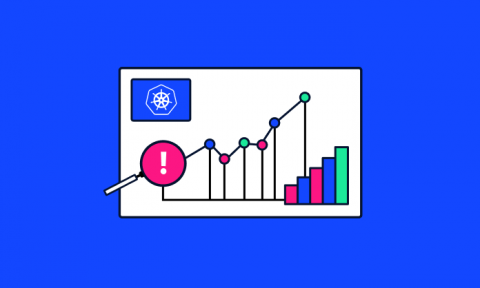
Kubernetes. Nowadays it seems companies in the industry are divided into two pools: those that already use it heavily for their production workloads and those that are migrating their workloads into it. The issue with Kubernetes is that it is not a single system the way Redis RabbitMQ or PostgreSQL are. It is a combination of several control plane components (for example etcd, api server) that run our workloads on the user (data) plane over a fleet of VMs.

5 takeaways from the CNCF Annual Survey 2021

The CNCF Annual Survey 2021 is in and makes for some very encouraging reading for the future of Kubernetes and its place in the tech landscape. The 2021 survey was the biggest yet, with some 3,829 developers, engineers, architects, and C-level execs in the cloud native space taking part. Here are some of our key takeaways…

How to Scale your AWS Infrastructure - Part 1

When designing a solution, you should keep future needs in mind. If the number of users increases dramatically in a short period of time, the solution should be scalable enough to handle the new growth. Making systems scalable on cloud is relatively easier as compared to scaling on-premises infrastructure. AWS has provided excellent tools/services to enable your applications for as much scalability as you want.

Should Your Startup Use AWS Managed Services?

Let’s face it. Gaining a competitive advantage in the target market is expensive. Even if you have a good idea and its execution plan in mind, operations related to management, storage, networking, service provisioning, security, and application management will cost you a fortune. To say the least, a cutting-edge IT infrastructure, a reliable team, and a strategy for rapid product releases or expansion/scaling is a must for your product’s success.

What are Linux containers?

Over the last decade, containers have become an essential part of running infrastructure more efficiently. Containers enable productivity, automation, and cost-effective deployments. But there are different types of containers to consider, and this blog explains what Linux containers are, and how they differ from application containers.

Introducing Epinio 0.6: Smaller, Faster *and* More Capable!

With our latest releases of Epinio, we’ve focused on making both the setup and developer experience much more streamlined. We’ve looked at where users are having issues and removed many of the roadblocks. This reduced footprint also allows for more customizability and easier long-term maintenance. If you are not familiar with Epinio, it is an application development engine for Kubernetes that lets you go from code to URL in a single step.