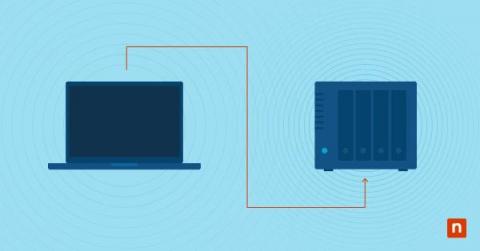
Network Backup Solution Guide
Business Wire reports that over the next three years, more than three out of every four businesses believe that they are going to experience major data loss or a breach of data.


The latest News and Information on Managed Service Providers and related technologies.
Business Wire reports that over the next three years, more than three out of every four businesses believe that they are going to experience major data loss or a breach of data.
When comparing operating systems, it’s clear that Microsoft Windows currently comes out on top. As a matter of fact, “Microsoft Windows was the dominant desktop operating system (OS) worldwide as of January 2023, with a share of just over 74 percent.” Microsoft has many tools and features that are widely-used by the IT community, such as SCCM. This SCCM patch management deployment guide lays out the essential steps to take for deploying updates in the tool.
The amount of technology is growing exponentially as people and organizations undergo the process of digital transformation. More information and data is found online and on machines than ever before. It’s important to keep this data safe in properly functioning software on devices and machines, which is why applying patches is a key task.
Managing the various types of IT assets within an organization, whether it be hardware, software, or other assets, can be a challenging and tedious process. With the exponentially growing number of assets in businesses, it can be an especially daunting task. Fortunately, the tools used for IT asset management have advanced and it is much more feasible. Gartner claimed that if organizations adopt and execute IT asset management processes, they can save 30% of costs within the first year.
During the month of May, NinjaOne will roll out a slew of exciting new features and enhancements as part of their 5.3.9 release. Most of the features are the direct result of requests from our customers and we’re glad to be able to bring them to light. First, NinjaOne has a new Patching dashboard that is currently available for NinjaOne customers to test drive.
With an estimated 400 million small and medium-sized businesses (SMBs) operating worldwide, they account for 95% of global organizations. This places SMBs as one of the main sources of job creation and the foundation of the global economy.
The modern threat actor is using the most advanced technologies to gain access to your systems, wreak havoc, and steal your sensitive data. In the constant cybersecurity “arms race,” IT providers, MSPs, and security professionals are incorporating these same advanced technologies to stop these sophisticated attacks. In this article, we’ll discuss the current malware threat and work to better understand what you can do to stop these attacks.
Global cyberattacks increased by 38% in 2022 (Source). And because attacks are not only becoming more common, as well as difficult to detect, 65% of organizations plan to increase their cybersecurity spending in 2023 (Source). Even so, hackers will continue to hone their skills and exploit vulnerabilities. Successful ransomware attacks will happen. Theft and sale of personally identifiable information (PII) and other “valuables” on the dark web will happen.