Operations | Monitoring | ITSM | DevOps | Cloud

The latest News and Information on Log Management, Log Analytics and related technologies.

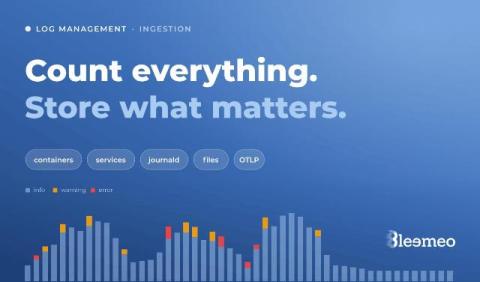
Log ingestion: you are probably paying to store logs you will never read

The default way to adopt log management is to ship everything and search it later. It is the path every vendor’s quickstart puts you on, and it is the reason log bills surprise people: ingestion is priced by volume, so“ship everything” is a spending decision disguised as a configuration default. The uncomfortable part is that most of that volume is never read. Nobody greps last Tuesday’s 200 OK access lines.

UK data residency for Hosted OpenSearch on Logit.io

Procurement teams asking for UK-hosted OpenSearch usually mean something concrete: indexes and cluster storage should land in a UK data centre, not wherever a vendor’s default region happens to be. On Logit.io that choice is an account-level data storage region, not a free toggle on every stack. Get the first stack right and every later OpenSearch or log stack in that account follows. Get it wrong after go-live and you are looking at a second account, not a silent migrate button.

Agentic Operations Start with Context: Build the Right Data Foundation

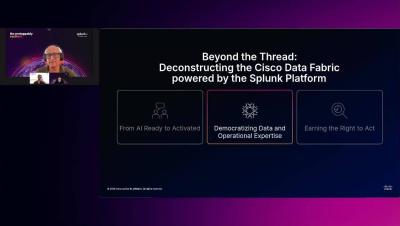
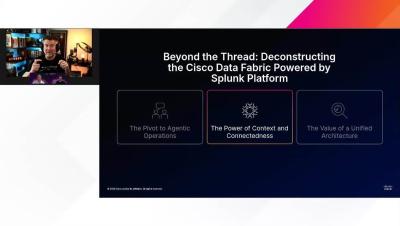
Episode 1, "Beyond the Thread: Deconstructing the Cisco Data Fabric Powered by the Splunk Platform," explores the intersection of data strategy and operational efficiency. Hosted by Splunk's Courtney Wright, the session features insights from experts Keith McClellan and Michael Sondag on the complexities organizations face in data management and operational models.

Assisted, Augmented or Agentic? Choose Your Splunk Starting Point

Episode two of Beyond the Thread explores how organizations can leverage a solid data foundation for AI-driven actions. Hosted by Courtney Wright and featuring experts Greg Ainsley-Malik and Sonal Pardeshi, the discussion delves into the Cisco Data Fabric, powered by the Splunk platform, and its role in transforming machine data into actionable insights. The episode highlights the journey towards agentic operations, addressing the challenges faced in moving from AI-ready data to effective implementations, and examines different adoption strategies that organizations may pursue.

How to extract structured fields from unstructured logs

If you’ve spent any time digging for insights in logs, you know the shape of the problem. A single log line might contain an IP address, a status code, a response time, and a user ID, but it’s all buried in one long, unstructured string. You know the information is there. Getting it into a field you can filter, group, or chart on is a different matter.

Log Filtering: How to Cut Log Ingest Volume Without Losing Evidence

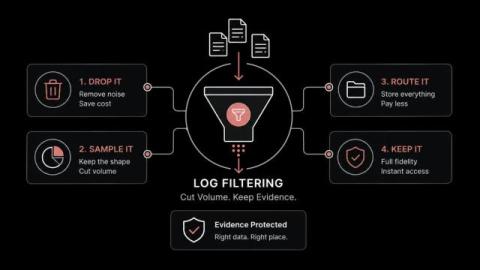
Every log estate reaches a point where volume grows faster than the value inside it. The usual response is to find the biggest source and drop it. Cutting volume is the easy part. Cutting the right half takes judgment. Log filtering is only one of four options for an expensive source, and the other three matter just as much. In this blog, you will: By the end you can defend every rule you write, including the ones that keep data. A volume cut fails in two directions.

The pager shouldn't be what starts the investigation

Authored by Greg Janco, Engineering Manager at Mezmo I've always thought there was something backwards about incident response. An alert fires at 3 a.m. PagerDuty does its job. Somebody wakes up, grabs a laptop, connects to the VPN, opens the alert, and then starts answering the same basic questions we ask at the beginning of almost every incident. What changed? What else is broken? Have we seen this before? Some of those need a human eventually. A lot of the first pass doesn't.

Automate Product Analytics reports with your agent and the CX CLI

Every page view, click, and session your RUM SDK captures lands in Coralogix as a log event under the cx_rum subsystem — the raw data behind how people actually use your product. You can turn it into a shareable report without writing a single query. Just ask your coding agent. Your agent queries that data through the CX CLI and writes the report for you: describe what you want in plain English, get a formatted report back — without leaving the terminal.

Cribl On Your Coffee Break Episode 4 - Gathering REST data

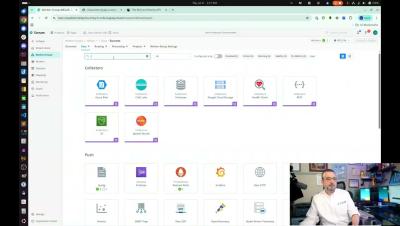
In the 4th installment of our series, Leon looks at Cribl’s ability to collect REST API data. By the time the month (and the series) is over, you will have a pretty good idea of what Cribl can do, and how to do it. You’ll also have consumed your body weight in caffeinated beverages...

6 Signs a Dedicated Log Tool Fits Better Than a Full Observability Platform

Most growing teams eventually consolidate onto a full observability platform, and for teams correlating logs, metrics, and traces across a complex system, that’s often the right call. But a dedicated log tool still wins for a specific set of teams: ones that need to move fast, keep costs simple, and get real answers from logs without carrying the weight of a platform they don’t fully need yet. Here’s when that’s you.