Operations | Monitoring | ITSM | DevOps | Cloud

The latest News and Information on Incident Management, On-Call, Incident Response and related technologies.

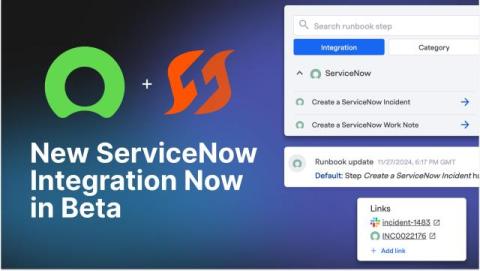
New ServiceNow Integration (Beta) Powers More Efficient ITSM

Today, we’re excited to announce the release of our new ServiceNow integration in beta — designed to give engineers even more control to manage and automate incidents in FireHydrant while seamlessly keeping the rest of the organization aligned in ServiceNow.

Home Call Survival Guide

Whether it’s your first or hundredth home call shift, preparing yourself both physically and mentally is crucial. These shifts can be unpredictable, demanding, and emotionally taxing, making it essential to prioritize your well being while maintaining your readiness to provide the best possible patient care. By adopting effective time management, organization, and healthy strategies, you can confidently navigate the unique challenges of home call shifts. Key Takeaways (TL;DR)

Update December 2024 - Intelligent event filters and enhanced manual alarm distribution

In our December update, we have significantly revamped and improved manual alerting. If you need to carefully evaluate incidents before distributing them manually to the respective teams or want to send critical operational updates to relevant personnel, you’ll love the new features we’ve introduced! Additionally, we’ve added intelligent filtering options for automatically incoming events.

Reducing noise: configuring alert processing with Terraform

With increasing numbers of alerts, keeping focus on the important and most critical alerts proves to be more and more of a challenge. A reduction of alert noise, meaning the prevention of too many created alerts and any kind of user notifications, is needed to ensure efficient alert response. While a detailed explanation of this topic is given in this blog post, a flexible and automated setup for your relevant resources can be achieved with Terraform using the ilert Terraform provider.

What is MTTR and How Does It Impact Your Bottom Line?

Mean time to repair (MTTR), sometimes referred to as mean time to resolution, is a popular DevOps and site reliability engineering (SRE) team metric. MTTR identifies the overall availability and disaster recovery aspects of your IT assets or application workloads. The acronym MTTR can cause some confusion since it has different meanings across different industries. Sometimes, MTTR refers to mean time to respond: the amount of time needed to react to a problem.

Incident Management for Software Engineers: Lessons from Production Fires

A notification "Critical: Payment processing down" is every software engineer's nightmare - a production incident that demands immediate attention. But the truth is that production incidents are inevitable. The question isn't whether they'll happen, but how well you'll respond when they do. In this article I explore the lessons I learned from real-world production fires.

Incident Response vs Incident Management: What the Terms Actually Mean

During an outage, teams need to restore service, coordinate decisions and keep customers informed. Incident response and incident management describe overlapping parts of that work. Here's the distinction we use, and why security, ITIL and SRE sources may use the terms differently.

Transforming ITSM with AIOps: EMA research

Managing modern IT environments is becoming more complex and fragmented as organizations rely on a broader range of applications and services, including cloud, hybrid infrastructure, microservices, and legacy systems. This complexity and velocity surpass human capacity and old processes, making it challenging for IT teams to respond efficiently to incidents.