Operations | Monitoring | ITSM | DevOps | Cloud

The latest News and Information on Incident Management, On-Call, Incident Response and related technologies.

Building Interactive Dashboards: Why React-Grid-Layout Was Our Best Choice

After releasing our first version of the ilert dashboard as a static layout, we knew we wanted to take it further by allowing users to customize and arrange widgets freely. We aimed to provide a truly interactive experience, which led us to search for a library that could handle drag-and-drop and resizing functionalities while integrating well with our existing tech stack.

From iOS to Web Apps: Comparing Setup and Development

I joined ilert as a student front-end software developer. Before, I was mainly writing iOS apps. Even though I already had some experience with web technologies, diving deep into front-end development was a huge step. Both developing iOS apps and web apps share the same kinds of tasks, such as developing the user interface (UI) and writing app logic. However, the actual development environments are completely different.

What are the benefits of generative AI for IT?

Can generative AI help improve IT efficiency? Imagine you’re part of an IT team constantly juggling a growing number of support tickets, system issues, and daily maintenance tasks. It can feel like you’re always playing catch-up. It’s a common challenge: Repetitive tasks and troubleshooting waste valuable time, leaving little room for innovation or strategic improvements. Generative AI (GenAI) for IT provides a solution.

Are you ready for the next outage? How a to prepare for any crisis

We live in an “always on” world, so unplanned outages are more than just inconvenient. They can result in lost revenue, damaged reputations, and, more importantly, frustrated customers. While preventing outages is impossible, the most resilient teams must be prepared with a solid plan, a “technical go bag,” so to speak: a collection of tools, plans, and resources ready to activate at the first sign of trouble.

How data integration improves incident management

During critical incidents, teams often scramble to pull data from multiple sources, wasting precious time and delaying issue resolution. Manual processes hamper response and create blind spots that can lead to costly oversights. Data integration addresses this head-on. Data integration collects incident management information from various sources, such as monitoring tools, logs, and user reports, into a unified system.

Deploying Prometheus With Docker

There are different ways you can use to deploy the Prometheus monitoring tool in your environment. One of the fastest ways to get started is to deploy it as a Docker container. This guide shows you how to quickly set up a minimal Prometheus on your laptop. You can then extend that setup to add a monitoring dashboard, alerting, and authentication.

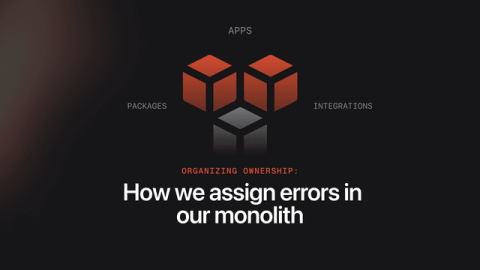
Organizing ownership: How we assign errors in our monolith

At incident.io, we run on a monolith. This brings a whole load of benefits that we don’t want to give up any time soon. We don’t have to worry about the speed of internal network requests, complex deployments, or optimizing work that touches multiple services. This blog post isn’t about the relative benefits of monoliths though (but we’ve written more about that here if you are interested)! Ownership in monoliths is tricky.