Operations | Monitoring | ITSM | DevOps | Cloud

The latest News and Information on DevOps, CI/CD, Automation and related technologies.

How to Use Git Blame in Your Editor in 6 Steps (2026)

Tracking down who made a specific change in your codebase can feel like detective work. Whether you’re debugging an issue or trying to understand why a particular piece of logic exists, knowing the history behind each line is invaluable. GitKraken makes this process simple with tools like GitLens for VS Code and GitKraken Desktop, which bring blame annotations directly into your workflow.
Healthy PR Lifecycle Time: Benchmarks & Targets (2026)

Your pull request has been open for three days. Your reviewer hasn’t commented. You’re starting to wonder if anyone will ever look at it—and whether the code you wrote on Monday still makes sense on Thursday. This feeling is common. PR lifecycle time—the duration from first commit to merged code—directly impacts how quickly you ship features, how fresh your code stays, and how engaged your reviewers remain.

Bring Your Playwright Suite to Harness: No Rewrites, No Infrastructure, AI-Powered Triage Built In | Harness Blog

Key Takeaway: Harness AI Test Automation now runs existing Playwright suites without code changes, adds AI-powered failure triage, and integrates test results directly into build and deployment pipelines. ‍

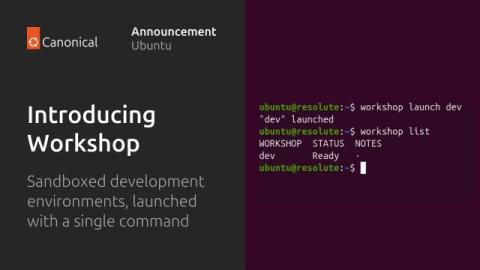
Introducing Workshop: launch sandboxed development environments on Ubuntu with a single command

Today, Canonical announced the release of Workshop, a solution for launching development environments with a single command. These environments are configured once, and can be reproduced on different machines. This means consistent workflows across development machines and deployment pipelines, and less time managing dependencies.

Using Bootc to Manage Ubuntu Hosts | Ubuntu Summit 26.04

What if you could manage your Ubuntu hosts the same way you manage your containerized applications? Managing Ubuntu hosts traditionally means configuration management, package updates, and drift control using tools like Puppet, Chef, or shell automation. Bootc streamlines the process. A Cloud Native Computing Foundation (CNCF) Sandbox project, bootc lets you define your Ubuntu systems as OCI container images and deploy them consistently across bare metal, virtual machines, edge devices, or cloud environments.

Introducing Workshop | Ubuntu Summit 26.04

In this talk from Ubuntu Summit, Dmitry Lyfar (Engineering Manager at Canonical) introduces Workshop: a new solution for launching composable, secure, and fast development environments on Ubuntu in a single command. Learn how to create sandboxed, reproducible environments for running agents with different development stacks consistently and securely. Ubuntu Summit 26.04 is a showcase for the innovative and the ambitious.

Welcome Keynote | Ubuntu Summit 26.04

Welcome to Ubuntu Summit 26.04! In this welcome keynote, Mark Shuttleworth (CEO, Canonical), and Jon Seager (VP Engineering, Canonical), detail how Ubuntu is driving speed, safety, and community access in the era of agentic engineering. Learn how Canonical is balancing the need for rapid innovation with strict safety sandboxing through snaps, LXD, and microVMs. You'll also get a first look at what's in store for Ubuntu.

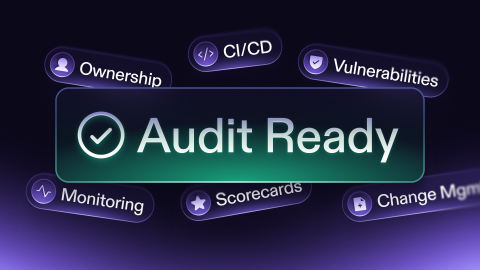
The audit-ready engineering org

Two weeks before the audit, the Slack messages start. Get me a screenshot of this. Can you screenshot the CI/CD logs? Can you add the artifact names that were deployed to production and when, and when the incident happened? Senior engineers stop shipping. A spreadsheet appears. The product roadmap goes on hold while four people chase down ownership data and evidence that should have existed all along. This fire drill is the symptom of an operating model problem.

Data sovereignty is an opportunity for regional growth

Data sovereignty wasn’t a major topic just a few years ago and now it’s becoming a major economic opportunity for regions across the UK. In this clip from Perspectives from the Edge, Katie Gallagher OBE from Manchester Digital discusses why the conversation around data sovereignty has shifted, and how the rise of AI is accelerating demand for trusted regional digital infrastructure. As organisations rethink where data is stored, processed and governed, regions like Manchester are increasingly well placed to benefit through investment, innovation and digital skills growth.

Security and reliability review: 7 delivery model weak points to check first

Security audits that focus only on application code often miss the delivery layer entirely. That is where the most common and most avoidable failures live. Most teams treat security as a layer added on top of a working system. The problem is that the delivery model itself introduces risk before a single line of application code runs. When deployments are manual, environments are inconsistent, or configuration drifts across stages, the system behaves unpredictably.