Operations | Monitoring | ITSM | DevOps | Cloud

The latest News and Information on Cloud monitoring, security and related technologies.

env zero Launches EZ Control, the Autonomous Cloud Control Plane for the AI Era

Industry-Leading Asset Coverage Spanning Nearly 2,300 Resource Types Across AWS, Azure, Google Cloud and Kubernetes, Structured into a Real-Time Ontology That EZ Control Uses to Enforce Security, Cost, Availability, Maintenance and Performance Policies Continuously.
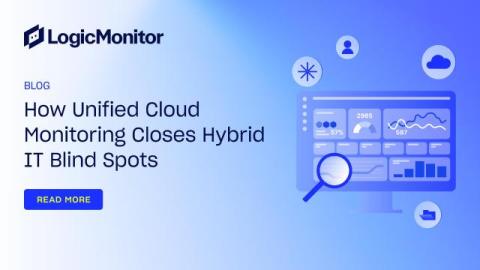
How Unified Cloud Monitoring Closes Hybrid IT Blind Spots

Modern IT runs across public cloud, data centers, containers, SaaS, networks, and AI services. Cloud monitoring delivers more value when those environments share the same observability context, giving teams a clearer way to troubleshoot service issues, manage cloud spend, and support AI-assisted operations.

Watch this AI agent find and fix performance bottlenecks

Anyone can claim an AI agent will fix your performance problems. This demo shows exactly what it looks at and what it hands back. In this Product Highlights conversation, Sylvain Guittard, Senior Director of Product at Upsun who leads the team behind the Upsun console and CLI, runs the Upsun Cloud Performance Agent live on a demo project. His take: "You have a patch that is already available, and a recommendation, so you can see if it fits or not to your context." We get into.

This AI agent finds your app's bottlenecks and suggests the fix

Most teams collect the profiles and traffic data that explain a slowdown. Almost nobody has time to read it before users notice. In this Product Highlights conversation, Sylvain Guittard, Senior Director of Product at Upsun who leads the team behind the Upsun console and CLI, breaks down the Upsun Cloud Performance Agent, the first background agent running on Upsun Cloud. His take: "We monitor everything, we feed that into an agent, and the agent will be capable of finding what the bottlenecks are in your application. And on top of it, it gives you a patch, or a way to fix it." We get into.

Change the Cloud Cost Conversation from Spend to Margin

"Our Azure bill went up 20% last month." Without context, finance only sees a rising cost. Unit economics gives them the full picture. Turbo360 lets you overlay business KPIs on your Azure spend. Track units like orders, active users, document views, or monthly recurring revenue alongside cost, and see your cost per unit month over month. Now the conversation becomes: "Orders went up 150% and our cost per order came down." That is a story about efficiency, not overspend.

Auto-Generate Richer Azure Architecture Diagrams

Azure architecture diagrams go out of date fast, and management-plane data alone misses the runtime connections that matter most. In v5.4, diagrams move to their own Diagrams tab in Azure Documenter. Alongside the enhanced network and workload diagrams, there is a new Resource Visualizer diagram. Scope it by subscription and resource group, or write your own custom Azure Resource Graph query to define exactly which resources to include.

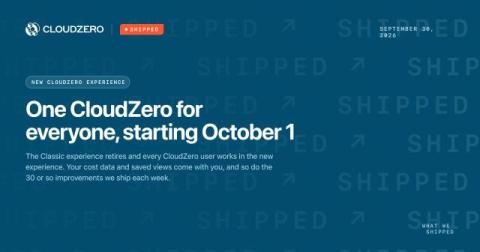
Shipped: One CloudZero for everyone, starting October 1

On June 3, we made the new CloudZero experience the default for every customer. Since then, we’ve shipped around 30 improvements a week: side-by-side period comparisons in Explorer, budgets you can create and edit right in the app, threshold alerts on dashboard tiles, and Monitors, which flags AI and cloud spend that moves outside its normal pattern and shows you what changed. Pages load 28 to 61% faster. JavaScript execution is 85% faster.

AI cost allocation: how to attribute AI spend by team, product, and customer

AI cost allocation is the practice of attributing every dollar of AI spend to the team, product, feature, or customer that generated it. That spend includes API tokens, GPU compute, per-seat tools, and shared infrastructure. It's harder than cloud allocation because AI spend arrives untagged, spans vendors, and pools in shared resources. Four methods cover most cases: tag-based, key-based attribution, proportional split, and usage-telemetry.

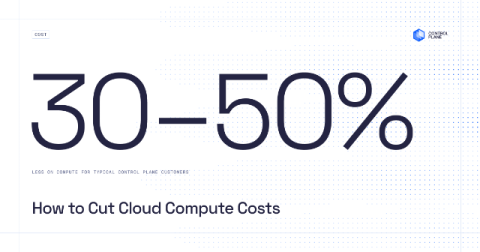
How to Cut Cloud Compute Costs Without Rewriting Your Apps

The fastest way to cut cloud compute costs is to stop paying for capacity your workloads do not use. Right-size CPU and memory to real usage, scale idle workloads to zero, and make cost policy a platform default instead of a quarterly review. Control Plane does all three at the platform level: Capacity AI right-sizes running workloads, autoscaling scales idle ones to zero, and customers typically spend 30 to 50 percent less on compute than running directly on AWS, GCP, or Azure.

Why Engineers Ignore Cloud Cost Optimization & Fixes

Learn why engineers ignore cloud cost optimization and how to build a culture of FinOps governance. See how Harness helps. Engineers often overlook cloud costs due to lack of visibility, fragmented tooling, and competing delivery priorities. Organizations can fix this by embedding FinOps guardrails into developer workflows and providing real-time cost feedback during build cycles.