Operations | Monitoring | ITSM | DevOps | Cloud

AI ROI: From Adoption to Business Proof

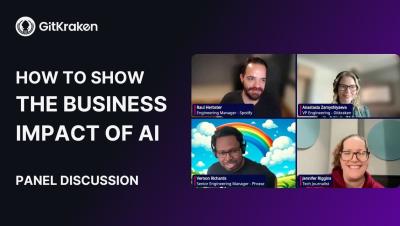
AI adoption is easy to report. Business impact is harder to prove. Engineering leaders are under pressure to show what AI is actually changing — not just who is using it, but whether it is improving delivery, quality, developer experience, and business outcomes. This discussion between 3 engineering leaders explores how to move beyond vanity metrics, build a practical measurement approach, and communicate AI’s value to executives and CFOs with more credibility and less hype.
AI-powered monitoring with Site24x7's Zia

In this video, you'll learn how to integrate Large Language Models (LLMs) with Site24x7 using Bring Your Own Key (BYOK), Zoho Key Services (ZKS), and Microsoft Azure OpenAI. Discover how Zia helps you analyze outages, understand performance issues, identify root causes, and get monitoring insights using simple natural-language queries. What you'll learn.

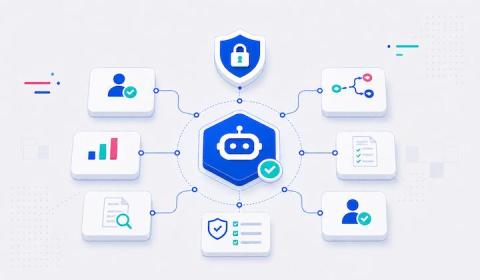
The future of governing AI agents

How to build governance into autonomous security agents from the architecture up The industry has moved fast on capabilities. Agents now triage alerts, investigate endpoints, create detection rules, and enrich indicators, and they are even capable of performing most actions we as security operators can perform. The architecture patterns are maturing, as are the models, but governance is not keeping pace.

From Data Warehouses to AI: How Enterprise Data Quality Has Changed Over the Last 20 Years

An interview with Marcin Chudeusz, co-founder and CEO of digna Two decades ago, enterprise data quality looked very different. Organizations were building centralized data warehouses, business intelligence projects revolved around structured reporting, and most data quality initiatives relied on thousands of manually created validation rules. The objective was simple: ensure the data entering reports was accurate enough for decision-making.

Anthropic Warns Against AI While Building It Faster Than Anyone

On June 4, 2026, Anthropic published a document unlike anything a major AI lab had put in writing before. Titled "When AI builds itself," and co-authored by Jack Clark (Anthropic's co-founder and head of policy) and Marina Favaro, who runs the Anthropic Institute, the piece argues that frontier AI development may need to slow down - or even stop - before humans lose the ability to control what comes next.

The invisible visitor: Why the internet is no longer just for humans

"Every website was once designed for people. That assumption is beginning to change." For nearly three decades, the internet has worked in a predictable way. Whenever we wanted to know something, we searched for it, clicked through a few websites, compared information, and made a decision. Whether it was buying a new phone, planning a vacation, or researching software for work, businesses knew exactly how people behaved online.

Why prompt injection gets worse with AI agents?

When AI could only answer questions, a bad prompt just meant a bad answer. But now AI agents read your documents, browse websites, and actually do things on your behalf. So when someone sneaks a malicious instruction into a file or a webpage, the agent doesn't just say something wrong. It does something wrong!

How do you run AI when your data can't leave the network?

Highly classified environment. Strict compliance requirements. Data that can't leave the network. But still a real need for the competitive advantage AI delivers. Civo Director of Enterprise Cloud Solutions John Dietz addresses exactly that challenge and how Konstruct makes it possible to run Kubernetes, deploy your own models, and point Claude Code at your own internal private servers instead of public APIs.