Operations | Monitoring | ITSM | DevOps | Cloud

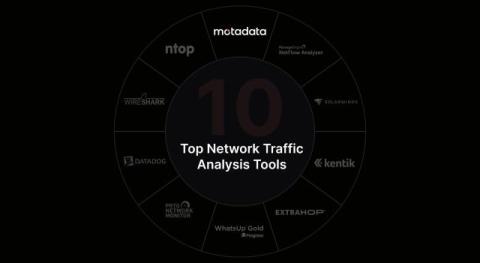
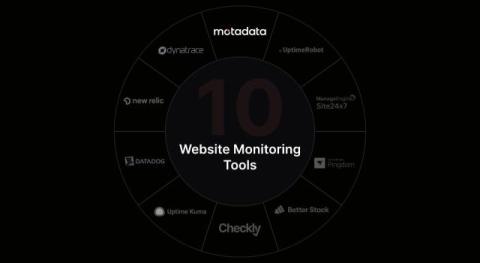
10 Top Website Monitoring Tools for Uptime, Page Speed and Real User Data

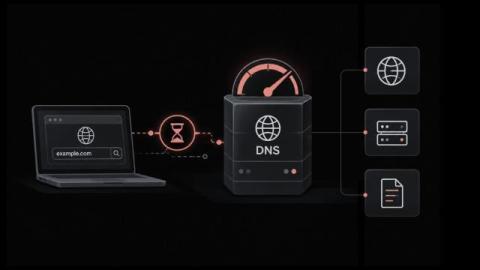
Your uptime tool reports the site as available all month. Support reports something else, because customers in one region spent the morning unable to complete a checkout. Both records are accurate, and that is the problem. An external check confirms the page answered. It cannot tell you that the answer took nine seconds for everyone routed through one CDN edge, or what caused the delay.

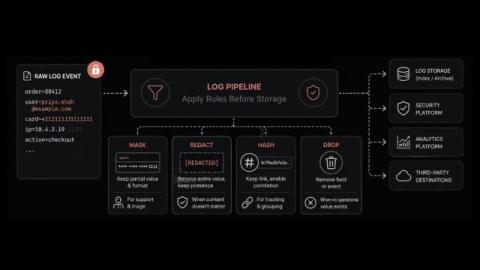
PII Redaction in Logs: Mask, Redact, Hash, or Drop?

Sensitive values reach your logs without anyone deciding they should. A debug line prints a whole request object. An error message carries the query string. A customer email address is suddenly stored in three systems. PII redaction in logs then gets treated as one setting to switch on. In practice it covers four separate treatments. The value is already inside the message before log ingestion finishes. In this blog, you will: By the end you can write a rule for each field and defend it.
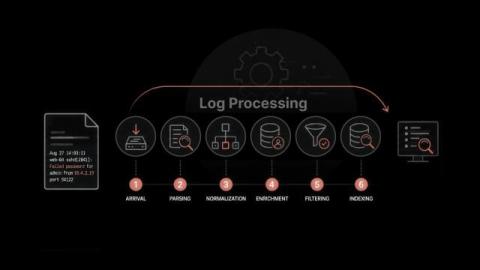
Log Processing: What Happens to a Log Line Before You Can Search It

A log line arrives as plain text and leaves as a record you can query. Six steps sit between those two states. Each one adds something useful, and each one costs you time, CPU, or storage. Most teams never look at that chain until a search comes back empty. Here is what log processing does to an event, step by step: By the end you can look at your own chain. You will know what each step buys you. Six steps turn a raw log line into a searchable record.

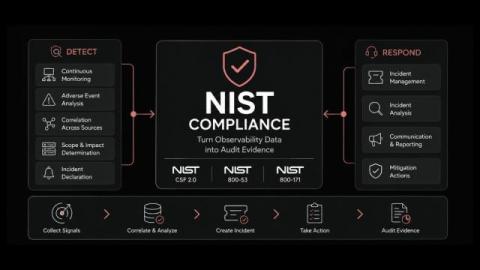
How NIST Compliance Turns Observability Data Into Audit Evidence

Can you prove, on demand, which production systems were under continuous monitoring last quarter? Buyers, auditors, and insurers all ask a version of that question, and the answer decides contracts as often as audit findings. NIST compliance means aligning security controls and operations with standards from the National Institute of Standards and Technology, then holding evidence that the alignment stayed continuous. The frameworks are precise about outcomes and quiet about mechanics.

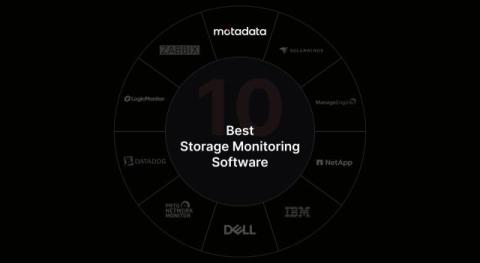
Best Storage Monitoring Software: 10 Tools Compared

Storage rarely fails loudly. A pool fills. Latency climbs on one LUN. The first to notice is a user whose application timed out. The best storage monitoring software catches it earlier. It watches capacity, IOPS, latency and drive health across your arrays, which is what storage resource monitoring is for. In this blog, you will see: By the end you will know which one fits. Storage monitoring software tracks the health, capacity and performance of your IT storage.