Operations | Monitoring | ITSM | DevOps | Cloud

The latest News and Information on Containers, Kubernetes, Docker and related technologies.

OpenShift monitoring tools

In Part 1 of this series, we looked at the key observability data you should track in order to monitor the health and performance of your Red Hat OpenShift environment. Broadly speaking, these include cluster state data, resource usage metrics, and information about cluster activity such as control plane metrics and cluster events. In this post, we’ll cover how to access this information using tools and services that come with a standard OpenShift installation.

Kubeflow: The Answer to AI and ML in Kubernetes?

Kubeflow v1.0 was released on March 2, 2020 Kubeflow and there was much rejoicing. The banner announcement, “Cloud-Native ML for Everyone,” while clearly hyperbole, is evidenced by the streamlined command-line interface (CLI), informative and intuitive dashboard and comprehensive cloud provider documentation. Compounded with a best-in-class product suite supporting each phase in the machine learning (ML) lifecycle, Kubeflow stands unrivaled in the arena of ML standardization.

April 2020 Online Meetup: Hands On with Rancher 2 4 -- Take Hybrid Cloud Kubernetes to the Edge

Kubernetes enables a common compute platform across any infrastructure and a consistent set of infrastructure capabilities including improved reliability, enhanced security and increased operational efficiencies. But as organizations adopt Kubernetes, clusters are often deployed with limited access to shared tooling and services, inconsistent security policies and no centralized cluster operations. As a Kubernetes Management Platform, Rancher addresses the challenges of enterprises running multi-cluster Kubernetes on-premises, in the cloud and at the edge.

Google Cloud Kubernetes: Deploy Your First Cluster on GKE

Google, the original developer of Kubernetes, also provides the veteran managed Kubernetes service, Google Kubernetes Engine (GKE). GKE is easy to set up and use, but can get complex for large deployments or when you need to support enterprise requirements like security and compliance. Read on to learn how to take your first steps with GKE, get important tips for daily operations and learn how to simplify enterprise deployments with Rancher.

Introducing: Observability for Cloud & Containers

Are you currently dealing with complex and fast-changing Cloud & Container environments? If your answer to that question is yes, then you are probably looking for an easy solution that gives you complete control to make sense of all these fast and complex IT environments. In the dynamic world of microservices and containers, traditional monitoring solutions are no longer sufficient to provide needed visibilities to maintain healthy and happy environments.

Kubernetes on Azure: Deploy and Manage Your First Cluster in AKS

Most Kubernetes deployments live on the cloud. According to the CNCF, while 63 percent of companies use AWS for Kubernetes, 29 percent are deploying Kubernetes on Azure, and the number is rapidly growing. Microsoft Azure provides mature Kubernetes tools, primarily the Azure Kubernetes Service (AKS). In this post, we’ll show you how to run your first Kubernetes cluster on AKS, and how to manage enterprise Kubernetes deployments on AKS with Rancher.

Introducing the Calico eBPF Dataplane

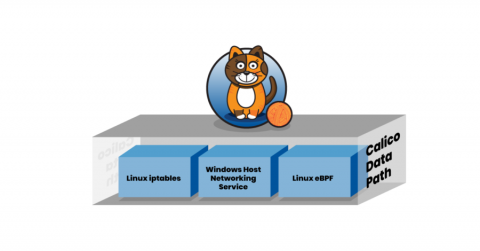
eBPF is a hot topic right now; most of the infrastructure-focused conferences and events have included talks on eBPF over the past year, which is creating a lot of interest in the technology. You might be wondering what eBPF is. eBPF stands for “extended Berkeley Packet Filter” which is a feature in modern Linux kernels that allows you to write mini-programs that are attached to low-level hooks in the Linux kernel, that execute based on certain events (e.g. filtering network traffic).

What is Podman? Docker's successor?

What is Podman? Well, we will start by saying that Podman is a container engine developed by RedHat, and yes, if you thought about Docker when reading container engine, you are on the right track. Podman wants to be the alternative to the well-known container Docker engine, but you may wonder: what does RedHat offer through Podman? Why should I switch to Podman? Is Podman the replacement for Docker or just another competitor?

Running Google Cloud Containers with Rancher

Rancher is the enterprise computing platform to run Kubernetes on-premises, in the cloud and at the edge. It’s an excellent platform to get started with containers or for those who are struggling to scale up their Kubernetes operations in production. However, in a world increasingly dominated by public infrastructure providers like Google Cloud, it’s reasonable to ask how Rancher adds value to services like Google’s Kubernetes Engine (GKE).