
Operations | Monitoring | ITSM | DevOps | Cloud

What Compliance Training Software Should Do for Your Business

Compliance training software has become crucial for every business today. The main goal of this software is to ensure organizations remain compliant with various laws and regulations. This practice helps safeguard an organization from threats and consequences. At the same time, these software solutions should do more than just cover the regulatory requirements. They should also help employees, minimize mistakes, and promote team integrity.


How Unified Vulnerability Management Improves Security and Reduces Risk

In today's rapidly changing digital landscape, organizations face an unprecedented level of cyber threats. Vulnerabilities in software, hardware, and network configurations are exploited daily, leading to data breaches, financial losses, and reputational damage. Traditional vulnerability management often struggles to keep pace with the sheer scale and complexity of modern IT environments. This is where unified vulnerability management comes into play. But what is unified vulnerability management, and how does it make a meaningful difference in improving security and reducing risk?

Datadog for Government achieves FedRAMP High certification

Modern government missions depend on software platforms that can perform under demanding conditions. As agencies update systems that support public safety, benefits delivery, financial operations, and national priorities, they face security and compliance requirements that shape how technology is adopted as well as how it is built, operated, and evolved over time.

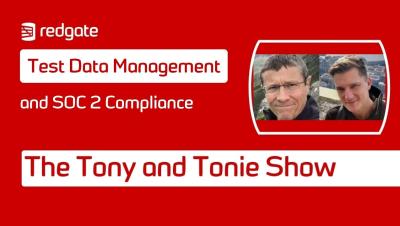
Test Data Management and SOC 2 Compliance | The Tony and Tonie show Ep43

SOC 2 compliance isn’t just about protecting data in your production systems. Your test data may also be exposing you to risk. Here’s how to get it under control. Using production data outside prod is one of the fastest ways to create compliance risk. Tony and Tonie discuss how a Test Data Management approach gives you the control, automation and traceability that SOC 2 demands, without slowing down development.

How Financial Institutions Are Rethinking Risk Management in a Digital-First World

Financial services have undergone a rapid digital transformation over the past decade. Nowadays, institutions are able to scale up faster and service customers more efficiently through cloud infrastructure, real-time payments, and API-driven platforms. But this shift also introduced a more complex risk landscape. Risk management is no longer confined to compliance teams and periodic audits. It's now embedded in day-to-day operations. As financial institutions modernize, they need to rethink how they identify, monitor, and mitigate risks across their entire tech stack.

Scaling Remote Teams in Asia: Compliance Challenges and How EOR Models Solve Them

Asia continues to draw global companies looking to scale their remote workforce, thanks to its deep talent pools and cost advantages. Yet hiring across the region brings layered compliance demands that vary from country to country. The employer of record (EOR) model has emerged as a practical fix, helping firms hire legally and quickly without the cost of building local entities from scratch.

DORA Metrics in the AI Era: Why Deployment Isn't Faster

DORA metrics in the AI era reveal a paradox: PR volume is climbing, but deployment frequency is staying flat. In this talk, GitKraken's Director of Product Jeff Schinella breaks down why AI-accelerated code generation is creating a review bottleneck that your DORA metrics can't fully explain on their own. Jeff walks through how PR metrics (cycle time, first response time, code churn, and PR size) serve as the leading indicators behind your DORA data. If your deployment frequency is flat while PR counts go up, the bottleneck isn't your devs. It's your review capacity.

Poland's KSC Act Is Now in Force: Why NIS2 Compliance Starts with Infrastructure Automation

Poland’s implementation of the EU’s NIS2 Directive marks a decisive shift in how organisations think about cybersecurity, resilience, and operational risk. With amendments to the Act on the National Cybersecurity System (KSC Act) entering into force on 3 April 2026, enforcement expectations are now real, national, and significantly stricter than many organisations anticipated – including obligations for security controls, incident response, and supply‑chain governance.

What Every IT Operations Team Should Know About Managing IPv4 in 2026

IPv4 was supposed to be a temporary problem. Address exhaustion was meant to push the entire internet toward IPv6 within a decade, and operations teams could simply manage the transition and move on. That hasn't happened. Most enterprise networks still run dual-stack configurations, customer-facing services still depend heavily on IPv4, and the secondary market for addresses has become a permanent fixture of modern infrastructure planning.

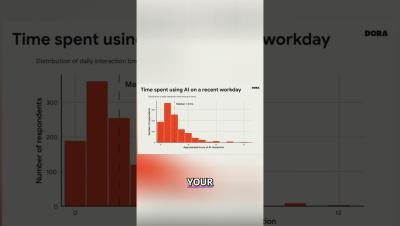
90% AI Adoption. Still Failing. DORA Explains Why.

AI adoption is nearly universal. So why are most teams still struggling? In this session from GitKon, Nathen Harvey, head of DORA at Google Cloud, shares findings from the 2025 DORA State of AI-Assisted Software Development report, drawing on data from nearly 5,000 developers worldwide. The answer isn't more AI. It's what surrounds it.