Custom Error Pages in AWS S3 and Cloudfront
In this video Matthew Barlocker, the CEO of Blue Matador, will show you how to get custom error pages in AWS S3 and/or Cloudfront.


The latest News and Information on Containers, Kubernetes, Docker and related technologies.
Twistlock is a platform for managing security and compliance within various environments, including virtual machines, containers, and serverless functions. Ensuring legal and technical security is just as valuable as preventing outages and errors, which is why Datadog is delighted to announce a new integration with Twistlock. With this integration, you can track security and compliance risks within the same platform as the metrics, traces, and logs you already collect with Datadog.
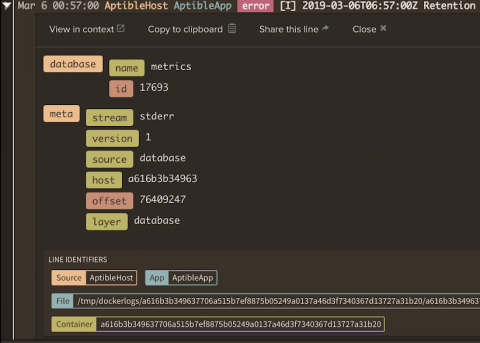
We’re happy to announce that forwarding your Aptible logs to LogDNA is much simpler than before. Aptible Enclave is a container orchestration platform built for developers that automates security best practices and controls needed for deploying and scaling Dockerized apps in regulated industries.
Today Enterprise IT does not question the value of containerized applications anymore. Given the move to adopting DevOps and cloud native architectures, it is critical to leverage container capabilities in order to enable digital transformation. Google’s Kubernetes (K8s), an open source container orchestration system, has become the de facto standard — and the key enabler — for cloud native applications, and the way they are architected, composed, deployed, and managed.
kube-proxy is a key component of any Kubernetes deployment. Its role is to load-balance traffic that is destined for services (via cluster IPs and node ports) to the correct backend pods. Kube-proxy can run in one of three modes, each implemented with different data plane technologies: userspace, iptables, or IPVS. The userspace mode is very old, slow, and definitely not recommended! But how should you weigh up whether to go with iptables or IPVS mode?