Operations | Monitoring | ITSM | DevOps | Cloud

What Is Hybrid Cloud Monitoring (And How To Actually Do It Well)

Most IT teams running a real hybrid setup are not short on data. They are short on a place where the data agrees with itself. By the end, you will know what to ask a vendor for, where teams usually trip, and how to scope a proof of concept that does not burn a quarter. Hybrid cloud monitoring is the ongoing collection of telemetry across your on-prem kit and one or more public clouds, treated as one environment instead of two or three. The goal is not just visibility.

10 ITIL Change Management Best Practices for 2026

Most IT teams do not struggle with change management itself. The problem is how it is run in practice. In many organizations, CABs meet regularly, approvals are recorded, and workflows already exist. Even with this in place, production incidents still come from changes that were not properly checked or assessed. The issue is not the process. It is execution. Many teams rely too much on approvals, do not assess risk in a consistent way, and slow down delivery with heavy governance.

What is a Change Agent? Roles, Types, and Why They Matter

Why do so many IT change initiatives fail even after the rollout is complete? A new ticketing system goes live on a Monday. Training is finished, documentation is shared, and the process looks ready on paper. Yet by Wednesday, teams are still sending requests through old email chains and avoiding the new workflow. The issue is rarely the technology itself.

What is Service Request Management? A Complete Guide

If you run a service desk, you’ve likely seen this pattern: Service requests, incidents, and change requests often end up in the same queue under the same SLA, even though they require different handling. Many requests that could be resolved through self-service still go through manual intervention, while misclassification adds further delays and confusion. Service request management brings structure to this by defining how requests are handled end to end.

What is Patch Management and Why is It Important? A Complete Guide

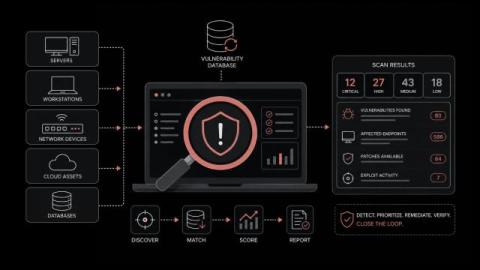
Patch management is one of the cheapest security steps you can take, and one of the most often ignored. Most IT teams know they are behind on patching. They just disagree on how far behind they actually are. Here is the simple truth: That waiting period is the problem patch management exists to solve. This guide covers what patch management actually is, how the full process runs from start to finish, where most teams quietly fall behind, and what to look for in a tool that holds up today.

What is Log Management? The IT Team's Guide to Taming Log Data

Understand what log management is and why it’s essential for troubleshooting, security, and observability across modern IT environments. Log management helps organizations collect, centralize, parse, and analyze logs from servers, applications, cloud platforms, containers, and network devices in one searchable platform. Learn how centralized log monitoring reduces mean time to resolution (MTTR), eliminates siloed troubleshooting, and helps IT teams detect anomalies faster using AI-powered analytics.

What is a Self-Service Portal? A Complete Guide for 2026

Salesforce's research found that 61% of customers would rather solve simple issues on their own than wait for a support agent. The same pattern shows up inside companies, where most IT teams report that password resets, software requests, and ticket status checks make up the bulk of their daily work. So, the demand is clear. The use cases are obvious. Yet most self-service portals quietly stop being used by month six. This guide walks through what's going wrong, and what works.

12 IT Infrastructure Best Practices Every IT Leader Should Follow

Why do IT infrastructure issues continue to slow down teams even when tools keep improving? In most IT environments, the challenge is not a single failure. It is a set of ongoing operational gaps that are easy to overlook but difficult to control over time. A few of the common challenges include: In 2026, IT environments are more distributed and fast-changing than before. Hybrid infrastructure, cloud adoption, and strict compliance requirements make consistency harder to maintain.

Server Monitoring: The Complete Guide to Metrics, Tools, and Best Practices

If you run IT operations, you already know servers carry most of what your business depends on: When a server slows down or goes offline, the impact spreads fast, and the team feels it before the dashboard does. That's the core problem server monitoring is built to solve. It watches the health and performance of your servers continuously, so issues get caught early instead of becoming outages. The cost of getting these wrong keeps climbing.

Proactive vs Reactive Monitoring: What are the Differences?

A single hour of unplanned downtime can cost a mid-sized enterprise more than $300,000, according to ITIC report. Most of that cost comes from one place: teams find out about the problem after users do. That is the core limitation of reactive monitoring. It tells you something has failed, but doesn't tell you something is about to fail. This guide is for IT operations leads, platform and SRE engineers, and IT directors deciding how to evolve their monitoring practice.