Operations | Monitoring | ITSM | DevOps | Cloud

How to Design an On-Call Escalation Policy That Works

An on-call escalation policy is the part of your incident response that runs when nobody is looking. It fires at 3:14am, decides who gets woken up, decides how long to wait before waking up somebody else, and decides when to stop trying. Most teams write one in an afternoon, wire it to a rotation, and never touch it again until an incident goes badly and the retro asks the uncomfortable question: why did it take forty minutes for a human to acknowledge?
How to Write Runbooks Your On-Call Team Actually Uses

Most engineering teams have on-call runbooks. Very few have on-call runbooks that anyone opens during an actual incident. The document exists, it was written with good intentions during a quiet sprint, it is linked from a wiki page called "Operations", and when the pager fires at 3 in the morning the responder ignores it completely and starts guessing in a terminal instead.

Assign Bugs and Tickets to the Current On-Call, Automatically

There is a particular kind of ticket that costs more than it should. It is filed correctly, it has a good description, it is in the right project, and it has nobody's name on it. It sits in the queue for two days because everyone who looks at the board assumes someone else has it. Then a customer follows up, someone notices, and the fix takes twenty minutes. The gap was never engineering time. It was ownership.

Identity Provider Outage: The On-Call Blast Radius

An identity provider outage is the one failure mode where your dashboards stay green and your entire company stops working anyway. On August 31, 2026, Microsoft acknowledged a widespread Exchange Online incident at 5:30 PM UTC, tracked as EX1464935, and described it in the admin center as "a common failure pattern across affected Exchange Online requests that is associated with authentication and protocol connectivity." Tens of thousands of users were affected according to Downdetector.

2026 Buyer's Guide: Top On-Call Scheduling Tools for IT Teams

A missed page at 2 a.m. can turn a minor service degradation into an hours-long outage, an SLA breach, and a costly customer-trust problem. For IT operations, SRE, and DevOps teams, the tool that decides who gets alerted, how, and when someone stops the escalation is a critical piece of infrastructure.

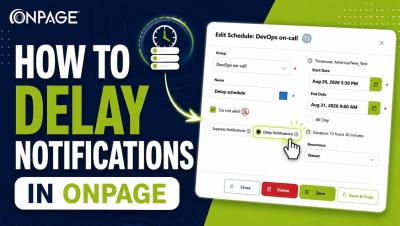
Delaying OnCall Notifications in OnPage

Learn how to delay OnPage notifications for a defined period so alerts can be queued and sent later without interrupting the on-call team in real time. OnPage’s Delay Notifications option temporarily holds notifications during a scheduled window and delivers the queued alerts afterward as low-priority notifications. This is useful when teams want to reduce interruptions during certain hours at night for use cases that allow them to do so, or planned activities while still preserving alerts for later review.

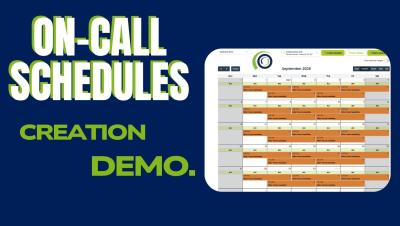
Creating an AfterHours OnCall Schedule

Learn how to create and configure an **on-call schedule in OnPage** with this step-by-step how-to guide. In this video, we walk through how to select a group, create a new schedule, assign on-call team members, set escalation priority, and configure coverage for specific days and times. Using OnPage’s on-call scheduling capabilities, teams can ensure the right responders are automatically available for critical alerts, incidents, messages or calls during designated coverage periods, including after-hours, weekends, and other shifts.

Cloud Outage Resilience: On-Call Lessons for 2026

Cloud outage resilience has quietly become the most important reliability topic of the year. Analysts now treat large scale cloud downtime as a matter of when, not if. Forrester has predicted at least two major multi day hyperscaler outages in 2026, and the reasoning is hard to argue with. AWS, Azure, and Google Cloud together account for well over half of enterprise cloud spending, so when any one of them stumbles, a huge slice of the digital economy stumbles with it.

AI-Related Outages Are Reshaping On-Call in 2026

AI-related outages just moved from a fringe worry to a mainline reliability problem, and the on-call rotation is where that shift lands first. A new StackGen analysis of nearly 178,000 public status-page records found that incidents disclosed by AI model and AI application companies now account for more than one in ten reported outages, a sixfold jump from 1.7 percent in 2023 to 10.7 percent so far in 2026.