Operations | Monitoring | ITSM | DevOps | Cloud

DevOps Patterns and Antipatterns for Continuous Software Updates at Velocity Berlin 2019

So, you want to update the software for your user, be it the nodes in your K8s cluster, a browser on user’s desktop, an app in user’s smartphone or even a user’s car. What can possibly go wrong? In this talk, we’ll analyze real-world software update fails and how multiple DevOps patterns, that fit a variety of scenarios, could have saved the developers. Manually making sure that everything works before sending an update and expecting the user to do acceptance tests before they update is most definitely not on the list of such patterns.

Motadata's Network Configuration Management Software

Motadata's Network Configuration Management helps users deploy policy compliant configurations, alerts them on out of process changes, monitors devices for configuration changes, backup and restore device configurations, manage configuration changes. It works in a multi-vendor environment and it can work with almost all the devices on your network.

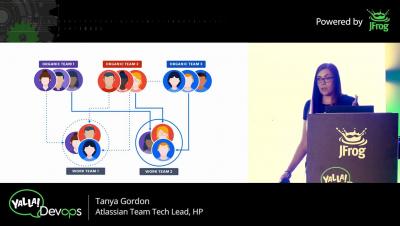
Tanya Gordon - How Atlassian software supports HP on its LPPD journey

Atlassian was chosen as the technical partner to introduce and apply the LEAN methodology at HP. LEAN is not just a buzzword or a quick fix, but rather a strategy: a new way of thinking and running a company, which is beneficial for both line workers and the CEO. The ultimate goal was to create the most value for the customers while minimizing resources, time, energy and reducing waste.

Tim Pouyer - Promoting Kubernetes CI/CD to the Next Level

Many companies and organizations have adopted CI/CD processes in order to help deliver applications running on Kubernetes quickly, transparently, and with automated tests. While this is a desirable goal, it gets more complex when developing a management layer on top of k8s, especially when both images and Helm charts are involved.

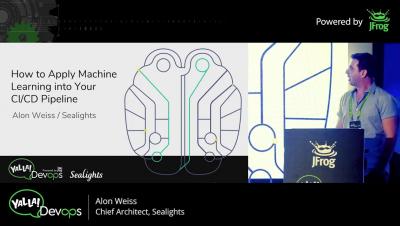
Alon Weiss - How to apply Machine Learning into your CI/CD Pipeline

Reducing DevOps costs is a high priority for teams moving to microservices, yet remains a huge challenge when trying to speed up test execution and Continuous Integration cycles by running all tests in parallel over many machines. Test Impact Analysis (TIA) has evolved over the recent years and is today one of the most innovative solutions to DevOps cost reduction. In this session, I will walk you through the evolvement of Test Impact Analysis, from theory to execution, and how SeaLights has shortened it’s testing and CI cycles by over 50% using Machine Learning – based smart test execution.