Operations | Monitoring | ITSM | DevOps | Cloud

Sponsored Post

How Right-Sizing Ephemeral Environments Reduces Cloud Costs

Ephemeral environments supercharge development velocity-but if left unchecked, they can quietly drain your cloud budget. The answer? Right-sizing: a strategy that tailors resource allocation to real-world usage. Done right, it can slash cloud expenses by 30% to 70%. Let's dive into how this works-and why more teams are making it part of their CI/CD pipelines.

Electronic Data Capture: Transforming Operations in Clinical Research

The clinical research landscape has undergone a dramatic transformation in recent years, driven by the urgent need for faster, more accurate data collection and management. At the heart of this evolution lies Electronic Data Capture (EDC) technology, which has fundamentally changed how organizations conduct clinical trials and manage operational workflows. For operations professionals overseeing complex research environments, understanding EDC systems represents a critical component of modern data management strategy.

DeepSeek Pricing: Models, How It Works, And Saving Tips

Some teams won’t touch DeepSeek because it’s Chinese. Others are quietly running pilots and rethinking how much reasoning and context they actually need, or can afford. For SaaS teams staring down runaway AI costs, DeepSeek’s mix of open-source freedom, massive context windows, and token rates 10–30X cheaper than OpenAI or Anthropic is tough to ignore. However, DeepSeek pricing comes with cache hits, cache misses, off-peak discounts, that September pricing shift, and more.

FinOps For Claude: Your Strategy For Managing Claude API And Anthropic Costs At Scale

Anthropic’s Claude is one of the most powerful and developer-friendly large language models (LLMs) available. But as usage grows, so does cost. Here’s the reality: A single unoptimized development loop or unmonitored QA job can multiply costs 10x overnight. Most teams experimenting with Claude lack the visibility and guardrails needed to prevent runaway costs, especially once usage moves from R&D into production.

12 Cloud Cost Optimization Examples For Your Cost Journey

Organizations face increasingly complex cloud environments — from hybrid clouds to multi-cloud deployments — where costs can quickly spiral without real-time visibility and intelligent controls. This is why setting clear goals for cloud cost optimization is necessary to keep your organization proactive. The key to success lies not just in setting goals, however, but in ensuring those goals are clear, realistic, and supported by continuous measurement and actionable insights.

Eliminate cloud waste across AWS, Azure, and Google Cloud with Cloud Cost Recommendations

As organizations increasingly adopt multi-cloud strategies, identifying areas to reduce cloud spend has become highly complex and time consuming. While there are many reasons that organizations choose to run their infrastructure in a multi-cloud environment, many do so to comply with regional data requirements, take advantage of best-of-breed offerings, or avoid vendor lock-in.

Reduce cloud waste with Datadog Cost Recommendations

Struggling to optimize your cloud spend across AWS, Azure, and Google Cloud? Datadog Cloud Cost Management highlights underutilized or legacy resources and lets engineers take immediate action using Datadog Workflows. Eliminate waste and drive savings with recommendations that your teams can trust.

Optimize Kubernetes and Container Costs with Datadog Cloud Cost Management

Struggling to understand the true cost of your Kubernetes workloads? With Datadog Cloud Cost Management, you can automatically allocate container costs by team, product, and service down to the pod. Instantly identify idle resources, surface optimization opportunities, and act with confidence. All in one unified platform.

How to surface misconfigured resources by defining policies | Datadog Tips & Tricks

Misconfigured infrastructure resources can be easy to miss, especially in multi-account or multi-cloud environments. From EKS clusters running on deprecated versions to RDS engines on extended support, these issues can disrupt services or drive up costs if left unchecked. In this video, we show you how to: By centralizing policies, you’ll gain a clear view of where to focus your remediation efforts.

Claude Pricing: A 2025 Guide To Anthropic AI Costs

When OpenAI surged into the spotlight with ChatGPT, not everyone inside the company agreed on the path forward. In 2021, a group of senior researchers broke away. They had concerns about safety, transparency, and the direction of AI development. They went on to found Anthropic. And their answer to ChatGPT was Claude. Anthropic’s mission is for openness now. Yet, Claude’s pricing can feel as mysterious as the model weights behind the scenes.

Rethink Cloud Finance: From Cost Control To Strategic Growth

Cloud costs keep rising, and most companies are struggling to contain it. That’s where today’s finance teams can step up their game, not only as a professional opportunity but as a leading protagonist on the cloud cost optimization stage. A bit of background first: Global public cloud spending is projected by Gartner to exceed $720 billion in 2025. That’s up from nearly $600 billion in 2024. And a lot of that is sheer, unmitigated waste.

Put Cloud Costs in Front of Engineers with Datadog Cloud Cost Management

Tired of surprises on your cloud bills? With Datadog Cloud Cost Management integrated into the Software Catalog, engineers see cost, performance, and reliability side by side—no context switching required. Give every service owner the visibility they need to make cost-aware decisions.

Track Cloud Unit Economics with Datadog Cloud Cost Management

Do you know the true cost per user, API call, or checkout? Datadog Cloud Cost Management lets you break down spend by combining cost, observability, and custom business metrics—all in one place. Track cost per transaction, alert on changes, and align engineering and finance with real-time unit economics.

FinOp vs Traditional Finance: Why Modern Investment Firms Need Specialized Operations Support

Investment firms are navigating an era where traditional finance no longer provides the agility and precision needed to stay competitive. Markets move faster, regulations tighten, and investors demand real-time insights. That's where FinOp, or financial operations, comes in. Unlike legacy approaches, FinOp is designed to integrate strategy, technology, and process optimization in ways that directly support firm growth. For example, firms that explore finop services, like those offered by Cartesian FinOp Partners, often find that they bridge the gap between financial oversight and operational efficiency.

AWS Reserved Instances 101: The Complete Guide

With 240 distinct services, ranging from compute to storage to networking and content delivery — each offered at different price points — choosing the right AWS service requires meticulous consideration.. By default, AWS services are available on-demand and you pay a monthly bill for services used. However, the on-demand pricing model can get expensive if you use a lot of services and deploy a fleet of instances.
The Complete SaaS Unit Economics Guide (2025 Edition)

Measuring and monitoring unit economics can help your SaaS brand make informed business and engineering decisions. But how do you get that data, and what exactly are SaaS unit economics? We’ll cover exactly what SaaS unit economics are, metrics you should monitor, how to calculate your unit economics, and the tools you can use to be successful.

What A Great FinOps Onboarding Looks Like In 2025

I’ve seen firsthand how persona-centric FinOps creates realized savings through synergy. I’m a Certified AWS Solutions Architect, FinOps Engineer, and Customer Success leader who’s had the joy of turning cloud confusion into clarity. I’ve added a customer story below — but hold up, we’ve got onboarding optimizing to do.

10 Best Kubernetes Alternatives In 2025 (By Category)

Containers and microservices are revolutionizing how distributed applications are built, run, and optimized. They enable apps to be highly scalable. You can also isolate some areas for updates and patches without shutting down the entire application or service. Yet, managing containers and microservices at scale can be tricky. That’s where a container management platform like Kubernetes comes in – or, as you’ll see below, where the top Kubernetes alternatives shine.

How we saved $1.5 million per year with Cloud Cost Management

In collecting and analyzing trillions of events each day, Datadog ingests a massive amount of data. We spend substantially to process and store this data in the cloud, and teams across the organization are committed to optimizing the return on this investment. To this end, our FinOps analysts have always tracked the costs of delivering our services and identified opportunities for savings.

The Top AI Models And Trends Shaping SaaS in 2025

Two years ago, a “state-of-the-art” AI model could write decent copy or summarize a meeting transcript. Today, the top AI models can generate working code, analyze video in real time, and reason through complex scenarios. For SaaS teams, these changes represent a strategic crossroads. Choose the right model and you unlock new revenue streams, slash time-to-market, and wow your users.

Mastering Cloud Governance: Build A Strategy That Works

One of the biggest benefits of the cloud is that it gives engineering teams the freedom to deploy and iterate applications quickly. Unlike traditional IT environments where engineers require a series of approvals before embarking on projects, in the cloud, engineers can choose from several managed services and deploy them at the click of a button. This means your team can innovate faster and respond quickly to market demands.

Stop Asking What AI Costs, Ask If It Is Worth It

AI is surging into products. And the invoices are exploding with it. The key question is no longer, “How much did we spend?” It’s now: “Was it worth it?” That shift, from totals to value, is at the heart of FinOps. The FinOps community defines the practice as bringing financial accountability to the cloud, so teams make tradeoffs with clear business context. In plain English, measure value per dollar, then optimize the system and not just the bill.

Monitor Claude usage and cost data with Datadog Cloud Cost Management

Managing the cost of foundation models is a critical challenge as AI adoption surges, particularly for teams using powerful models like Anthropic's Claude Opus and Claude Sonnet. Growing teams generate larger prompt volumes and escalating model complexity, making it difficult to have clear visibility, accountability, and control of cloud AI spending.

AI Cost Optimization At Scale: How One CloudZero Customer Manages Spend Across 50+ LLMs

AI adoption isn’t just accelerating, it’s compounding. From GPT-5 to Claude to Llama and beyond, engineering teams are integrating diverse LLMs across products, experiments, and services. And finance teams are now grappling with a new kind of cloud complexity: token-based economics and volatile inference costs, often spread across multi-model, multi-cloud, and multi-region architectures. The modern FinOps stack needs to keep up. CloudZero was built for this moment.

Practicing What I Preach, Just At Scale

I’ve spent most of my career building and optimizing cloud, on-prem, and data platforms for growing companies. It’s been an amazing journey so far. Through it all, FinOps has become more than just a methodology for me (Fred FinOps didn’t just come from my love of the Flintstones, though I do appreciate a good cartoon). It’s a community, a discipline, a tribe I’ve come to call home. Lately, some tough questions have kept me up at night: These challenges got me thinking.

Amazon SageMaker Pricing Guide: 2025 Costs (And Savings)

Amazon SageMaker makes it easy to prepare data for machine learning (ML) and then train, deploy, and modify ML models. SageMaker is a fully managed service that automates much of the ML lifecycle. So, if you want a single partner to help you through all stages of your Artificial Intelligence (AI) lifecycle, SageMaker might be the answer. Perhaps more important for this post is the promise that Amazon SageMaker can reduce your machine learning model costs. But does SageMaker pricing reflect this?
Sponsored Post

Traffic Replay: Production Without Production Risk

The software and product life cycle is fraught with pitfalls and tradeoffs. While testing applications under production-like load is critical to ensuring the reliability, performance, and security of your data storage and software services, you need to do this testing without actually affecting the production data and systems. In essence, you have to pull off the impossible - be as close to production as you can without actually being production.

Amazon Kinesis Pricing Explained: A 2025 Guide

Kinesis is an Amazon Web Services (AWS) product that collects, processes, and analyzes streaming data in real-time. It can process streaming video, audio, IoT data, application logs, and other data as it arrives from thousands of unique sources, unlike technologies like Hadoop, which utilize batch processing (waiting for a complete dataset to arrive before processing and analyzing it).

Stop Trying To Cut Cloud Costs, Start Trying To Price AI Correctly

Most SaaS companies aren’t spending too much on AI. They’re just completely screwing up how they price it. You feel the budget pressure. The OpenAI and Anthropic bills keep climbing. Finance is starting to twitch. So the instinct is to cut. Trim back experiments. Cap usage. Beg your team to “optimize.” You can’t cost-cut your way out of a pricing failure though. And most of the time, that’s all this is — a pricing failure.

How HireVue Turned Cloud Cost Chaos Into A Competitive Edge

When you’re a global leader in AI-assisted hiring, speed matters. Not just in matching candidates to jobs, but in making the engineering and financial decisions that keep your platform running efficiently. For HireVue, fragmented infrastructure, manual processes, and sprawling spreadsheets turned cloud cost management into a time-consuming spelunking expedition.

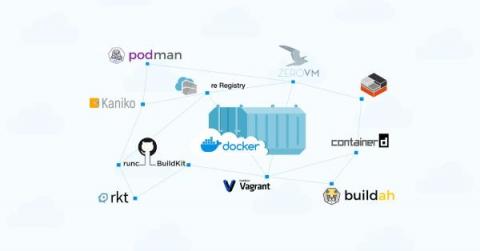
15+ Best Docker Alternatives For Containers And Beyond

Although container-related technology existed before 2013, Docker revolutionized and propelled it into the mainstream. Using Docker, developers could automatically create containers from application source code, share libraries, and reuse containers. Docker enables you to track container image versions, roll back to an earlier iteration, and track who built a specific one. You can even upload only the deltas between two versions.

Why Sustainable Cloud Starts With The Bottom Line - Not Before

If you want to align green awareness with bottom-line impact, start by looking at your cloud waste. Not just as a budget problem, but also as wasted energy, because that’s exactly what it is. AI, especially, is a mounting factor. Deloitte’s Tech Trends 2025 report highlights the growing energy demands of large AI models, warning that electricity use in data centers could soon rival that of entire nations like Sweden or Germany.

Product Klip: Komodor's Advanced Cost Optimization Capabilities

This Product Klip covers Komodor's cost optimization features, highlighting how the platform helps users reduce Kubernetes spending while maintaining operational stability. Key features discussed include: Before activation, Komodor provides simulations of potential savings, and for activated clusters, it shows CPU and memory usage before and after Komodor's bin packing and the resulting dollar savings. Komodor enhances existing autoscalers rather than replacing them, unlocking up to 40% in additional savings.

How To Run Monthly Cloud Cost Meetings For AI Teams

If you’ve ever stared at your cloud bill and thought, “How on earth did this get so crazy?” — you’re not alone. Especially when AI workloads come into play, those GPU costs can feel like a runaway train. The good news? It doesn’t have to be that way. The magic happens when you’ve got someone from every team that cares about smart growth (FinOps, AI/ML, product, engineering, whatever) all in one room, looking at the same set of numbers.

The Impending SaaS Crisis: How AI Is Disrupting SaaS - And How You Can Prepare

At CloudZero’s most recent company retreat, we held an investor panel, where representatives from four of the VC firms investing in CloudZero fielded questions from our team. Unsurprisingly, a good deal of the conversation revolved around AI. A standout moment from this panel came when one investor described a vibe coding session he’d done about a month prior. “Vibe coding,” for the uninitiated, means using AI to build an application without writing any actual code yourself.

A guide to cloud unit economics

As you analyze your organization's cloud spending, you'll often find that stakeholders have different perceptions of what that spending brings you. This is especially true when overall costs are rising and it's hard to distinguish waste from valuable investments in growth. But when finance, engineering, and product teams can all connect cloud spending to specific business outcomes, you gain the ability to make data-driven decisions about how to maximize the value of that spending.

CFO Cloud Cost Metrics: Key KPIs To Track

Cloud services have become an indispensable resource for businesses seeking agility, scalability, and innovation. However, with this increased reliance on the cloud comes the challenge of managing and optimizing costs effectively. For Chief Financial Officers (CFOs), understanding and tracking cloud cost metrics is crucial to maintaining financial health and ensuring strategic investments yield the desired returns.

Cut Compute Costs Up To 90% With Azure Spot Instances

When cloud costs spike, compute is often the culprit. Using Azure Spot Instances could cut your compute costs by up to 90%. But Spot VMs come with trade-offs, including unpredictable evictions and capacity constraints. And that makes them tricky to use without the right strategy and visibility. In this guide, we will share how to make them work for you.