Scaling Techqueria with Sentry's Open Source Grant
In March, we awarded Sentry’s Open Source Grant to Latinx non-profit Techqueria. Here’s a look at their progress, six months later.


In March, we awarded Sentry’s Open Source Grant to Latinx non-profit Techqueria. Here’s a look at their progress, six months later.
Cortex, the open source, horizontally-scalable, highly-available, clustered Prometheus implementation that powers Grafana Cloud’s Hosted Prometheus cut its first release yesterday! This release was led by Chris Marchbanks from Splunk, who put together the whole release process and shepherded this first release.
Open source is one of the key drivers of DevOps. The need for flexibility, speed, and cost-efficiency, is pushing organizations to embrace an open source-first approach when designing and implementing the DevOps lifecycle. Monitoring — the process of gathering telemetry data on the operation of an IT environment to gauge performance and troubleshoot issues — is a perfect example of how open source acts as both a driver and enabler of DevOps methodologies.
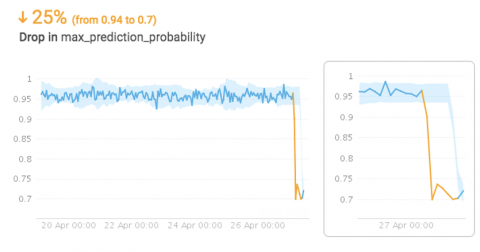
Machine Learning (ML) algorithms are designed to automatically build mathematical models using sample data to make decisions. Rather than use specific instructions, they rely on patterns and inference instead. And the business applications abound. In recent years, companies such Google and Facebook have found ways to use ML to utilize the massive amounts of data they have for more profit.
A few members of the Scout team had the chance to head to Monitorama in Portland, Oregon this week. For those who do not know what Monitorama is, it is a 3-day, open-source monitoring conference with a single track. There is plenty of time during the breaks to chat with attendees, ask the speakers questions or just catch up on some email.
Today, I’m excited to announce a partnership between Logz.io and Microsoft Azure. With this partnership, Logz.io is now offering Azure customers a fully managed, scalable machine data analytics platform built on ELK and Grafana. What does that mean? Azure customers can now easily deploy, run, and scale ELK without the hassle and pain of maintaining and managing the stack themselves.
What is the most important feature your Node.js application can have? Do you think it’s having fancy fuzzy logic for your full-text search, or maybe using sockets for real-time chats? You tell me. What’s the fanciest, most amazing and sexy feature you can add to your Node.js application?
The growing threat of attacks and data breaches on IT systems has made security monitoring more crucial now than ever before. Organizations of all sizes face risks to their data, and without the proper tools in place, a single attack could pose a severe threat to your operations.
In Parts One and Two of this blog, we looked back at the ongoing open source licensing wars, focusing on the evolving situation between Elastic N.V. and AWS. In this final installment, we’ll offer some opinions on the situation, as well as share our own views on how we’re reacting at Grafana Labs.
Open source software adoption continues to grow within enterprises (even for legacy applications), beyond just startups and born-in-the-cloud software. In this second part of our Kafka monitoring series (see the first part discussing Kafka metrics to monitor), we’ll take a look at some open source tools available to monitor Kafka clusters. We’ll explore what it takes to install, configure, and actually use each tool in a meaningful way.