Operations | Monitoring | ITSM | DevOps | Cloud

The latest News and Information on DevOps, CI/CD, Automation and related technologies.

Empowering Productivity: Unleashing the Full Potential of Device Management Solutions

Effective device management solutions are crucial in today’s dynamic workplace, where working with several devices is the norm. As companies navigate hybrid models, remote work, and an expanding ecosystem of devices, device management solutions become necessary. In this article, we will look at the fundamentals of this technology paradigm and see how firms can increase productivity by making the most of device management solutions.

How to Optimize Your AWS Costs in 2024: Top Vendors, Tips, and More

Sigh...in the blink of an eye, AWS now has hundreds of thousands of SKUs, 180 different types of services, 17 different ways to launch a container, and has dozens upon dozens of regions and availability zones. No wonder AWS billing has become so complex to understand. Is there a fix?

Role of Human Oversight in AI-Driven Incident Management and SRE

In the fast-paced landscape of technology, AI-driven Incident Management and Site Reliability Engineering (SRE) have emerged as critical components in ensuring the seamless functioning of digital systems. AI algorithms are increasingly employed to detect, diagnose, and resolve incidents with unprecedented speed and efficiency, revolutionizing the traditional approaches to reliability.

What Is Continuous Delivery and How Does It Work?

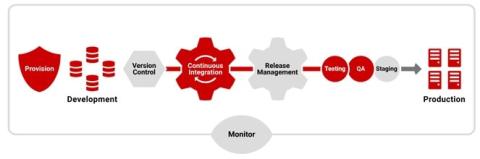
Continuous delivery (CD) is an application development practice that involves automatically preparing code changes for release to a production environment. Combined with continuous integration (CI), continuous delivery is a key aspect of modern software development. Together, these two practices are known as CI/CD. Properly implemented CI enables developers to deploy any code change to testing and production environments late in the software development lifecycle (SDLC).

What is Bash Scripting? Tutorial and Tips

Linux is a powerful and versatile operating system that’s widely recognized for its robustness, security, and open-source nature. It is a Unix-like OS, which means it shares many characteristics with the original Unix system developed in the 1970s. Linux has become a preferred choice in various computing environments, from personal computers and servers to embedded systems and supercomputers.