Operations | Monitoring | ITSM | DevOps | Cloud

The latest News and Information on DevOps, CI/CD, Automation and related technologies.

How To Configure a PostgreSQL Datasource in Grafana

So, you’ve got a PostgreSQL database packed with juicy data, and you want to turn those raw numbers into slick, interactive Grafana dashboards? Good call! Grafana’s PostgreSQL datasource is like the secret handshake that lets you visualize your data in style—no extra ETL magic required. In this guide, we’ll walk through getting PostgreSQL and Grafana to play nice, covering everything from connection settings to query tuning.

The Basics of Log Parsing (Without the Jargon)

Logs are crucial for understanding what's happening in your system, but they can often be hard to make sense of. Log parsing is the key to turning raw, unstructured data into something useful. In this blog, we'll explore the basics of log parsing, its importance, and how it helps you extract valuable insights from your logs without all the clutter.

OpenTelemetry Processors: Workflows, Configuration Tips, and Best Practices

Most developers are familiar with Opentelemetry core components—Traces, Metrics, and Logs. But there’s one part of the OpenTelemetry ecosystem that doesn’t always get the spotlight: processors. These behind-the-scenes operators shape your data pipeline, helping you filter, enrich, and fine-tune telemetry data before it reaches your backend systems. Processors play a key role in making sure your data is cleaner, more useful, and just the way you need it.

Reviewing Every New Feature in HAProxy 3.1

HAProxy 3.1 makes significant gains in performance and usability, with better capabilities for troubleshooting. In this blog post, we list all of the new features and changes. All these improvements (and more) will be incorporated into HAProxy Enterprise 3.1, releasing Spring 2025. Watch our webinar HAProxy 3.1: Feature Roundup and listen to our experts as we examine new features and updates and participate in the live Q&A.

How to make Kosli generic attestations using the kosli-attest-generic command

All but one of the kosli attest commands calculate the true/false compliance value for you based on their type. For example, kosli attest snyk can read the sarif output file produced by a snyk scan. The one that doesn’t is kosli attest generic which is “type-less”. It can attest anything, but Kosli cannot calculate a true/false compliance value for you. Often the tool you are using can generate the true/false value, which is then easy to capture.

Empowering NOC Teams - Enhanced Workload Insights

In the dynamic landscape of cloud operations, Network Operations Centers (NOCs) are crucial in ensuring service reliability and performance. However, managing the diverse workloads of NOC teams can be challenging. At MoovingON, we are dedicated to providing solutions that enhance operational efficiency and cultivate a positive work environment for our engineers. To this end, we are excited to introduce a powerful new feature in our moovingon.ai platform: Enhanced Dashboards for Workload Management.

Top Azure App Insights Techniques You're Not Using for Querying Logs

The Business Activity Monitoring (BAM) module's new feature allows seamless navigation directly to the Azure portal. This video provides an overview of how BAM enables the monitoring and querying of logs from Azure App Insights and Log Analytics. It also showcases a use case in the employee benefits scenario, where daily file processing data is visualized for business and support teams to track system activities.

Introducing step failure strategies in Bitbucket Pipelines

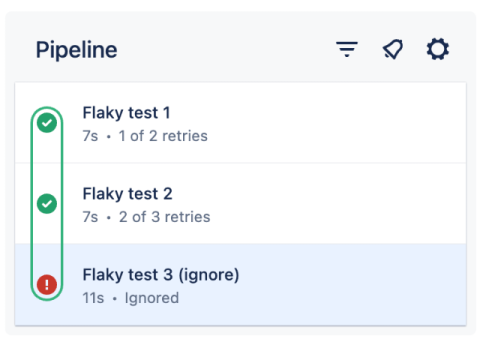
We are excited to introduce a new capability in Bitbucket Pipelines – Step Failure Strategies. This is the first of a set of new features allowing developers to implement more comprehensive logic and control-flow inside their CI/CD pipelines. Failure Strategies are designed to give you explicit control over how your pipeline behaves in the event that an individual step within the pipeline fails.

Announcing ARM builds in cloud for Bitbucket Pipelines

We are excited to announce the release of ARM builds in the Pipelines cloud runtime. Our release of Linux based ARM runners in cloud allows you to build and deploy software for ARM-based systems with all the benefits of our fully managed CI/CD platform. To use the new cloud ARM runners in your pipeline, make the following modifications to your bitbucket-pipelines.yml file.

Moving to a zero-trust model with Kosli's custom attestations

The Kosli CLI provides several attest commands, such as kosli attest snyk, kosli attest jira, etc. These attestations are “typed” - each one knows how to interpret its own particular kind of input. For example, kosli attest snyk interprets the sarif file produced by a snyk container scan to determine the true/false value for that individual attestation.