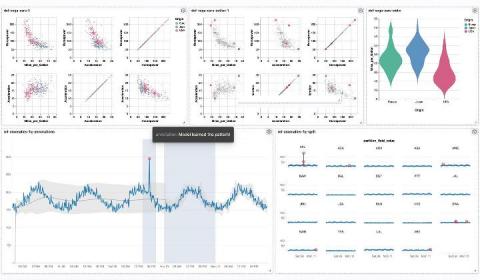
We are pleased to announce the general availability of Elastic 7.9. This release brings a broad set of new capabilities to our Elastic Enterprise Search, Observability, and Security solutions, which are built on the Elastic Stack — Elasticsearch, Kibana, Logstash, and Beats.
Performance has been a top user concern and an area of investment for InfluxDB Cloud since launching a year ago. The theme of our recent performance push is aggregations; we took a vertical slice from backend platform to front-end user interface to improve aggregations across the full stack.
In Elasticsearch 7.9, we’ll be introducing a new “wildcard” field type optimised for quickly finding patterns inside string values. This new field type addresses best practices for efficiently indexing and searching within logs and security data by taking a whole new approach to how we index string data. Depending on your existing field usage, wildcards can provide: The most exciting feature of this new data type is its simplification of partial matches.
In today’s digital age there are numerous websites that compete to drive traffic to their portals. They invest heavily in strategies like SEO and SMM to get visitors hooked on their content. Getting traffic on your website is important but it’s also critical to understand how visitors interact with your content. This is where website analytics tools and solutions come in.
As there are more advances in data use, businesses must ensure they’re delivering value by utilizing all data sources present in their environments. Irrespective of the source of data, be it operational or transactional systems, smart devices, social media, video, or text, it’s what the business does with the data available that determines its value strategy.
As usage-based pricing models have continued to increase over the past decade, particularly for technology companies, there has been a major shift in budget planning and resource allocation. Since CFOs can no longer predict or approve each and every expense before they’re incurred, variations in usage costs can often make or break a company’s profitability. For example, two of the most common usage-based costs come from online advertising and IT-related cloud costs.
The COVID-19 pandemic has had a major impact on our working lives. Companies have adopted by transforming their workforce to work remotely through video conferencing software. Cisco’s Webex Meetings, one of the most popular video conference softwares, plays a critical role in helping employees stay connected, enhance collaboration and drive productivity.
Military strategists will often tell you that the best way to win a conflict is to prevent it by projecting an unmistakable posture of strength, preparedness and resolve. As history has shown in the seven decades since the Second World War, deterrence doesn’t come cheap, certainly not in the era of modern, technology-enabled warfare. Yet it is still far less costly in lives, dollars, and equipment than letting a hostile situation escalate out of hand.