Operations | Monitoring | ITSM | DevOps | Cloud

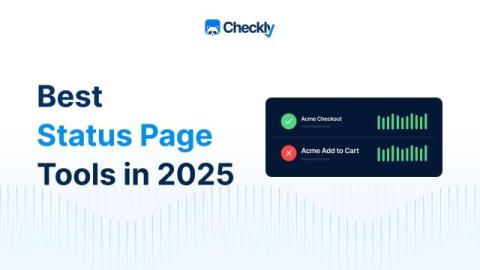
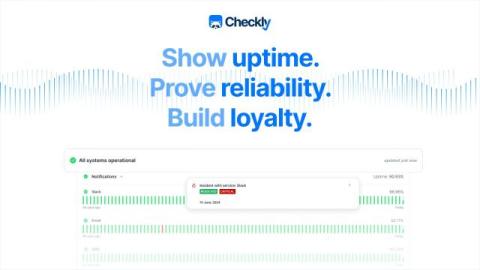
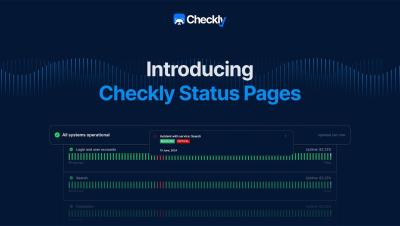
Detect, Resolve, and Communicate: Introducing Checkly Status Pages

Checkly has always been your early warning system—giving engineering teams unmatched speed and precision in detecting problems through powerful synthetic monitoring. When systems fail, communicating clearly and quickly is just as important as fixing the issue itself. Downtime is inevitable. Confusion doesn’t have to be.

New In Playwright 1.51 - Can AI Fix Failing Tests With The New Error Prompt?

In this episode, Stefan Judis, Playwright ambassador, explores the new 'Copy as prompt' feature in Playwright 1.51. This feature allows you to copy a pre-filled LLM prompt with all the context of a failing test case. Does this mean that AIs can take over and magically fix all the failing tests? Let's find out!

Combine Fixtures & Page Object Models for DRYer Test Code in Playwright

If you're using Playwright for end-to-end testing or synthetic monitoring with Checkly, you've likely considered reusing your test code across different test cases. A common approach for this is using Page Object Models (POMs). However, if you're like me, you might have mixed feelings about POMs—while they help organize your code, they can sometimes feel cumbersome to set up and maintain.

Integrate Checkly with Render for more reliable production environments

With Render’s announcement this week of their new webhook integrations triggered by Render events, I wanted to explore how the integration between Render and Checkly can help ensure more reliable production services for your users. Render is a cloud application platform that enables developers to deploy and scale their apps without needing to manage infrastructure.

Reducing MTTR: Why Speed Matters for B2B SaaS Companies

For B2B SaaS companies, downtime isn’t just an inconvenience—it’s a direct threat to customer satisfaction and revenue. Unlike consumer applications, they serve a mix of power users pushing the system to its limits and new users expecting a seamless experience from day one. Reliability isn’t just about keeping services online—it’s about ensuring every user interaction runs smoothly. A minor hiccup for one customer might be a major disruption for another.