Operations | Monitoring | ITSM | DevOps | Cloud

Featured Post

The End of Automation Anxiety

If there's one thing 2020 has highlighted, it's that the world is constantly changing. For most industries-IT included-one constant spans the ages: a lingering concern about automation. The very thing that helped pave the foundations for the industrial revolution and the world we know today has been a concern ever since, with the worry machines will take our jobs in one way or another. In 2021, we're likely to see the IT industry address this anxiety, embracing automation software solutions in a smarter way and freeing up tech professionals to prioritize the most important jobs.

What is ITOM and why is it important to ITSM?

Businesses of today are faced with an extensive list of technical solutions, both on-prem and in the cloud, with which to manage their business services and systems. As the complexity of IT infrastructures increases so does a business’s ability to maintain service levels. If new systems and processes are not aligned and synchronized across a business, it can result in a lack of visibility, which can negatively impact critical services.

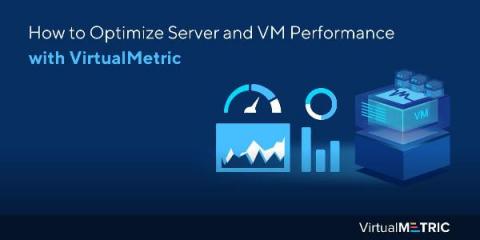
How to Optimize Server and VM Performance with VirtualMetric

The key to maximizing revenues and ensuring foolproof security is to actively monitor infrastructure. With virtualization growing increasingly, virtual machine or VM performance monitoring is one of the most crucial parts of infrastructure monitoring. This is because as opposed to a physical server or machine, detecting problems in a VM can be even more challenging.

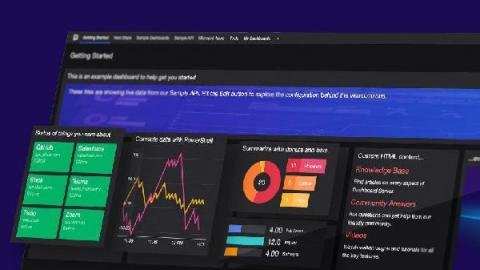
Dashboard Server Learning Path

Hey everyone! It’s been a while since we've gone on a learning journey together, after the Azure Monitor Learning Path. I’m thankful for the love that series received, and since then, I've been looking for another opportunity to take on something new and share my learning experience with you all. Finally, the time has come!

Using Sentry Performance To Make Sentry Performant

Like many companies, Sentry uses feature flags to determine when certain users see certain features. Recently, we decided to switch our feature flag software to an open-source system called Flagr. And while implementing Flagr, we used our new Performance tools to find — and ultimately fix — a serious issue in how we were fetching our flags.

SaaS vs. PaaS vs. IaaS: What's the Difference?

Every service you acquire to use temporarily and let go of when you’re done can use the “as a service” suffix. A cab is a vehicle as a service. Rather than buying a car, you merely pay to have another person’s car move you from one point to the next. IT services embody the same model. Browser-based text editors alleviate the need to install fully-fledged word processors on computers.

How to Achieve Unified IT Observability Amidst the Global Pandemic

The concept of unified IT observability has gained newfound importance in today’s world of remote work, hybrid infrastructures, and technological convergence. In this video, Christina Kosmowski, President at LogicMonitor, shares five tips on how to power your business forward and achieve unified IT observability during uncertain times.

Key Challenges of Database Cloud Migration

As we shift enterprise computing to the cloud, the need for database migration increases—but with this comes the inherent challenges of migration and the need to plan. Moving to the cloud can come with more risks and obstacles than migrating a database within a data center or from one on-premises data center to another. If a business isn’t fully prepared to migrate, they’re almost certain to run into issues.

Automated Patch Management and Team Swarming are Key Security Practices

In the blink of an eye, you can miss a new business disrupting security incident. We all recognize that cybersecurity breaches are increasing in volume and sophistication. How we respond to them is critical. Security vulnerabilities force organizations to go outside of their daily activities to execute out-of-band responses. We face numerous challenges in managing security risk.

Detecting rare and unusual processes with Elastic machine learning

In SecOps, knowing which host processes are normally executed and which are rarely seen helps cut through the noise to quickly locate potential problems or security threats. By focusing attention on rare anomalies, security teams can be more efficient when trying to detect or hunt for potential threats. Finding a process that doesn’t often run on a server can sometimes indicate innocuous activity or could be an indication of something more alarming.