Operations | Monitoring | ITSM | DevOps | Cloud

What SREs Can Learn from Revenue Operations (and Vice Versa)

Site reliability engineers and revenue operations teams rarely sit at the same desk. Software engineers look after cloud infrastructure while operations professionals look after data pipelines and sales funnels. Yet both teams spend their days managing complex systems that can't afford to crash. When you look past the different tools they use, the underlying principles of both roles are almost identical. Let's examine how these two technical worlds can share practical insights to build better business systems.


Best Practices for Designing Secure Entry Management Across Multiple Facilitiesse

Managing who gets in and who doesn't across several locations is genuinely complicated. One overlooked entry point can unravel security across an entire organization. As companies expand into new sites, the need for secure entry management intensifies quickly. In fact, more than 75% of multi-location organizations now treat digital visitor management and centralized access control as a top budgetary priority. Getting the architecture right from the start? That changes everything downstream.

Construction Safety Toolbox Talks: A Video-First Approach to Site Safety

Every construction site operates on a delicate balance between productivity and risk. Toolbox talks-brief, focused safety meetings held before shifts or during breaks-have long served as a frontline defense against workplace injuries. These informal gatherings give crews a chance to discuss site-specific hazards, review procedures, and raise concerns before problems escalate.

CAD Design for Accurate Construction Drawings and Permit-Ready Building Plans

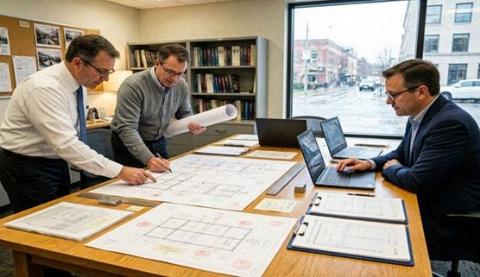
Every constructing challenge starts off long before the first brick is laid or the primary beam is raised. It begins on a display screen, in a field of strains and measurements that quietly determine whether a shape will stand authentic or run into costly issues later.

School at Home Is a Data Problem Before It Is a Teaching Problem

A family pulls their daughter out of school in March, planning to finish sixth grade at home and re-enroll her in the fall. In September the district registrar asks for an account of the spring: days of instruction, subjects covered, evidence of progress. What the parents have is a stack of finished workbooks, a library card with a long history, and a phone full of undated photos. They spend a weekend reconstructing five months from memory.

HandiFox Review Inventory Management Software for Your Business Needs

Implement robust systems that facilitate real-time tracking of stock levels, orders, and deliveries. This allows for accurate forecasting and minimizes the risk of overstocking or stockouts. Leverage functionalities that automate routine tasks, reducing manual input errors and freeing up employee time for more strategic initiatives.

How GPS Ankle Monitors Work in Ohio: A Complete Guide to Electronic Monitoring and Bail Bonds

When someone you care about is arrested, the experience can be overwhelming. Along with concerns about bail, court dates, and legal representation, many families are surprised to learn that a judge may require a GPS ankle monitor as a condition of release. If you've never dealt with the Ohio criminal justice system before, you probably have questions. What is a GPS ankle monitor? How does it work? Can someone still go to work? Do you still need a bail bond? What happens if the monitor stops working?
Sponsored Post

No SAP Expertise? No Problem. Automation Just Got Easier

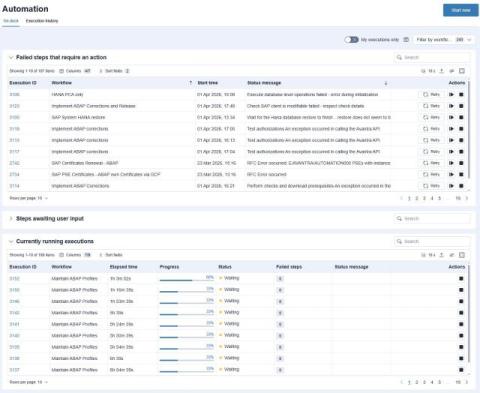
Avantra 21 introduced the concept of Automation workflows. By Avantra 23, compatibility with Ansible was added. Along the way, Avantra became the tool SAP teams reached for when they wanted system copies, refreshes, and backup orchestration to just run - predictably, on a schedule, without a senior engineer babysitting them. So, automation isn't new to Avantra users. Avantra made automation for SAP practical to deploy, predictable in operation, and easier to maintain.
Sponsored Post

How Collective IQ Turns Reactive IT into Truly Proactive IT

Most IT organizations still operate in "firefighting" mode: an employee opens a ticket, the service desk investigates, depending on severity and complexity multiple teams or people are involved to diagnose, and then the appropriate person or team fixes the issue. The whole process then repeats for the next reported incident. This model doesn't scale, drains time and budget, and leaves a huge number of issues unresolved because many employees simply don't bother to report them. And, if and when they do report them, it's too late, the problem has already impacted their productive work.