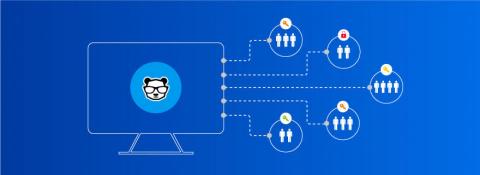
Today, we are excited to announce PagerTree now officially supports Broadcast Responses! With PagerTree’s Mass Notification System (MNS) your organization will be prepared to easily communicate with speed and reliability during critical events.
Back in the days of the wild wild web (www) and post JQuery era, one web framework stood above all others: AngularJS. A “ring to rule them all”, AngularJS consolidated quite a few micro-frameworks and provided many extensibility points of expansion if needed. Over time though, many performance and architectural questions began to arise, to the point of no return – when the guys @Google decided to migrate from AngularJS to Angular (a poor naming decision).
Role-based access control (RBAC) has become one of the main methods for system access control within large enterprises, assigning access to users based on their role in the organization. Employees are allowed to access only those resources that are necessary to effectively perform their assigned job duties.
To kick off the year, we’re launching a monthly blog series to share new product announcements on an ongoing basis. This month, we’re excited to announce several new integrations, as well as the new global events rule API that empowers admins and developers to easily manage event rules at scale. (Be sure to also check out our platform release notes to stay up-to-date on what’s new.)
2018 was a busy and productive year in StatusHub. We received a lot of great feedback and suggestions from our customers and we would like to say thanks. Today, we want to share our most recent updates and give a sneak peek of upcoming improvements.
Being proactive is one of the key elements of a successful company. We are always seeking ways to help you perform at your best. With this goal in mind, we have been working on enhancements over the past couple of months in our alerting logic. Today, we’re proud to announce another highly anticipated feature from LogDNA: Absence Alerting!
Let’s set the scene – an IT professional just received a critical alert, notifying him of an urgent matter. Unfortunately, due to a distracting social event, this professional is completely unaware of the notification. Even worse, he receives incident alerts via email, a communication method which doesn’t have the ability to forward the alert to another person if he doesn’t respond within a short time frame. Maybe he should stop attending social events.
Since the beginning of Dashbird, we’ve been conducting user interviews with all the users that take the time to jump on a call with us. One of the most common requests we get is the ability to customise alerts - specifically, what failures you will get notified upon and the ability to set custom alert based on metrics. Today we announce a new part of Dashbird that takes care of that - an incident management platform.