The latest News and Information on Containers, Kubernetes, Docker and related technologies.
Deployment controllers are a type of Pod controller in Kubernetes. They provide fine-grained control over how its pods are configured, how updates are performed, how many pods should run, and when pods should be terminated. There are many resources available for how to configure basic deployments, but it can be difficult to understand how each option impacts how rolling updates are performed.
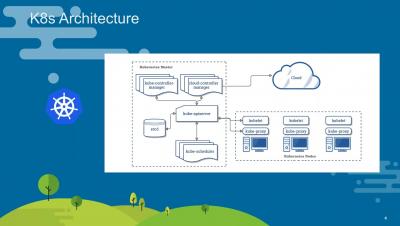
Kubernetes is the world’s leading container orchestration platform. Its cloud agnostic status enables you to manage your workloads with ease, whether they reside in the cloud or on-premises. It has reduced the necessity of being locked into services provided by a cloud provider as well as the need for an entire operations team to manage large workloads on-premises on virtualization platforms.
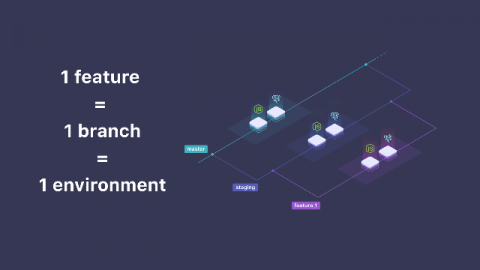
Back in the early days of software development, having multiple developers working on the same application was a tough challenge. That’s why VCS (Version Control System) like Git was created and methodology like Feature Branching was introduced. The basic idea of working per git branch (also known as Feature Branching) is that when you start to work on a feature, you take a branch of your repository (e.g: git) to work on that feature.
Have you ever grown tired of running the same kubectl commands again and again? Well the good folks over at the Kubernetes team understand you. With the addition of custom resources and the operator pattern, you can now make use of extensions, or addons as I like to call them, to the Kubernetes API that help you manage applications and components. Operators follow Kubernetes principles including the control loop.
In my previous blog post, “How to Explore Prometheus with Easy ‘Hello World’ Projects”, I described three projects that I used to get a better sense of what Prometheus can do. In this post, I’d like to share how I got more familiar with Prometheus Alertmanager and how I set up alert notifications for Slack, PagerDuty, and Gmail.
Rancher allows enterprises to adopt container and Kubernetes-related technologies incrementally.
In a previous post we showed how to install Prometheus and Grafana using the prometheus-ksonnet library along with Tanka. This is great for getting a well-managed monitoring install going, but sometimes it isn’t enough for monitoring larger clusters. If you have multiple clusters that you want to monitor on a single dashboard, or need long-term storage, or need a high-availability setup for your monitoring data, then this installation won’t be sufficient on its own.
Enterprise teams face unique challenges when it comes to software development. Managing more developers means managing more code, more projects, more logistics… the list goes on. Many technical enterprise teams have adopted a DevOps strategy to help bridge the gap between code development and operations. When developers work in tandem with system architects to break down silos, it can have an incredible effect on the organization’s productivity and culture.