Operations | Monitoring | ITSM | DevOps | Cloud

Resque 3.2 Closes a CSRF Gap in resque-web: What Changes When You Upgrade

Resque 3.2.0 shipped on October 16 with a single change, listed under Security: resque-web now rejects state-changing requests that come from another site. Until this release, resque-web had no cross-site request forgery (CSRF) protection at all. A page on any other site could submit a form to your dashboard and clear your failed jobs or delete a queue, as long as the browser it ran in could reach resque-web and was logged in to it. The fix is small and most teams can upgrade without touching anything.

Apache ActiveMQ CVE-2023-46604: DripDropper Exploit Explained

When a CVSS 10.0 vulnerability is published, the expectation is that affected software gets patched within days. When it involves an open-source broker that processes business-critical transactions in enterprise environments, the expectation is that the security teams responsible for those brokers treat it as an emergency. “The attacks exploit a maximum-severity security flaw in Apache.

How to Secure Your PHP Infrastructure and Remediate PHP2Shell with Puppet

The detailed flaw coined “php2shell” is inherent in the PHP language itself, with multiple versions of PHP affected that have been released on the last decade. Ryan Austin, a Calif researcher who helped uncover the issue told the BBC it was, “The most serious vulnerability I’ve ever found". Wiz wrote in a blog post about the detailed findings that would allow hackers to exploit the PHP2Shell issue and take control of an affected web server.

How to Patch PHP2Shell Across Every Server and Prove Each Fix to Auditors

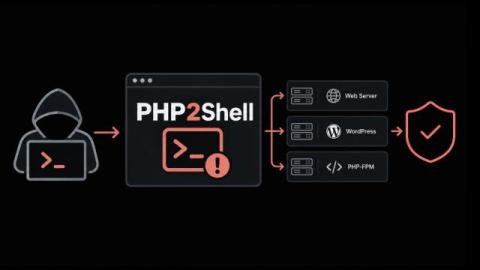
When a critical flaw surfaces in the language behind a large share of your web applications, how quickly can your organization name every server that runs it? PHP2Shell puts that question in front of every IT leader who runs PHP. The answer decides how long the business stays exposed. Here's the short version. PHP2Shell covers two flaws in the PHP engine, and either one lets an attacker run code on a web server with no login at all.

How Upsun handled PHP2Shell: protection in place 22 hours before the patch

On 21 October 2026, the team behind PHP released an emergency fix for two critical security flaws. PHP is the programming language behind a large share of the web, including WordPress, Drupal and many online stores. Researchers at Wiz named the flaws PHP2Shell. An attacker could use them to take control of a website without ever logging in. Updating a website, its CMS, or its plugins doesn't help. The only real fix is (and was) a new version of PHP itself.

PHP2Shell: What the Critical PHP Vulnerabilities Mean for Your Servers

TL;DR On October 21, 2026, PHP released emergency patches for two critical flaws known together as PHP2Shell (CVE-2026-109618 and CVE-2026-109619). An attacker with no credentials can use them to run code on a PHP web server, in some cases with a single HTTP request. Upgrade to PHP 8.2.35, 8.3.36, 8.4.27 or 8.5.12 now. Then go through your logs, because exploitation attempts were recorded before the patch shipped. In this post.

PHP2Shell: How to Find Vulnerable PHP Versions on Your Devices

Last updated: October 21, 2026. We'll update this article as PHP and Linux distributions publish new information. PHP2Shell is the nickname of two critical vulnerabilities in PHP that let an attacker run code on a web server without logging in. PHP released the fixes on October 21, 2026, and IT and security teams now need to know which of their servers and computers run a vulnerable PHP version, so they can patch those first.

HAProxy Enterprise WAF protects against PHP2Shell (CVE-2026-109618, CVE-2026-109619)

On October 20th, 2026, the PHP Security Team issued an advanced notice and security advisory disclosing two critical vulnerabilities (CVE-2026-109618 and CVE-2026-109619), both rated CVSS v4.0 9.2, affecting PHP installations.

CVE-2026-74580: Possible VM Escape via the Vghost Vulnerability

CVE-2026-74580 is a high-severity Linux kernel bug in vhost, the subsystem that accelerates I/O for virtual machines. It gives a local user a reliable path to root on the host, and in some VM setups it lets a guest write into host memory. The CVE record has existed since August 21, 2026, but the full technical write-up, nicknamed "Vghost", only went public on October 12. It came with working exploit demos for both a local root escalation and a VM escape.