Operations | Monitoring | ITSM | DevOps | Cloud

Prepare for the EU AI Act with Harness AI Security | Harness Blog

Harness AI Security provides a unified control plane for AI discovery, risk visibility, and runtime protection, helping organizations operationalize key requirements of the EU AI Act. Instead of relying on manual audits or fragmented tooling, teams get continuous insight into how AI systems are built, exposed, and used, along with the evidence needed to demonstrate compliance.

Why Most AI Pilots Never Reach Production

Most AI initiatives never make it out of the pilot stage. Gartner has forecast that 30% of generative AI projects will be abandoned after proof of concept by the end of 2025, undone by poor data quality, weak controls, unclear business value, and escalating cost. The problem predates the current wave of generative tools. RAND's study of experienced practitioners found that more than 80% of AI projects fail, roughly twice the rate of IT projects that carry no AI component.

How Agentic AI speeds up troubleshooting application issues

One night, Daniel Rizzy was the only person awake on Zylker’s IT team, and the clock was already running. He was also the only thing standing between a P1 outage and 10,000 customers. Rizzy works nights for ZylkerXchange, Zylker’s foreign currency exchange app. He lives on the city’s outskirts, where the air is clean and quiet, and the night shift suited that life. Most nights, nothing happened. Some nights, everything did.

The Future of Digital Experience in Companies: What Changes with DEX, AI, and the Employee at the Center

For decades, companies measured IT efficiency through technical indicators: servers up, systems online, equipment working. But does that actually mean a good experience for the people doing the work?

AI Tool Sprawl Is Killing Enterprise ROI | Why Orchestration Matters More Than AI Features

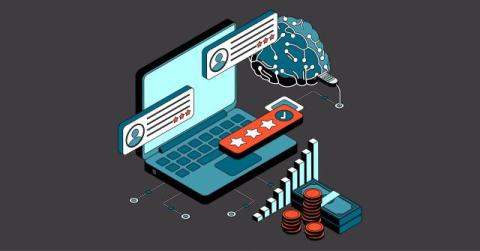
Enterprise AI adoption is accelerating, but are organizations actually solving business problems or just adding more tools? In this episode of Agents of IT, Fran Fernandez (Chief Product Officer at Resolve) and Zach Austin (Director of Product Marketing) explore one of the biggest challenges facing enterprise IT in 2026: AI tool sprawl. They discuss why many organizations struggle to demonstrate ROI from AI investments, how disconnected AI assistants create operational complexity, and why orchestration, automation, and context have become the real differentiators for enterprise AI success.

Reading the agent traces is how you make the call your eval can't

Remember being excited (or dreading, depending on the stage of your career and the company you worked at) about writing unit tests? Or sweating all the details in your end-to-end and integration tests you were sure covered all the use cases your users would hit? These days a lot of UIs are slowly being replaced by a single input field and an agent that promises to deliver the same value a UI would, but with the elegance and pun-ness of a “Jarvis”.

Harness Agents

Today, we're launching Autonomous Worker Agents, AI agents that run as governed pipeline steps inside Harness. They inherit OPA policies, RBAC, audit trails, and scoped credentials from the first run. And because they live inside your Harness pipelines, they reason using the Harness Knowledge Graph: your services, deployments, incidents, and policies.

AI Agents Write Broken Code 49% of the Time #speedscale #AI #Coding #Tech #DevOps

AI agents write broken code nearly 50% of the time. By adding a traffic-based deterministic evaluation, Speedscale boosted unsupervised bug-fixing quality from 51% to 77% in just 5 minutes. This helped slash token costs and eliminate rework without human intervention. Learn more: speedscale.com.