Operations | Monitoring | ITSM | DevOps | Cloud

The latest News and Information on DevOps, CI/CD, Automation and related technologies.

The role of secure data storage in fueling AI innovation

Artificial intelligence is the most exciting technology revolution of recent years. Nvidia, Intel, AMD and others continue to produce faster and faster GPU’s enabling larger models, and higher throughput in decision making processes. Outside of the immediate AI-hype, one area still remains somewhat overlooked: AI needs data (find out more here).


Decentralized Monitoring Explained

Users often find themselves puzzled by the concepts of decentralized or distributed monitoring. This confusion is likely due to many monitoring systems claiming distributed capabilities, making it challenging to discern how Netdata stands out. To grasp the distinction, we must delve into the evolution of monitoring systems. When the first monitoring systems were created, about 20-25 years ago, they were built as SNMP collectors.

Colo Rental Rates are Rising: Are You Keeping Track of Your Power Utilization?

It’s getting more expensive to rent space in colocation data centers. According to CBRE, colocation rates are up 18.6% year-over-year to a record $163.44 per kW/month due to limited supply and strong demand. Average Asking Rental Rate with Y-o-Y % Change for Primary Markets *Rental rates are quoted asking rates for 250-500 kW at N+1/Tier III requirements. Image Source: CBRE Research, CBRE Data Center Solutions, H2 2023.

Azure Mangement Platform - Turbo360

Turbo360 (Formerly Serverless360) is an advanced Cloud Management platform that empowers you with significant Azure Cost savings and Infra Monitoring for complex Azure Environments. This tool has helped customers experience annual savings of up to 30% through advanced cost monitoring, granular analysis, optimization insights, and reduced incident resolution time by 80% through holistic infra monitoring across multiple Azure resources with business context.

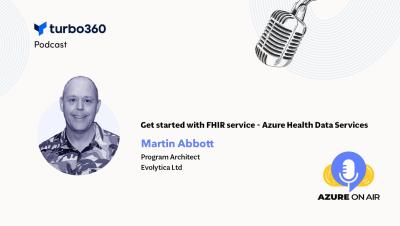
Get started with FHIR service - Azure Health Data Services

Get started with FHIR service - Azure Health Data Services Interoperability in healthcare is crucial, but it's often hindered by varying systems and data formats. Enter Fast Healthcare Interoperability Resources (FHIR), a modern standard revolutionizing data exchange. In this enlightening discussion, Azure MVPs Martin Abbott and Lex Hegt unravel the complexities of FHIR and its integration within the Azure ecosystem. Discover what FHIR is and how it facilitates seamless healthcare data sharing.

Don't Redo the Work: How to Migrate OS the Easy Way

So, you think you want to migrate OS (AKA operating systems)? In (most) everyone’s life there comes a time where you look toward migrating to another operating system. There are a variety of reasons why — take for instance the recent trouble with CentOS and RedHat. This process change has broadened adoption of new Enterprise Linux variants like Rocky, Alma Linux, or even Ubuntu.

Episode 3 | Ryan Cooke on CSPM, DSPM and Data Security in the Cloud

In this episode, the hosts and guest discuss the importance of data security posture management (DSPM) and its role in protecting sensitive data. They explore the evolution of the cybersecurity and data security market over the years, highlighting the challenges and advancements in securing data in cloud environments. The conversation also touches on the vendor landscape, the complexity of selecting security tools, and the need for organizations to invest in data security. The key takeaways include the overwhelming number of security tools available, the importance of aligning security goals with business risks, and the impact of regulations on data security.

How to test your systems for scalability and redundancy with Fault Injection

Part of the Gremlin Office Hours series: A monthly deep dive with Gremlin experts. Do you know if your services can tolerate losing a node? What about an entire availability zone? Or a region?‍ Large-scale outages aren’t unheard of. When you’re running critical services, it’s vital that those services can keep running even if an AZ or region fails. In addition to failing over, these services also need to scale quickly so traffic shifts don’t overwhelm your systems. How do you prove that a service is both scalable and redundant? The answer is with Fault Injection.