How Geometric Search Works for Hexagons in Elasticsearch
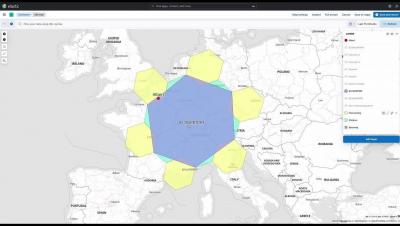
Geographic grid systems allow zooming into maps at progressively higher resolutions and finer grids. For rectangular grids, this is very simple, but for hexagonal grids, the situation is much more complex, since child hexagons are not fully contained within parent hexagons. This video demonstrates how we can still achieve efficient parent-child search in Elasticsearch using the H3 hexagonal grid.