Operations | Monitoring | ITSM | DevOps | Cloud

The latest News and Information on Observabilty for complex systems and related technologies.

Ask Miss O11y: Is There a Beginner's Guide On How to Add Observability to Your Applications?

I want to make my microservices more observable. Currently, I only have logs. I’ll add metrics soon, but I’m not really sure if there is a set path you follow. Is there a beginner's guide to observability of some sort, or best practice, like you have to have x kinds of metrics? I just want to know what all possibilities are out there. I am very new to this space.

Splunk Observability in Less Than 2 Minutes

Splunk Observability is the most comprehensive observability solution available today, combining application, infrastructure and digital experience monitoring, with log management, AIOps and incident response in a single solution experience. With Splunk Observability software engineering and IT operations teams can fix problems faster, improve reliability and build exceptional customer experiences.
Sponsored Post

The Risks and Pitfalls of Too Many Monitoring Tools

If you are like most organizations, your technology environment is a complex mixture of tools needed to run your business. In this environment, monitoring and observability are critical to making sure everything is running smoothly. You use monitoring tools to measure server resources, log-parsing tools for troubleshooting, application tools to observe application performance, and audit-request tools to comply with regulations. While these are all valid observability needs, there are risks to overdoing it by introducing too many tools. Here are some ways to avoid monitoring proliferation when developing your observability strategy.

Level Up Your Observability Game With the Cribl Suite of Products: All About Our 4.1 Release

After our recent company-wide offsite in New Orleans, the Cribl employees are feeling like they’ve leveled up in more ways than one. Not only did we indulge in delicious beignets and king cakes, but we also came back motivated to create some kick-ass new product features with our 4.1 release. It’s like we soaked up all the good vibes and brought them back with us.

Easily configure Elastic to ingest OpenTelemetry data

Watch how to easily configure your application to ingest Elastic OpenTelemetry data. About Elastic Elastic is the leading platform for search-powered solutions, and we help everyone — organizations, their employees, and their customers — find what they need faster, while keeping applications running smoothly, and protecting against cyber threats. When you tap into the power of Elastic Enterprise Search, Observability, and Security solutions, you’re in good company with brands like Netflix, Uber, Slack, Microsoft, and thousands of others who rely on us to accelerate results that matter.

SaaS Observability Platforms: A Buyer's Guide

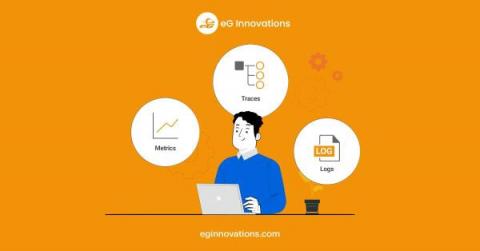
Observability is the ability to gather data from metrics, logs, traces, and other sources, and use that data to form a complete picture of a system’s behavior, performance, and health. While monitoring alone was once the go-to approach for managing IT infrastructure, observability goes further, allowing IT teams to detect and understand unexpected or unknown events.

Platform Engineering Is the Future of Ops

Ops and DevOps roles as we know them are on their way to becoming extinct—the future is platform engineering. While DevOps engineers typically focus on the application layer, platform engineers focus on the underlying infrastructure layer. Without a solid and reliable platform, it can be challenging to deploy and maintain software applications effectively. This can result in downtime, poor performance, and security vulnerabilities. Platform engineering enables software applications and services to run effectively and efficiently and has a direct impact on the user experience and the success of the entire organization.

How Do We Cultivate the End User Community Within Cloud-Native Projects?

The open source community talks a lot about the problem of aligning incentives. If you’re not familiar with the discourse, most of this conversation so far has centered around the most classic model of open source: the solo unpaid developer who maintains a tiny but essential library that’s holding up half the internet. For example, Denis Pushkarev, the solo maintainer of popular JavaScript library core-js, announced that he can’t continue if not better compensated.